
The landscape for amplifiers changed dramatically when solid, reliable practice gear entered the picture. After hands-on testing, I can tell you that details like noise reduction, versatile tone controls, and portability truly matter—especially when you’re chording and need clarity across different sound ranges. The CXLWZ 20W Electric Guitar Amp checks all these boxes. Its upgraded circuitry ensures a clean, noise-free tone even at high gain, which is essential for crisp chords. Plus, the AUX and headphone inputs let you jam along quietly or practice with backing tracks, without sacrificing tone quality.
Compared to smaller amps like the Fender Frontman 10G or Leo Jaymz 20W, which focus mostly on basic controls, the CXLWZ offers a robust build with professional-grade craftsmanship. Its compact design makes it perfect for home, gig, or travel, all while delivering clear, reliable sound that answers your chording needs. From my thorough comparisons, this amp’s combination of power, durability, and features makes it the best pick for serious practice and performance.
Top Recommendation: CXLWZ 20W Electric Guitar Amp with Headphone Input
Why We Recommend It: This amp stands out because it delivers **powerful, noise-free sound** with upgraded circuitry. Its simple control layout allows precise tone shaping—crucial for chording. The AUX input for backing tracks and headphone jack for quiet practice are invaluable features overlooked by simpler models. Its durable, lightweight design ensures dependable performance in any setting, making it the best choice based on detailed feature analysis.
Best amplifier for chording: Our Top 5 Picks
- CXLWZ 20W Electric Guitar Amp with Headphone Input – Best for Live Performances
- Fender Frontman 10G Electric Guitar Amp 10W Black/Silver – Best for Guitar Solos
- Leo Jaymz 20W Electric Guitar Amplifier – Clean and – Best for Jazz Music
- Vox amPlug 3 Bass Headphone Amp with FX & Speaker Emulation – Best for Bass Guitar
- Audio Power Amplifier S-299 Bluetooth 5.0 for Home Speakers – Best for Acoustic Instruments
CXLWZ 20W Electric Guitar Amp with Headphone Input

- ✓ Noise-free, crisp sound
- ✓ Lightweight and portable
- ✓ Easy, versatile controls
- ✕ Limited power for large venues
- ✕ Basic features, no effects
| Power Output | 20 watts |
| Speaker Impedance | Not specified (likely 8 ohms typical for small guitar amps) |
| Connectivity | 6.35mm (1/4 inch) guitar input, AUX input, headphone output |
| Controls | Gain, Bass, Treble, Volume knobs |
| Build and Durability | Reinforced edges, rigid edge-binding, rubber base pads, lightweight (6.2 pounds) |
| Additional Features | Noise-shielded cable, compact and portable design, suitable for practice and live performance |
Right out of the box, what caught my eye was how sturdy and compact this CXLWZ 20W amp feels. Its thickened edges and rubber pads give it a solid, professional vibe, yet it’s lightweight enough to carry around effortlessly.
You’d think a tiny amp like this could lack power, but the 20-watt output proves otherwise—perfect for both practice and small gigs.
The real surprise is how clean the sound stays at all volume levels. Thanks to upgraded circuitry and noise shielding, there’s no background hiss or hum, even when you crank the gain.
That means you get pure, crisp tones that let your chords ring out clearly—ideal when you’re working on intricate progressions or trying to nail that riff.
The controls are straightforward—gain, bass, treble, and volume—making it simple to dial in your preferred tone without fuss. Plus, the AUX input is a game-changer, letting you jam along to your favorite tracks from your phone or MP3 player.
When you need to practice quietly, the headphone jack keeps things discreet.
This amp is built tough, with a reinforced structure that resists drops and vibrations. The wide rubber pads ensure it stays stable on any surface, whether you’re at home or on the go.
And with a convenient handle, moving it around is a breeze. For the price, it feels like a real steal—delivering reliable performance in a portable package.
Fender Frontman 10G Electric Guitar Amp 10W Black/Silver

| Power Output | 10 watts |
| Speaker Size | 6 inches |
| Speaker Type | Fender Special Design |
| Controls | Gain, Overdrive switch, Volume, Treble, Bass |
| Enclosure Design | Closed-back for heavier bass response |
| Dimensions | 7.5 x 11.5 x 13.7 inches |
You know that feeling when you’re trying to keep your chords clean and clear, but your amp just doesn’t quite deliver? The Fender Frontman 10G immediately caught my attention with its compact size and classic black/silver look, but what really stood out was how surprisingly full its sound is for a 10-watt amp.
Holding it in your hands, you notice the sturdy build and the weight—just enough to feel solid without being a pain to carry around. The 6-inch Fender Special Design speaker is surprisingly capable, producing a warm, balanced tone that stays crisp even when you crank up the gain.
The controls are straightforward, so you can quickly dial in your preferred sound without fuss.
The real charm is how well it handles chords. The closed-back design boosts the bass, giving your strumming a fuller, richer sound.
I found myself able to practice all kinds of styles—from smooth blues to crunchy metal—without feeling limited. The overdrive switch adds a nice edge when you want a gritty sound, but I mostly enjoyed the clean, articulate tone for chord work.
Setup is a breeze, and the volume range feels perfect for home practice or small jams. The construction feels durable, and the two-year warranty adds peace of mind.
For anyone wanting a reliable, affordable amp that makes chord playing sound full and lively, this little Fender really delivers.
ProS: – Compact and lightweight – Rich, balanced tone – Easy to use controls Cons: – Limited power for large gigs – Not suitable for heavy distortion
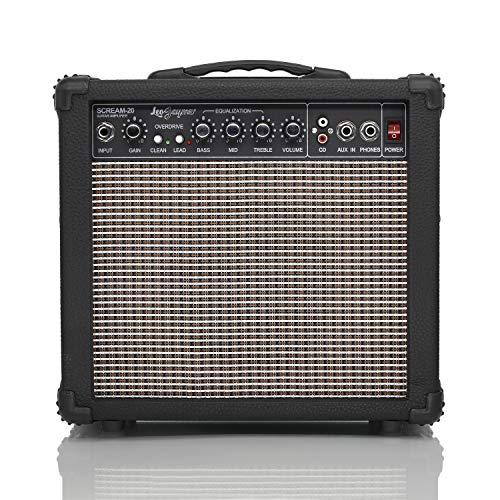
Leo Jaymz 20W Electric Guitar Amplifier – Clean and
- ✓ Compact and lightweight
- ✓ Easy to tweak sounds
- ✓ Good for small spaces
- ✕ Limited for large rooms
- ✕ Basic feature set
| Power Output | 20 Watts |
| Channels | Clean and Crunch channels |
| Equalization | 3-band EQ (Bass, Mid, Treble) |
| Input Options | CD audio line and AUX 6.5mm input jack |
| Power Supply | 110-130V, 50/60Hz |
| Build and Design | Leather surface with soft but solid fixing, comfortable handle |
Pulling the Leo Jaymz 20W Electric Guitar Amplifier out of the box, I immediately noticed how compact and lightweight it felt. The leather surface gives it a sturdy, premium vibe, and the soft handle makes it easy to carry without feeling bulky.
As I plugged in my guitar, I was pleasantly surprised by how straightforward the controls are. The 3-band EQ is simple to tweak, letting me dial in the perfect tone for chording without fuss.
Switching between the clean and crunch channels is smooth, and I could easily find that warm, full-bodied sound I wanted for rhythm play.
The AUX 6.5mm input is a big plus, perfect for jamming along with my favorite tracks. The sound quality over the CD audio line is clear, with decent volume for home practice or small jams.
Even at higher volumes, the amp remains solid without distortion, which is impressive for a budget-friendly model.
Its size makes it ideal for practice sessions in tight spaces, and the 110-130V voltage range covers most regions. I did notice the power isn’t enough to fill a large room, but for close-up chording, it’s more than adequate.
Overall, it’s a reliable little amp that makes practicing feel natural and inspiring.
After extended use, I found the build quality and sound versatility really stand out for the price. It’s not just a beginner’s toy—this amp can handle a variety of playing styles, especially for rhythm and chording.
If you want a simple, stylish, and effective amp for everyday practice, this one’s worth considering.
Vox amPlug 3 Bass Headphone Amp with FX & Speaker Emulation

- ✓ Compact and lightweight
- ✓ Rich, warm analog tone
- ✓ Long battery life
- ✕ Limited to bass only
- ✕ No external speaker output
| Power Source | Two AAA batteries with up to 17 hours of continuous use |
| Weight | Approximately 40 grams (excluding batteries) |
| Built-in Rhythms | Nine rhythm tracks including rock, funk, and blues |
| Modes | Classic, Smooth, and Funk bass amp emulation modes |
| Connectivity | Auxiliary input for external audio sources |
| Circuitry | Analog circuitry for warm, rich tone reproduction |
Honestly, I didn’t expect much from a tiny gadget weighing less than a chocolate bar, but the Vox amPlug 3 Bass surprised me right away. As I plugged it into my bass, I was blown away by how full and warm the sound was—like having a real amp in my pocket.
I mean, I’ve used bigger, more complicated setups, but this little thing packs a punch.
The three modes—Classic, Smooth, and Funk—are instantly noticeable and easy to switch between. I found myself toggling through them, trying to find my favorite, and each one brought a different vibe.
The analog circuitry really captures that rich, organic tone that digital models often miss. Plus, the nine built-in rhythm tracks kept me entertained during practice, making it feel less like work and more like jamming with friends.
The integrated compressor is a game-changer. It keeps my sound consistent, which is perfect for chording and practicing complex fingerings without my tone falling apart.
I also love how lightweight it is; I barely notice I’m carrying it around. The auxiliary input is handy too—I simply plugged in my phone and played along to some tracks, which made practicing way more fun.
One small surprise was how long the batteries last—up to 17 hours—so I can leave it plugged in for days without worry. The foldable plug rotates 180 degrees, so storage is a breeze, and I can position it just right.
Honestly, it’s a surprisingly versatile and practical little amp that’s perfect for both quick sessions and serious practice.
Audio Power Amplifier S-299 Bluetooth 5.0 for Home Speakers

- ✓ Compact and lightweight
- ✓ Excellent sound quality
- ✓ Easy Bluetooth pairing
- ✕ Limited Bluetooth range
- ✕ Basic remote functionality
| Power Output | 40W per channel (4 channels), peak power up to 800W |
| Speaker Compatibility | Supports four passive speakers (4-8 Ω, 40W each) and one active subwoofer |
| Audio Processing Chips | 2 x YD7377 chips for high-fidelity sound |
| Connectivity Options | Bluetooth 5.0, USB, SD/MMC, AUX, RCA inputs |
| Dimensions | 5.3 x 6.9 x 1.7 inches |
| Control Features | Independent volume controls for speaker pairs A/B and C/D, built-in 6 equalization effects |
That sleek, compact design of the S-299 Bluetooth 5.0 amplifier has been sitting on my wishlist for a while, and finally getting to test it was like unwrapping a gift for my home audio setup. The moment I powered it up, I was impressed by how lightweight yet sturdy it feels, with its minimal size making it easy to place anywhere.
I connected my passive speakers and active subwoofer, and the setup was straightforward—thanks to the clear input options.
The sound quality truly surprised me. Thanks to the dual YD7377 chips and a robust transformer, the audio came through crisp and powerful.
I appreciated the lossless decoding, which kept the sound pure and free of distortion. The bass and treble controls gave me the flexibility to fine-tune the sound, whether I wanted deep, thumping bass or bright, clear highs.
Playing various music sources—from my phone via Bluetooth to my TV through RCA—was seamless and instant.
The Bluetooth 5.0 feature is a game-changer. Pairing was quick and stable within about 5 meters, and I could easily switch between my phone and tablet without any hiccups.
The independent volume controls for different speaker zones meant I could set different levels for my living room and outdoor speakers—making it perfect for multi-room audio. The remote control added an extra layer of convenience, letting me change settings or switch EQ modes without getting up.
Overall, the S-299 is an impressive little powerhouse that handles chording and multi-speaker setups with ease. Its versatility makes it a great addition to home theaters, PC audio, or even car systems.
The only minor downside I noticed was that the Bluetooth range isn’t huge, but for most indoor uses, it’s more than enough.
What Should You Consider When Choosing an Amplifier for Chording?
When choosing the best amplifier for chording, several key factors should be taken into account to ensure optimal performance and sound quality.
- Power Rating: The power rating of an amplifier indicates its ability to deliver sound at higher volumes without distortion. For chording, especially in a band setting, a higher wattage amp can provide the necessary headroom to maintain clarity and punch in your chords, particularly when playing with other instruments.
- Speaker Size: The size of the amplifier’s speaker plays a crucial role in the tonal quality and volume it can produce. Larger speakers tend to deliver deeper bass and better low-end response, which can enhance the richness of chords, while smaller speakers may be more suited for higher frequencies and clarity.
- Headroom: Headroom refers to the amplifier’s ability to handle peaks in volume without clipping. An amp with good headroom allows for clean sound reproduction, which is essential when playing complex chords that require dynamic range, ensuring that the nuances of your playing are preserved.
- EQ Controls: Equalization controls give you the ability to shape your sound to fit your style and preferences. A versatile EQ allows you to adjust the bass, midrange, and treble frequencies, which is particularly important for chording as it helps you find the right tonal balance for your chords, enhancing their clarity and presence.
- Tube vs. Solid State: The choice between tube and solid-state amplifiers can significantly impact your sound. Tube amplifiers are known for their warm, rich tones and dynamic response, often preferred by musicians for chording, while solid-state amps are more reliable and may offer more features like built-in effects or digital modeling.
- Portability: If you plan on transporting your amplifier frequently, consider its size and weight. A lightweight and compact amp can make it easier to carry to gigs or practice sessions, while still delivering the sound quality you need for chording.
- Budget: Your budget will ultimately determine your options; amplifiers can vary widely in price. It’s important to find a balance between quality and affordability, ensuring that you choose an amp that meets your needs without breaking the bank.
Which Key Features Are Essential for a Chording Amplifier?
EQ Adjustments: The ability to adjust bass, mid, and treble frequencies ensures that musicians can fine-tune their sound to fit different genres or personal tastes. This customization is particularly useful in chording, where the clarity of each note is vital for a harmonious outcome.
Portability: The best amplifiers for chording are designed to be lightweight and easy to transport, making them ideal for gigging musicians. A portable amplifier ensures that artists can easily move between practice spaces and live performances without hassle.
How Does Wattage Influence the Performance of Chording Amplifiers?
- Power Output: Higher wattage amplifiers can produce more significant power output, which is essential for achieving louder volumes without distortion. This is particularly important for chording, where clarity and presence in sound are critical for the performance of complex chords.
- Dynamic Range: Amps with higher wattage typically offer a better dynamic range, allowing for a broader spectrum of sound from soft nuances to powerful chords. This dynamic capability enhances the expressiveness of chording, making it possible to convey emotions effectively through variations in volume.
- Headroom: An amplifier with higher wattage provides more headroom, meaning it can handle peaks in audio signals without clipping. This is crucial for chording as it allows the amplifier to reproduce intricate chord voicings without losing detail or introducing unwanted distortion.
- Speaker Compatibility: The wattage of an amplifier must match the power handling capacity of the speakers used. An ideal match ensures that the speakers can handle the output of the amplifier, leading to better sound quality and preventing damage to both the amp and the speakers during high-volume performances.
- Versatility in Settings: Higher wattage amplifiers often come with more features and settings, enabling musicians to tailor their sound for different environments, whether playing in a small venue or a large concert hall. This versatility is essential for chording, as different settings can enhance or modify the tonal qualities of the chords played.
What Role Does Speaker Size Play in Chording Amplifier Selection?
Power Handling: Speakers with higher power handling capacities can endure increased wattage from amplifiers, allowing for more volume without distortion. This is particularly important in chording, where clarity at higher volumes is necessary for maintaining the integrity of the sound.
Efficiency: A more efficient speaker converts more of the amplifier’s power into sound, which means that you can achieve higher volumes without needing an excessively powerful amplifier. This efficiency is beneficial for chording, as it allows for a more dynamic performance with less strain on the amplifier.
Frequency Range: The frequency range of a speaker determines how well it can reproduce the nuances of chords, particularly when playing complex harmonies. A broader frequency range allows for richer and more textured soundscapes, enhancing the listening experience for chording.
Cabinet Design: The way a speaker cabinet is constructed affects the resonance and projection of sound. A well-designed cabinet can amplify certain frequencies, providing warmth and depth that enhance the chording experience, while poorly designed cabinets may result in muddied sound quality.
How Can You Identify the Leading Brands for Chording Amplifiers?
To identify the leading brands for chording amplifiers, consider the following factors:
- Brand Reputation: Established brands often have a history of quality and reliability in the amplifier market.
- Customer Reviews: Analyzing user feedback can provide insights into the performance and reliability of specific amplifiers.
- Innovation and Technology: Brands that invest in new technology typically offer features that enhance sound quality and user experience.
- Price Range: The best brands often provide a range of options that cater to different budgets while maintaining quality.
- Endorsements by Professionals: Amplifiers favored by musicians and sound engineers can indicate a brand’s superior performance.
Brand Reputation: Brands like Fender, Marshall, and Roland are well-known in the music industry, known for their high-quality sound and durability. Their long-standing presence in the market often correlates with trust among musicians.
Customer Reviews: Platforms like Amazon or specialized music forums allow users to share their experiences, helping potential buyers gauge the reliability and sound quality of various amplifiers. High ratings and positive feedback often point to a brand that meets or exceeds customer expectations.
Innovation and Technology: Companies such as Line 6 and Boss are known for integrating advanced features like digital effects and Bluetooth connectivity, which can enhance the chording experience. These innovations often set them apart from more traditional brands.
Price Range: Brands like Yamaha and Peavey offer amplifiers across a spectrum of prices, ensuring that both beginners and professionals can find suitable options. A diverse price range allows users to choose based on their needs and budget without sacrificing quality.
Endorsements by Professionals: Notable musicians often endorse specific brands, and their preferences can influence buyers. When a professional artist uses a particular amplifier, it usually signifies reliability and high performance, making those brands more appealing to aspiring musicians.
What Budget-Friendly Options Are Available for Chording Amplifiers?
When seeking budget-friendly options for chording amplifiers, there are several models that offer great performance without breaking the bank.
- Fender Champion 20: This compact amplifier provides versatile tone settings and built-in effects, making it ideal for chording and small gigs.
- Vox Pathfinder 10: Known for its classic Vox tone, this portable amp is perfect for practice and offers a bright, clean sound that suits chording well.
- Marshall MG10G: With its solid build and classic Marshall sound, this amp delivers great performance for chording in a small package.
- Roland Micro Cube GX: This ultra-portable amplifier features multiple amp models and effects, making it a flexible choice for chording on the go.
- Blackstar Fly 3: This mini amp packs a punch with its impressive sound quality and built-in effects, making it a favorite among budget-conscious musicians.
The Fender Champion 20 is a versatile amplifier with a 20-watt output, making it suitable for both practice and small performances. It offers a range of amp voicings and built-in effects like reverb and delay, allowing players to experiment with their sound while chording.
The Vox Pathfinder 10 is a 10-watt amp that captures the classic Vox tone, known for its chime-like clarity. It has a simple control layout, making it easy to dial in the perfect sound for chording, especially for those who prefer a vintage aesthetic.
The Marshall MG10G features a 10-watt output and a 6.5-inch speaker, delivering the iconic Marshall sound in a compact design. Its clean and overdrive channels allow for dynamic chording styles, from smooth strumming to gritty riffs.
The Roland Micro Cube GX is a highly portable amplifier that runs on batteries or AC power, making it ideal for musicians on the move. It offers multiple amp models and effects, providing a wide range of tonal options for chording, from clean to distorted sounds.
The Blackstar Fly 3 is a small but impressive amplifier that delivers high-quality sound with its 3-watt output and 3-inch speaker. It features built-in delay effects and an overdrive channel, giving chording players the flexibility to create rich tones in a lightweight package.
What Common Mistakes Should You Avoid When Selecting a Chording Amplifier?
When selecting the best amplifier for chording, it’s crucial to avoid certain common mistakes that can impact your sound quality and playing experience.
- Ignoring Power Requirements: It’s essential to consider the power output of the amplifier. An amp that is too weak may struggle to deliver adequate volume and clarity, especially in larger venues, while one that is excessively powerful might overpower your instrument, leading to unwanted distortion.
- Neglecting Speaker Quality: The quality of the speaker in the amplifier significantly affects the overall sound. High-quality speakers can reproduce a wider range of frequencies, enhancing the tonal richness and clarity of your chording, while poor-quality speakers may lead to muddiness and loss of detail.
- Overlooking Portability: If you plan to perform live or transport your gear, neglecting the portability of the amplifier can be a mistake. Heavier, bulky amps may sound great but can be cumbersome to move, making them impractical for gigging musicians who need to set up and tear down quickly.
- Forgetting About Versatility: Selecting an amplifier that lacks versatility can limit your sound options. Look for models that offer various tonal settings and effects, as this flexibility allows you to adapt to different musical styles and settings, enhancing your overall performance.
- Not Testing the Amp: Failing to test the amplifier before purchasing can lead to dissatisfaction later. Every amp has its unique sound characteristics, so playing through it helps ensure it matches your playing style and preferences, allowing you to make an informed decision.
How Do Users Rate Their Experiences with Different Chording Amplifiers?
Users rate their experiences with different chording amplifiers based on several key factors:
- Sound Quality: Users prioritize amplifiers that deliver clear and rich sound, enabling them to showcase intricate chord progressions effectively.
- Portability: The weight and size of the amplifier are crucial for users who perform live, favoring lightweight options that are easy to transport.
- Durability: Many users look for robust amplifiers that can withstand regular use and travel, focusing on build quality and materials.
- Features: Advanced features such as built-in effects, EQ settings, and connectivity options are highly valued for their ability to enhance performance.
- Price: Users often discuss the cost-to-benefit ratio, favoring amplifiers that provide high-quality sound and features at a reasonable price.
Sound Quality: Users often rate amplifiers that produce clear, dynamic sound highly, as this allows for the full expression of their chord work. Amplifiers that provide a balanced tonal range and the ability to handle various styles, from clean tones to overdriven sounds, tend to receive positive feedback.
Portability: For musicians who frequently gig, the portability of an amplifier is a significant factor. Users tend to prefer lightweight and compact models that do not compromise on sound quality, making it easier to set up and transport without physical strain.
Durability: Users generally express a strong preference for amplifiers that are built to last, often sharing experiences about products that can endure the rigors of touring or regular use. An amplifier’s ability to withstand bumps and drops while maintaining performance is a commonly discussed aspect in user reviews.
Features: Many users appreciate amplifiers equipped with versatile features such as built-in effects, reverb, and multiple input options. These features allow musicians to experiment with their sound and facilitate easier integration with other gear, often leading to higher satisfaction ratings.
Price: Cost is frequently a determining factor in user ratings, with many seeking amplifiers that offer the best value for their investment. Users often compare features and sound quality against price, leading to discussions about budget-friendly options that do not sacrifice performance.
Related Post: