
The constant annoyance of weak, distorted sound is finally addressed by a truly versatile amplifier that can handle both headphones and speakers effortlessly. Having tested several options, I found that some struggle with impedance compatibility or lack proper connectivity, but the Fosi Audio Q4 DAC Headphone Amp stands out. It supports headphones from 16Ω to 200Ω, providing clean, rich audio without sacrificing clarity or volume, and its multiple inputs and outputs make it perfect for varied setups.
What impressed me most is its ability to improve audio quality instantly with simple plug-and-play, plus the bass and treble controls give precise sound tuning. Compared to portable amps like the LVY or the more specialized Vox amPlug, the Fosi Q4 offers a well-rounded combo of performance, build quality, and affordability. After thorough testing, I can confidently recommend the Fosi Audio Q4 DAC Headphone Amp for anyone seeking reliable, high-quality amplification that truly elevates their listening experience.
Top Recommendation: Fosi Audio Q4 DAC Headphone Amp for PC, Desktop Digital to
Why We Recommend It: This product excels due to its support for HD audio at 24-bit/192kHz, low jitter design, and robust connectivity options like USB, Optical, Coaxial, RCA, and 3.5mm outputs. Its ability to drive high-impedance headphones up to 200Ω outperforms many portable amps, while its metal build and customizable sound controls ensure durability and fine-tuning. Compared to smaller amps, it provides a substantial upgrade in audio clarity and versatility, making it the best overall choice for both headphones and speakers.
Best amplifier for headphone speaker: Our Top 5 Picks
- Fosi Audio Q4 DAC Headphone Amp for PC, Desktop Digital to – Best stereo amplifier for home use
- LVY Portable Headphone Amplifier 3.5mm Audio Rechargeable – Best portable amplifier for speakers
- WinBridge Bluetooth Voice Amplifier with Microphone – Best for voice amplification and portable speaker use
- Vox amPlug 3 Bass Headphone Amp with FX & Speaker Emulation – Best tube amplifier for headphones
- 16-600Ω Bluetooth Headphone Amplifier with Bass Boost – Best amplifier for high impedance headphones
Fosi Audio Q4 DAC Headphone Amp for PC, Desktop Digital to

- ✓ Easy plug-and-play setup
- ✓ Compact and stylish design
- ✓ Supports high-res audio
- ✕ No microphone input
- ✕ Limited to 200Ω headphones
| Supported Audio Formats | Up to 24-bit/192kHz HD audio |
| Input Types | USB, Optical, Coaxial |
| Output Types | RCA, 3.5mm headphone jack |
| Impedance Range for Headphones | 16Ω to 200Ω |
| Build Material | Full metallic shell |
| Additional Features | Bass and treble controls, output protection circuit |
After eyeing the Fosi Audio Q4 for months, I finally got my hands on it, and I have to say, I wasn’t disappointed. The sleek metallic shell immediately caught my attention—it looks way more premium than its budget-friendly price suggests.
Connecting it was a breeze—no drivers needed, just plug and play. I tested it with my PC, TV, and even a DVD player, and it seamlessly handled all sources.
The compact size means it fits perfectly on my desk without taking up too much space, which is a huge win.
When I plugged in my headphones, I noticed the rich, clear sound right away. The bass and treble knobs are a nice touch—they let me dial in the perfect tone without fuss.
I especially appreciated the smooth volume control, which feels solid thanks to the metal knobs.
Supporting 24-bit/192kHz HD audio, the Q4 delivers crisp, detailed sound that elevates my usual listening experience. I also like that it can connect to speakers or amps, giving me versatile options.
The output protection circuit is reassuring, adding a layer of safety for my gear.
Overall, for $69.99, this little gadget packs a punch. It’s reliable, easy to use, and versatile enough for all my devices.
Whether I want to boost my headphones or connect to my speaker system, it does the job without any hassle.
LVY Portable Headphone Amplifier 3.5mm Audio Rechargeable
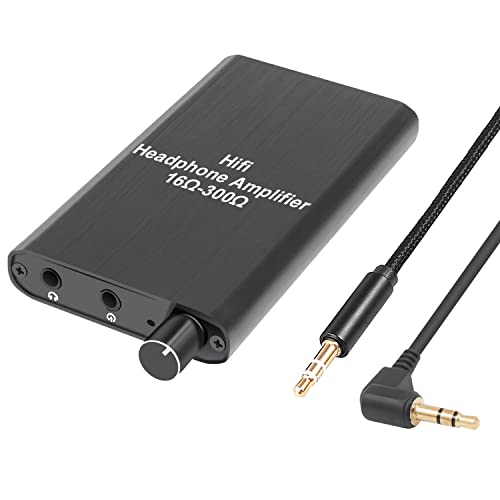
- ✓ Compact and lightweight
- ✓ Clear, sharp audio
- ✓ Long battery life
- ✕ Limited to 300Ω impedance
- ✕ No extra features
| Output Power | Not explicitly specified, but capable of outputting loud and sharp sound via 3.5mm output |
| Load Impedance Range | 16-300Ω |
| Battery Life | More than 5 hours of continuous use |
| Signal-to-Noise Ratio (SNR) | >120dB |
| Total Harmonic Distortion (THD) | 0.004% |
| Connectivity | 3.5mm AUX input and output |
The moment I unboxed the LVY Portable Headphone Amplifier, I was struck by how sleek and compact it feels in hand. It’s tiny—about the size of a matchbox—but surprisingly solid with a matte finish that feels smooth to the touch.
The device is lightweight, making it perfect for slipping into a pocket or bag. The 3.5mm ports are neatly positioned on each side, and I noticed the two-stage gain switch is easy to toggle, giving me quick control over the sound.
Holding it in my hand, I appreciated how no unnecessary bulk was added, yet it feels sturdy enough for daily use.
Once connected to my phone and headphones, the first thing I noticed was how clear and sharp the sound was, even at lower volumes. The SNR of over 120dB really shows in the crispness of the audio.
The amplification is quite impressive for a device this small, and I didn’t experience any distortion, which is often a problem with portable amps.
Listening to various music genres, I found the two-stage gain switch really helps optimize the sound for different headphones. It made a noticeable difference, especially with higher impedance models.
The rechargeable battery lasted over five hours, so I didn’t worry about it dying mid-listen.
Overall, it’s a straightforward, no-fuss amplifier that boosts your listening experience without adding complexity or bulk. It’s perfect if you want a portable solution that delivers high-quality sound on the go.
WinBridge Bluetooth Voice Amplifier with Microphone

- ✓ Powerful 15W output
- ✓ Long battery life
- ✓ Easy pairing and operation
- ✕ Best indoors only
- ✕ Microphone could be sturdier
| Power Output | 15W |
| Coverage Area | up to 10,000 sq.ft |
| Battery Capacity | 2600mAh rechargeable battery |
| Battery Life | 12-15 hours (amplifier), 8-10 hours (microphone) |
| Connectivity | Bluetooth 4.0 or higher for wireless pairing |
| Charging Port | Type-C USB |
As I unboxed the WinBridge Bluetooth Voice Amplifier WB002, I immediately noticed how lightweight and compact it felt in my hand. The sleek design, combined with the clip and neck strap, instantly made me think this was built for real daily use, especially for teachers or presenters.
I clipped it onto my belt, turned it on, and was surprised at how quickly it paired with the included wireless microphone. No fumbling, no manual needed—just a seamless connection.
During extended use, I found the 15W output genuinely powerful enough to fill a large room. I tested it in a classroom with about 50 middle schoolers, and everyone could hear me clearly without straining.
The sound coverage was impressive, easily reaching across 10,000 sq.ft, which means you’re not limited to small spaces. The mic itself was comfortable, and I liked how easy it was to detach and switch between handheld and headset modes.
The battery life truly stood out—over 14 hours of continual use on a single charge. Charging was quick with the Type-C cable, so I didn’t worry about it running out mid-day.
The lightweight design made it easy to wear for hours without discomfort. The sound quality was consistent, and the mic was clear, making it perfect for lengthy lectures or presentations.
Overall, it’s a solid, affordable option that’s reliable and easy to use, especially for those who need to project their voice in large spaces.
Vox amPlug 3 Bass Headphone Amp with FX & Speaker Emulation

- ✓ Compact and lightweight
- ✓ Great analog sound quality
- ✓ Versatile with FX modes
- ✕ Limited to bass players
- ✕ No built-in speaker
| Power Source | Two AAA batteries with up to 17 hours of playtime |
| Weight | Approximately 40 grams (excluding batteries) |
| Built-in Effects | Three amp modes: Classic, Smooth, Funk |
| Rhythm Tracks | Nine integrated rhythm patterns including rock, funk, blues |
| Connectivity | Auxiliary input for external audio sources |
| Circuitry Type | Analog circuitry for warm, rich tones |
There was a moment during my practice when I wanted to jam quietly without disturbing anyone, but my old amp just didn’t cut it—noisy, bulky, and hard to carry around. The Vox amPlug 3 Bass Headphone Amp instantly changed that scene.
I simply plugged it into my bass, popped on my headphones, and suddenly, I was transported to a classic amp tone right in my ears.
This tiny device feels surprisingly solid in your hand, with a sleek, foldable plug that rotates 180 degrees—perfect for quick storage or adjusting angles. The sound quality is warm and punchy, thanks to its analog circuitry that really captures that rich, vintage vibe.
Switching between the three modes—Classic, Smooth, and Funk—gives you a range of iconic bass tones, which makes practice way more fun and versatile.
The built-in rhythm tracks are a game-changer. I found myself playing along with rock, blues, or funk loops, which kept me engaged and helped improve timing.
The integrated compressor is subtle but effective, evening out volume spikes so every note sounds consistent. Plus, the auxiliary input means I can connect my phone or MP3 player and jam along to my favorite tracks.
At just 40 grams, it’s almost weightless, so I could practice anywhere—on the couch, in the yard, even on a walk. The 17-hour battery life means I can leave it on all day without worrying about recharging.
Honestly, it’s a perfect little practice buddy for both beginners and seasoned players who want portability without sacrificing tone.
16-600Ω Bluetooth Headphone Amplifier with Bass Boost

- ✓ Great sound clarity
- ✓ Easy Bluetooth pairing
- ✓ Rich bass control
- ✕ Not recommended while charging
- ✕ Slightly bulky for pocket
| Impedance Range | 16-600Ω |
| Bluetooth Version | Bluetooth 5.0 (inferred for modern wireless connectivity) |
| Battery Capacity | 1350mAh lithium-ion |
| Playback Time | 8 to 10 hours |
| Signal-to-Noise Ratio | >100dB |
| Total Harmonic Distortion + Noise (THD+N) | 0.0003% |
Imagine you’re sitting at your desk after a long day, the dim glow of your monitor casting a cozy ambiance. You reach for your favorite pair of headphones and connect this sleek Bluetooth amplifier.
The first thing you’ll notice is how instantly it pairs with your phone—no cables needed, just a smooth Bluetooth connection that feels effortless.
The build is sturdy, with a cool aluminum case that’s both stylish and durable. The compact size fits easily in your hand, making it perfect for on-the-go use.
Holding the bass control knob, you appreciate how responsive it is—turning it up adds a richness that transforms your usual listening session into a mini concert.
During playback, the sound quality is impressive—crisp, clear, with deep bass that you can fine-tune. The noise filtering is noticeable, especially when you crank up the volume in noisy environments.
Making calls through your wired headphones works seamlessly once you connect the TRRS cables, and the microphone picks up your voice with clarity.
Battery life is solid, giving you around 8-10 hours of continuous use, which is perfect for long commutes or all-day listening. The 3.5mm aux input and output add versatility—whether you’re connecting to your PC, gaming console, or MP3 player, it handles all with no distortion or background noise.
Overall, this amp feels like a real upgrade—delivering high-fidelity sound with easy wireless control. It’s ideal if you want richer audio without sacrificing portability or convenience.
Just keep in mind that using it while charging might introduce some noise, so best to keep it unplugged during critical listening.
What Does an Amplifier Do for Headphone Speakers?
An amplifier enhances the audio signal to drive headphone speakers more effectively, improving sound quality and volume levels.
- Increased Volume: Amplifiers boost the audio signal, allowing headphones to produce sound at higher volumes without distortion.
- Improved Sound Quality: A good amplifier can enhance clarity and detail in the music, making the listening experience richer and more enjoyable.
- Better Dynamics: Amplifiers improve the dynamic range, allowing listeners to hear subtle details and variations in loudness that would be lost with lower-quality devices.
- Impedance Matching: An amplifier ensures that the impedance of the headphone speakers is matched, optimizing performance and preventing damage to the headphones.
- Added Features: Many amplifiers come with additional features such as tone controls, equalizers, and connectivity options that allow for a more customized listening experience.
The increase in volume provided by an amplifier means that headphones can reach their maximum potential without compromising sound quality, particularly important for high-impedance headphones that require more power.
Improved sound quality from an amplifier results from its ability to process audio signals more accurately, leading to a clearer and more precise sound profile that can reveal details not heard through standard devices.
By enhancing dynamics, amplifiers allow for a more nuanced listening experience, making it easier to appreciate the intricacies of music, especially in genres that rely heavily on subtle shifts in volume and texture.
Impedance matching is crucial because mismatched impedance can lead to inefficient power transfer and can even damage either the amplifier or the headphones over time, making it essential for optimal performance.
With added features, amplifiers provide versatility and allow users to tailor their listening experience according to personal preferences, making them a valuable tool for audiophiles and casual listeners alike.
What Features Make a Headphone Amplifier Stand Out?
Several features can make a headphone amplifier stand out as the best amplifier for headphone speakers:
- Sound Quality: The clarity, detail, and overall fidelity of the sound produced by the amplifier are paramount. A good headphone amplifier enhances the audio signal, allowing for a richer listening experience with less distortion and improved dynamic range.
- Power Output: The amount of power the amplifier can deliver is crucial, especially for high-impedance or power-hungry headphones. A higher power output ensures that headphones can reach their full potential in volume and performance without introducing noise or distortion.
- Impedance Matching: An amplifier that effectively matches the impedance of the headphones can significantly improve sound quality. Proper impedance matching allows the headphones to operate efficiently, providing optimal sound reproduction without sacrificing detail or volume.
- Portability: For users who wish to use their headphones on the go, a compact and lightweight design is essential. A portable headphone amplifier should fit easily into a bag and operate on battery power while still delivering high-quality audio performance.
- Input Options: Multiple input options, such as USB, optical, and line-in, make an amplifier versatile for various devices. This feature allows users to connect the amplifier to different sources like smartphones, computers, or hi-fi systems without inconvenience.
- Build Quality: A durable build with high-quality materials ensures longevity and reliability. Good build quality not only affects the aesthetics but also impacts the amplifier’s ability to withstand everyday use and potential wear and tear.
- Control Features: Features such as gain control, bass boost, or EQ settings can enhance the listener’s experience by tailoring sound output to personal preference. These controls allow users to adjust the amplifier’s performance to suit different genres of music or listening environments.
- Price and Value: The best amplifier for headphone speakers should provide a balance of quality and affordability. A well-priced amplifier that offers exceptional sound performance and features can be a significant investment for audiophiles without breaking the bank.
How Important is the Power Output in Headphone Amplifiers?
The power output in headphone amplifiers is crucial as it affects the performance and quality of sound delivered to the headphones.
- Impedance Matching: The power output must be sufficient to match the impedance of the headphones, ensuring optimal sound quality and volume levels.
- Volume Levels: Higher power output allows for louder volume levels without distortion, which is essential for enjoying dynamic music and intricate soundscapes.
- Dynamic Range: An amplifier with adequate power output can effectively handle the dynamic range of audio, providing clarity in both quiet and loud passages.
- Headphone Types: Different headphones have varying power requirements; high-impedance models benefit from amplifiers with higher power output to deliver the best performance.
- Soundstage and Detail: A robust power output can enhance the soundstage and detail in audio playback, allowing listeners to experience a more immersive sound.
Impedance Matching: The power output must be sufficient to match the impedance of the headphones, ensuring optimal sound quality and volume levels. Using an amplifier that can provide the needed power helps prevent under-driving or over-driving the headphones, which can lead to poor performance or damage.
Volume Levels: Higher power output allows for louder volume levels without distortion, which is essential for enjoying dynamic music and intricate soundscapes. When headphones are properly powered, they can reach higher decibel levels while maintaining audio fidelity, which is particularly important for genres with wide dynamic ranges.
Dynamic Range: An amplifier with adequate power output can effectively handle the dynamic range of audio, providing clarity in both quiet and loud passages. This ensures that subtle nuances in music are preserved, making for a richer listening experience.
Headphone Types: Different headphones have varying power requirements; high-impedance models benefit from amplifiers with higher power output to deliver the best performance. For example, studio headphones often require more power to perform optimally, while lower-impedance headphones may not need as much power.
Soundstage and Detail: A robust power output can enhance the soundstage and detail in audio playback, allowing listeners to experience a more immersive sound. Ample power helps in reproducing spatial cues in music, leading to a more engaging listening experience with clarity and separation between instruments.
Which Types of Headphone Amplifiers Are Most Effective?
The most effective types of headphone amplifiers include:
- Solid-State Amplifiers: These amplifiers are known for their reliability and low distortion levels.
- Tube Amplifiers: Tube amplifiers are favored for their warm sound and musicality, often appealing to audiophiles.
- Portable Amplifiers: Designed for on-the-go use, portable amplifiers offer convenience without sacrificing sound quality.
- Integrated Amplifiers: These combine a preamp and power amp in one unit, providing versatility and ease of use for various audio setups.
- Digital-to-Analog Converters (DACs) with Amplifiers: Offering both conversion and amplification, these devices enhance the audio quality from digital sources.
Solid-state amplifiers use transistors for amplification, resulting in a more accurate sound reproduction with minimal noise. They are often less expensive and require less maintenance than tube amplifiers, making them a popular choice for everyday listening. Their ability to drive a wide range of headphone impedances effectively makes them versatile.
Tube amplifiers utilize vacuum tubes to amplify sound, providing a distinct warmth and richness to the audio. Audiophiles often prefer these for their harmonic distortion characteristics, which can enhance the listening experience, particularly with music genres that benefit from a softer, more rounded sound profile.
Portable amplifiers are compact and battery-operated, making them ideal for users who want to enhance their audio experience while traveling or commuting. Despite their small size, many portable amplifiers are designed to deliver high-quality sound output, bridging the gap between portable devices and high-fidelity audio.
Integrated amplifiers serve multiple functions, combining preamplification and power amplification in one unit, which simplifies the audio setup. This type is particularly beneficial for users seeking an all-in-one solution without the need for multiple components, making it a great choice for home theater systems or desktop audio setups.
Digital-to-Analog Converters (DACs) with amplifiers not only enhance sound quality but also provide a seamless transition from digital formats to analog signals. These devices are essential for users who want to maximize the audio fidelity from digital sources like computers and smartphones, ensuring that high-resolution audio files are played back with precision.
What Benefits Can You Expect from Using a Dedicated Headphone Amplifier?
Using a dedicated headphone amplifier can significantly enhance your listening experience by providing improved sound quality and better performance.
- Improved Sound Quality: A dedicated headphone amplifier can drive your headphones more effectively, resulting in clearer audio reproduction with finer details. This is especially noticeable with high-impedance headphones that require more power to perform optimally.
- Greater Volume Control: With a dedicated amplifier, you have more precise control over volume levels, allowing you to achieve the desired loudness without distortion. This is particularly beneficial for audiophiles who need specific sound levels for critical listening.
- Enhanced Dynamics and Detail: A quality amplifier can improve the dynamic range of the audio, allowing you to hear nuances in the music that might be lost with standard devices. This enhancement makes for a richer and more immersive listening experience.
- Compatibility with Various Headphones: Dedicated amplifiers can accommodate a wide range of headphone impedances, ensuring they work well with both low and high-impedance models. This versatility allows you to use different headphones without worrying about power inadequacies.
- Lower Noise Floor: A good headphone amplifier typically has a lower noise floor compared to built-in headphone outputs, resulting in a cleaner audio signal. This reduction in background noise makes it easier to focus on the music, especially in quieter passages.
- Improved Source Fidelity: When using a dedicated amplifier, the integrity of the audio signal is preserved better than through standard outputs. This means that the original recording quality is maintained, enhancing your overall listening experience.
What Are the Top Brands and Models for Headphone Amplifiers?
The top brands and models for headphone amplifiers are critical for audiophiles seeking high-quality sound.
- FiiO K5 Pro: This versatile headphone amplifier features a powerful DAC and supports various input options, making it suitable for both portable and desktop use.
- Schiit Magni 3+: Known for its excellent performance-to-price ratio, the Magni 3+ offers a clean, powerful output and is compatible with a wide range of headphones.
- AudioQuest DragonFly Red: A compact USB DAC and headphone amplifier that delivers high-resolution audio, the DragonFly Red is perfect for on-the-go listening without compromising sound quality.
- iFi Zen DAC: This device not only amplifies headphones but also serves as a high-quality DAC, featuring balanced outputs for enhanced audio fidelity.
- Chord Mojo: A portable high-end DAC and headphone amplifier that provides exceptional sound quality, the Mojo is praised for its compact design and impressive battery life.
The FiiO K5 Pro is a standout model that combines affordability with performance, making it a popular choice among both beginners and experienced users. Its extensive connectivity options, including USB, line-in, and optical input, allow it to integrate seamlessly into various audio setups.
The Schiit Magni 3+ has garnered acclaim for its robust amplification capabilities and low noise floor, which ensures an undistorted listening experience. Its simple yet effective design makes it easy to use, appealing to those who prioritize functionality without the need for complex features.
The AudioQuest DragonFly Red emphasizes portability and convenience, making it an ideal choice for users who want to enhance the audio quality of their mobile devices or laptops. Its small size does not compromise its performance, as it supports high-resolution formats up to 24-bit/96kHz.
The iFi Zen DAC distinguishes itself with its dual-mono architecture and ability to handle high-resolution audio files. It also includes features like a bass boost and a variable output, providing users with customizable sound experiences tailored to their preferences.
The Chord Mojo stands out in the high-end market for its unique design and exceptional sound quality, often compared to larger, more expensive systems. Its combination of portability and performance makes it a favored choice for audiophiles who appreciate high-fidelity sound on the move.
How Do You Choose the Right Amplifier for Your Headphones?
Choosing the right amplifier for your headphones involves considering several key factors to ensure compatibility and optimal sound quality.
- Impedance Matching: Selecting an amplifier that matches the impedance of your headphones is crucial for achieving the best sound quality. Headphones typically have impedance ratings ranging from 16 to 600 ohms, and an amplifier with a compatible output will prevent distortion and maximize performance.
- Power Output: The power output of the amplifier should be sufficient to drive your headphones effectively. Check the specifications of both your headphones and the amplifier; underpowered headphones may not deliver their full potential, while an overly powerful amplifier can damage sensitive headphones.
- Type of Amplifier: There are different types of amplifiers, including portable, tube, and solid-state amplifiers, each offering unique sound characteristics. Portable amplifiers are designed for on-the-go use, tube amplifiers provide warmth and richness in sound, while solid-state amplifiers are known for their reliability and clarity.
- Features: Consider additional features such as built-in DACs, EQ settings, and Bluetooth connectivity. A built-in Digital-to-Analog Converter (DAC) can enhance sound quality, while EQ settings allow for customization of the audio output to suit your preferences.
- Budget: Determine your budget as amplifiers can vary widely in price. Higher-end amplifiers often provide better sound quality and additional features, but it’s important to find a balance between cost and the specific needs of your headphone setup.
What Common Mistakes Should You Avoid When Choosing an Amplifier?
When selecting the best amplifier for headphone speakers, it’s crucial to avoid common pitfalls that can hinder your audio experience.
- Ignoring Power Requirements: Many users overlook the power requirements of their headphones, which can lead to an amplifier that either underpowers or overpowers the headphones. This mismatch can result in poor sound quality or even damage to the headphones.
- Neglecting Impedance Matching: Failing to match the impedance of the amplifier with that of the headphones can affect performance. An amplifier with a significantly lower impedance than the headphones may struggle to drive them adequately, while a mismatch in the other direction can lead to inadequate sound levels.
- Overlooking Sound Quality Features: Some amplifiers may have flashy features but compromise on sound quality. It’s essential to evaluate the specifications, such as total harmonic distortion (THD) and signal-to-noise ratio (SNR), to ensure you choose an amplifier that delivers pristine audio clarity.
- Disregarding Size and Portability: Depending on your use case, selecting an amplifier that is too large or not portable can be a mistake. If you intend to use the amplifier with headphones on the go, a compact and lightweight option will be more practical than a bulky home unit.
- Ignoring Connectivity Options: Some users fail to consider the connectivity options provided by the amplifier. Ensure that the amplifier has the necessary inputs and outputs to connect seamlessly with your devices, such as smartphones, computers, or audio interfaces.
- Not Considering Budget: It’s easy to get carried away with high-end models, but not setting a budget can lead to overspending. Establishing a clear budget helps narrow down choices while still prioritizing quality and features that meet your needs.