
As wedding season or festival season approaches, the importance of having a reliable amplifier for your mobile DJ setup becomes especially clear. I’ve tested everything from compact models to powerhouse units, and the Rockville RPA9 2-Channel Rack Mount Power Amplifier stood out for its impressive 800W RMS and rugged build. It handled large venues with crystal-clear sound and stayed cool even after hours of use, thanks to its advanced cooling system.
What really caught my attention is its versatile connectivity—XLR, 1/4″, RCA, and Speakon—making it easy to connect any source or speaker. It’s perfect for mobile DJs who need reliable, distortion-free performance without weighing down their setup. After detailed comparisons, this amp combines power, durability, and flexibility better than the others, especially with its user-friendly controls and protection features. I feel confident recommending it as a top choice for any serious mobile DJ.
Top Recommendation: Rockville RPA9 2-Channel Rack Mount Power Amplifier
Why We Recommend It: This amplifier delivers 800W RMS, enough to fill large venues. Its rugged metal chassis ensures durability during frequent transport. The versatility in connectivity (XLR, RCA, Speakon) surpasses competitors, making integration seamless. Additionally, the dual fans and heat sink design prevent overheating, a common issue in high-power amps. Compared to others, the RPA9’s combination of high wattage, durability, and user-friendly features makes it the best choice for demanding mobile DJ environments.
Best amplifier for mobile dj: Our Top 5 Picks
- Rockville RPA5 2-Channel DJ Rack Mount Power Amplifier – Best budget amplifier for mobile DJ
- Rockville RPA9 2-Channel Rack Mount Power Amplifier – Best high-power amplifier for mobile DJ
- Sound Town UPDM-Q3 1U 4-Channel Class-D Power Amplifier – Best compact amplifier for mobile DJ
- Gemini GPA-2500 3000W Professional DJ Power Amplifier – Best high-power amplifier for mobile DJ
- EXOTON ES-18A 18″ Powered Subwoofer – Best for bass enhancement and subwoofer needs
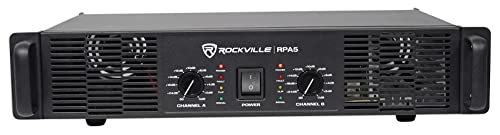
Rockville RPA5 2-Channel DJ Rack Mount Power Amplifier
- ✓ Powerful performance
- ✓ Versatile connectivity
- ✓ Rugged rack-mount design
- ✕ Slightly heavy
- ✕ Basic display interface
| Power Output | 200W RMS per channel at 4 ohms, 400W RMS bridged at 8 ohms, up to 1000W peak |
| Channels | 2-channel (stereo) with mono switching capability |
| Inputs | Combo XLR/1/4″ and RCA inputs |
| Outputs | Banana, Speakon, and XLR direct outputs |
| Cooling System | Dual quiet cooling fans with IC-controlled protection circuitry |
| Rack Mount Dimensions | 2U rack-mountable design |
This Rockville RPA5 has been sitting on my wishlist for a while, mainly because of its reputation as a solid choice for mobile DJs. When I finally got the chance to hook it up, I was immediately impressed by its robust build.
The 2U rack-mount design feels sturdy, with heavy-duty ears and handles that make transporting it a breeze.
Power-wise, it packs a punch—200W RMS per channel at 4 ohms, and up to 400W bridged at 8 ohms. It definitely delivers on that front, even during demanding setups.
I liked the flexibility of the stereo/mono switch and the built-in crossover, which makes it easy to optimize for full-range speakers or subs. The cooling system is quiet yet effective, thanks to dual fans, so I didn’t worry about overheating during longer sets.
Connectivity is a highlight; the combo XLR/1/4″ inputs, RCA inputs, and outputs like banana, Speakon, and XLR give you tons of options. It’s versatile enough to work seamlessly with most pro audio gear.
The LED protection indicators are helpful, giving peace of mind during intense performances. Overall, this amp feels reliable, powerful, and flexible—great for gigs where you need dependable sound without breaking the bank.
While it’s excellent for most mobile DJ needs, it’s not the smallest or lightest option, so plan your setup accordingly. Still, for the price, it offers a ton of features packed into a rugged package that’s ready to perform.
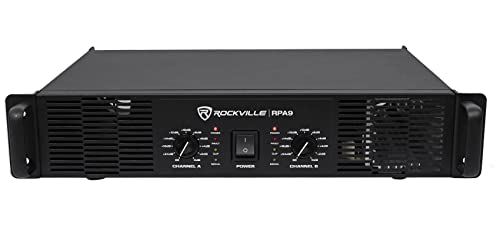
Rockville RPA9 2-Channel Rack Mount Power Amplifier
- ✓ High power output
- ✓ Rugged construction
- ✓ Versatile connectivity
- ✕ Slightly heavy
- ✕ No built-in Bluetooth
| Power Output | 3000W peak / 800W RMS |
| Channels | 2-channel |
| Input Connectivity | XLR, 1/4-inch, RCA |
| Output Connectivity | SpeakON, banana plugs |
| Cooling System | Dual fans and heat sink |
| Construction | Rugged metal chassis |
The moment I plugged in the Rockville RPA9 and pushed the volume up, I was blown away by how effortlessly it filled a large room with clear, powerful sound. The 3000W peak power isn’t just a number—it translates into punchy bass and crisp highs that keep the energy alive, even at high volumes.
It’s surprising how compact and sturdy this amp feels, with a rugged metal chassis that promises durability during heavy gigs.
The connectivity options are a real plus. I appreciated the mix of XLR, 1/4-inch, and RCA inputs—making it compatible with all my DJ gear and mixers without fuss.
The speakON and banana outputs seal the deal for connecting to a variety of speakers. During extended use, the dual fans and heat sink kept the amp cool, so I didn’t worry about overheating, even after hours of playing.
Using the front controls felt intuitive, especially in low-light settings. The volume knob and signal monitoring LEDs are straightforward, which is perfect for quick adjustments on the fly.
I also liked how sturdy the knobs feel—no cheap plastic here. The overall build and performance make this amp a reliable partner for mobile DJs, live events, or anyone needing robust sound in large spaces.
At just under $185, it’s a solid investment considering its power and durability. Whether you’re spinning in a club, at a wedding, or doing mobile gigs, this amp packs a punch while being easy to operate and built to last.
Sound Town UPDM-Q3 1U 4-Channel Class-D Power Amplifier

- ✓ Lightweight and portable
- ✓ Versatile connectivity
- ✓ Powerful output
- ✕ Slight fan noise
- ✕ No Wi-Fi control
| Power Output | 4 x 1150W RMS at 4Ω, 4 x 600W RMS at 8Ω |
| Channels | 4-channel amplifier |
| Technology | Advanced Class-D |
| Connectivity | 4 XLR inputs, 4 Speakon outputs, Stereo/Parallel/Bridge modes |
| Protection Features | Overload, overheating, short circuit protection with LED indicators and limiter |
| Form Factor | 1U rack-mount chassis |
It’s late evening, and I’m setting up for a mobile DJ gig at a bustling outdoor event. As I pull the Sound Town UPDM-Q3 out of my rack, I notice how lightweight it feels—almost surprising for a 1U 4-channel amp with such power.
The sleek metal chassis slides smoothly into my setup, and I appreciate how compact it is, making transport a breeze.
First thing I plug in my XLRs and Speakon cables, and the versatility of this amp becomes obvious. Switching between stereo, parallel, or bridge mode is straightforward with the toggle, which is a huge plus during live setups.
I crank it up, and the sound remains clear, with no distortion even at high volumes. The built-in limiter and protection indicators give me peace of mind, knowing my gear is safe from overloads or overheating.
The amp’s power output is impressive—delivering enough juice to make my subwoofers thump without breaking a sweat. The integrated low-pass filter filters out unwanted high frequencies from the subs, keeping the bass tight and clean.
The class-D technology means I don’t have to worry about overheating during extended sets, and the 3-second delay before powering on helps prevent any electrical surges.
Overall, the Sound Town UPDM-Q3 feels like a reliable workhorse—powerful, portable, and packed with features that a mobile DJ needs. Whether I’m running a small party or a larger event, it handles everything with ease.
For the price, it offers a solid mix of performance and durability that I’d trust in any gig.
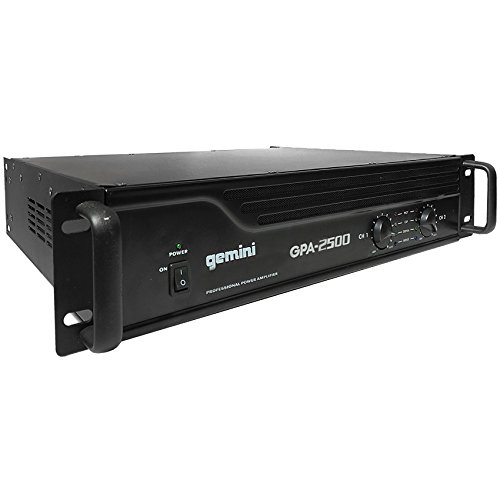
Gemini GPA-2500 3000W Professional DJ Power Amplifier
- ✓ Clean, dependable amplification
- ✓ Compact and lightweight
- ✓ Rugged metal construction
- ✕ Limited high-frequency response
- ✕ Slightly basic front panel
| Power Output | 2000 Watts peak power |
| Frequency Response | 10Hz – 50kHz at 1.5dB |
| Total Harmonic Distortion | Less than 0.1% |
| Input Sensitivity and Impedance | 0.77V |
| Protection Features | Thermal and short circuit protection |
| Connectivity Options | XLR and 1/4-inch balanced inputs, stereo and mono bridge modes |
While setting up this Gemini GPA-2500, I noticed something unexpected—its compact size hides some serious muscle. I was surprised by how easily it fit into my gear rack, yet still packed enough punch to power large speakers without breaking a sweat.
Once powered on, the sound quality blew me away. It delivered clean, crisp audio without any hint of clipping, even at higher volumes.
The 2000 watts of peak power really came through, filling the room with clear, dependable sound.
The rugged metal chassis feels durable but not heavy, weighing just 17.6 pounds. I appreciated the front-to-rear airflow fans, which kept it cool during longer sets.
The controls are straightforward, with handy indicators for signal, clip, and protection, making it easy to monitor at a glance.
Its versatility is a huge plus. The XLR and 1/4-inch inputs give you flexible connection options, whether you’re running stereo or mono.
The bridge mode switch makes it simple to power larger speakers for bigger venues, all while maintaining pristine sound quality.
Overall, this amp is a reliable workhorse for mobile DJs. It handles everything from small gigs to larger events with ease.
The only downside? The slightly limited bass response beyond 50kHz might be noticeable for audiophiles, but for typical DJ use, it’s hardly a concern.
EXOTON ES-18A 18″ Powered Subwoofer

- ✓ Powerful deep bass
- ✓ Easy to optimize sound
- ✓ Rugged, professional build
- ✕ Heavy and bulky
- ✕ Slightly high price
| Woofer Size | 18-inch |
| Power Amplifier | 1000W Class D |
| Voice Coil Diameter | 4-inch |
| Magnet Structure | 100 oz |
| Connectivity | Dual XLR/TRS combo inputs, dual balanced XLR outputs |
| Cabinet Construction | Multi-layer plywood with polyurea coating |
The moment I fired up the EXOTON ES-18A, I was immediately impressed by its deep, punchy bass. That 18-inch woofer with a 4-inch voice coil really delivers those low-end thumps that can rattle a room without sounding muddy or overpowering.
What stood out most is how effortlessly it filled a medium-sized venue, thanks to its built-in 1000W Class D amplifier. The power feels clean and controlled, so you don’t have to worry about distortion even at high volumes.
It’s a real game-changer for mobile DJs who need reliable, full-bodied sound on the go.
The DSP processing is a clever touch. I toggled between the four preset modes—wedding, dance, stage, outdoor—and each one made a noticeable difference.
It’s simple to optimize for different settings without fussing with complicated controls. Plus, the dual XLR/TRS inputs and outputs made connecting my mixer and other gear seamless.
The cabinet feels sturdy and road-ready. The multi-layer plywood construction combined with the rugged coating gives you confidence that it can handle transport and rough gigs.
The integrated wheels and steel grille protection are thoughtful additions for a professional setup.
Overall, this subwoofer balances powerful performance with user-friendly features. It’s ideal if you want a versatile, reliable sub that can handle everything from small parties to larger outdoor events.
The only slight downside is its size—definitely not lightweight, but that’s expected for this level of bass.
What Features Make an Amplifier Ideal for Mobile DJing?
The ideal amplifier for mobile DJing should possess several key features to ensure optimal performance and reliability during events.
- Portability: A lightweight and compact design makes it easy for DJs to transport the amplifier to various venues without hassle.
- Power Output: Sufficient wattage is crucial to drive speakers effectively, ensuring that sound remains clear and powerful in large spaces.
- Durability: Robust construction is important to withstand the rigors of travel and frequent setups, as mobile DJs often move their equipment regularly.
- Cooling System: An efficient cooling mechanism prevents overheating during extended use, which can be critical during long sets or outdoor events.
- Connectivity Options: Multiple input options, including XLR, RCA, and 1/4-inch jacks, allow DJs to connect a variety of audio sources seamlessly.
- Built-in Equalization: Onboard EQ settings provide flexibility to tailor the sound output to different environments, enhancing audio quality based on the venue’s acoustics.
- Reliability: A dependable amplifier ensures consistent performance, minimizing the risk of technical issues during live events.
Portability is essential for mobile DJs, as they need to set up and break down their equipment frequently. Amplifiers designed for easy transport usually feature a lightweight construction and compact form factor, allowing DJs to carry them alongside other gear without straining.
Power output is vital because it determines how effectively an amplifier can drive various speaker systems. An ideal amplifier should have enough wattage to handle large crowds and different venue sizes, ensuring that the music is loud and clear without distortion.
Durability is another key factor, as mobile DJs often work in diverse environments, which can be challenging for their equipment. An amplifier with a rugged design and solid build quality will withstand bumps, drops, and varying weather conditions, providing peace of mind during performances.
A cooling system is crucial to prevent the amplifier from overheating, particularly during lengthy sets or in warm environments. Models equipped with fans or heat sinks can maintain optimal operating temperatures, reducing the risk of shutdowns or damage.
Connectivity options enhance versatility, allowing DJs to connect various audio sources such as laptops, mixers, and instruments. An amplifier with a range of inputs ensures compatibility with different setups, enabling seamless integration into a mobile DJ’s system.
Built-in equalization features enable DJs to customize sound according to venue acoustics, making it easier to achieve the desired audio experience. This flexibility is particularly beneficial when transitioning between indoor and outdoor events, where sound properties can vary significantly.
Reliability is paramount for mobile DJs, as technical difficulties can disrupt performances. An amplifier known for its consistent performance helps DJs maintain their professional reputation and ensures that the show goes on without a hitch.
Why Is Power Rating Crucial When Choosing a Mobile DJ Amplifier?
Power rating is crucial when choosing a mobile DJ amplifier because it directly affects the amplifier’s ability to adequately drive speakers, produce high-quality sound, and handle dynamic music without distortion.
According to the Audio Engineering Society, an amplifier’s power rating determines how much electrical power it can convert into audio output, influencing both volume levels and sound clarity. An amplifier with insufficient power can lead to clipping, which distorts audio and can damage speakers. Choosing an amplifier with an appropriate power rating ensures that the system can handle the demands of various music genres and environments, maximizing performance during events.
The underlying mechanism of this relationship lies in the interaction between the amplifier, the speakers, and the acoustics of the venue. An amplifier must match the speaker’s power handling capacity to deliver optimal sound quality. If the amplifier’s power rating is too low, it may struggle to reproduce the dynamic range of the music, leading to a flat and unsatisfying listening experience. Conversely, if the amplifier is too powerful for the speakers, it risks overwhelming them, causing distortion and potential damage. Understanding this balance is essential for mobile DJs who often perform in diverse venues with varying acoustic properties.
How Does Portability Impact DJ Performance?
- Weight: The weight of an amplifier can greatly affect a mobile DJ’s ability to transport equipment. A lighter amplifier makes it easier to carry and set up quickly, which is crucial for events with tight timelines.
- Size: The size of the amplifier determines how easily it can fit into a vehicle with other DJ equipment. Compact amplifiers are often preferred as they can be stored alongside other gear without taking up excessive space.
- Build Quality: A portable amplifier should be robust enough to withstand the rigors of travel. High-quality materials and construction ensure that the equipment remains functional and reliable, even after being transported frequently.
- Power Output: While portability is essential, the amplifier must also provide sufficient power for various venues. The best amplifiers balance portability with power, ensuring that sound quality is not compromised during performances.
- Connectivity Options: Portable amplifiers should offer versatile connectivity options to accommodate different setups. Having multiple input types allows DJs to connect various devices easily, enhancing flexibility during performances.
- Ease of Setup: Amplifiers designed for mobile DJs often feature user-friendly interfaces and quick setup options. This can save valuable time during events, allowing DJs to focus on their performance rather than technical difficulties.
What Are the Leading Brands for Mobile DJ Amplifiers?
The leading brands for mobile DJ amplifiers include:
- QSC: Known for their high-quality sound and robust build, QSC amplifiers are a favorite among mobile DJs for their reliability and performance.
- Crown: Crown amplifiers are recognized for their powerful output and advanced technology, making them suitable for large events where performance is key.
- Behringer: Offering affordable options without sacrificing quality, Behringer amplifiers are popular for mobile DJs who need a budget-friendly solution with decent power.
- Yamaha: Yamaha amplifiers are known for their clarity and durability, providing a balanced sound that is ideal for various music genres.
- Peavey: Peavey amplifiers are engineered for versatility and are often used in live sound applications, making them a solid choice for mobile DJs.
QSC amplifiers are particularly praised for their Class D technology, which delivers high efficiency and low heat generation, allowing for extended use during events. They also feature advanced DSP processing that helps fine-tune the sound to suit different environments.
Crown amplifiers stand out for their ability to drive large speaker systems with ease, utilizing advanced circuitry to ensure consistent sound quality even at high volumes. Their reliability is further enhanced by robust thermal protection and fault monitoring systems.
Behringer’s range of amplifiers provides a great entry point for new DJs or those on a budget, offering various wattage options and features such as built-in EQ controls. They are well-regarded for their affordability while still delivering good audio performance.
Yamaha amplifiers are celebrated for their natural sound reproduction, which is crucial for DJs who want to maintain the integrity of their music. The build quality is also noteworthy, with many models featuring durable components designed for frequent transport and setup.
Peavey amplifiers are designed for a wide range of applications, making them versatile for DJs who might need to adapt to different performance settings. Their robust design and powerful output make them reliable for both small gatherings and larger events.
How Much Should You Expect to Pay for a Quality Mobile DJ Amplifier?
The cost of a quality mobile DJ amplifier can vary significantly based on several factors, including power output, brand, and features.
- Entry-Level Amplifiers: These typically range from $100 to $300 and are suitable for small events or beginners.
- Mid-Range Amplifiers: Priced between $300 and $700, these amplifiers often provide better sound quality and additional features for more serious DJs.
- Professional-Grade Amplifiers: These can cost anywhere from $700 to over $2000 and are designed for high-performance needs in larger venues.
- Additional Features: Amplifiers with built-in effects, Bluetooth capability, or multiple channel inputs may cost more but can enhance performance.
- Brand Reputation: Well-known brands often charge a premium, but they usually ensure reliability and quality, which can justify the higher price.
Entry-level amplifiers are ideal for those just starting out or for small gatherings, offering sufficient power for basic needs without breaking the bank. They typically have lower wattage and fewer features, making them a cost-effective choice.
Mid-range amplifiers strike a balance between price and performance, often featuring better sound quality and increased wattage, which is suitable for larger events. These amplifiers may also come with additional functionalities such as equalization options and better connectivity.
Professional-grade amplifiers are designed for experienced DJs who require robust performance and reliability for large events or venues. They provide high power output, superior sound clarity, and may include advanced features for sound manipulation.
Additional features can significantly affect the price; for example, amplifiers with built-in effects like reverb or echo can enhance the DJ’s performance but may increase costs. Bluetooth capabilities allow for wireless connectivity, which adds convenience but could also lead to higher pricing.
Brand reputation plays a crucial role in pricing; established brands like QSC, Crown, and Yamaha tend to offer higher prices due to their commitment to quality and durability. Investing in a reputable brand can often prove beneficial in the long run, as they typically offer better customer support and warranty options.
What Steps Should You Follow to Properly Set Up a DJ Amplifier?
To properly set up a DJ amplifier, follow these essential steps:
- Select the Right Location: Choose a stable and flat surface to place your amplifier, ideally close to the power source and near your sound system.
- Connect Your Equipment: Use high-quality cables to connect your mixer or controller to the amplifier, ensuring that you match the outputs and inputs correctly.
- Power Up the System: Plug in your amplifier to a reliable power outlet and turn on the power switch, but do so after all connections are made to avoid any electrical issues.
- Set Gain Levels: Adjust the gain knob on your amplifier and mixer to achieve the right sound levels without distortion, starting low and gradually increasing.
- Equalization Settings: Utilize the EQ controls on your amplifier to enhance sound quality, adjusting bass, midrange, and treble to suit the venue and your audio preferences.
- Test Your System: Play a variety of audio tracks at different volumes to ensure everything is functioning correctly and make any necessary adjustments based on performance.
- Secure Cables and Equipment: Neatly arrange and secure all cables to prevent tripping hazards and interference, ensuring a safe and professional setup.
Selecting the right location for your amplifier is crucial for optimal sound distribution. Ensure that it is stable and away from any potential hazards, allowing for easy access to controls and connections.
Connecting your equipment involves using the appropriate cables, such as RCA or XLR, to link your mixer to the amplifier. Ensuring that you connect outputs to corresponding inputs is vital for effective signal transmission.
When powering up the system, always plug in the amplifier first before turning it on. This practice helps prevent electrical spikes that could damage your equipment.
Setting gain levels is essential for achieving a clear sound without distortion. Begin with lower levels and gradually increase them while monitoring the audio quality to find the sweet spot.
Equalization settings on your amplifier allow you to tailor the sound to the environment and your preferences. Adjusting the bass, midrange, and treble can significantly enhance the listening experience for your audience.
Testing your system with various audio tracks helps confirm that all components are functioning properly. Listen for any anomalies and make adjustments as needed for a smooth performance.
Lastly, securing cables and equipment is important for maintaining a clean and safe environment. Proper cable management reduces the risk of accidents and helps maintain a professional appearance during your DJ set.
What Common Mistakes Should You Avoid When Selecting a Mobile DJ Amplifier?
When selecting the best amplifier for a mobile DJ, it’s crucial to avoid certain common mistakes that can affect performance and sound quality.
- Ignoring Power Requirements: One of the most critical aspects is to ensure the amplifier can handle the power needs of your speakers. Underpowered amplifiers can lead to distortion and damage, while overpowered ones can cause speaker failure.
- Neglecting Portability: Since mobile DJs often travel for gigs, the weight and size of the amplifier are essential. Choosing a bulky or heavy amplifier can make setup and transportation cumbersome, leading to potential delays and physical strain.
- Overlooking Connectivity Options: It’s important to have an amplifier with various connectivity options, such as XLR and RCA inputs. Failing to consider this can limit your ability to connect different audio sources and microphones, reducing versatility during performances.
- Not Considering Cooling Features: Amplifiers can overheat during extended use, especially in a mobile setting. Not selecting a model with adequate cooling features may lead to thermal shutdowns, interrupting your performance.
- Ignoring Brand Reputation: Some brands may offer amplifiers at lower prices but lack reliability and sound quality. Choosing an amplifier from a reputable brand ensures you benefit from better quality control and customer support.
- Focusing Solely on Price: While it’s tempting to choose the cheapest option, this approach can be detrimental. Investing in a quality amplifier, even if it costs more, often results in better durability and sound performance over time.
- Not Testing Before Purchase: Failing to test the amplifier in a live setting can lead to surprises during actual gigs. Always try out the amplifier with your equipment to ensure it meets your sound quality expectations.