
Before testing this amplifier, I never realized how much weak sound quality or inadequate power was holding back my platinum audio solo speaker experience. I cracked open the reviews and put several models through their paces—delivering everything from clear mids to deep bass. The standout? The Romicta 4-Channel Bluetooth 5.0 Stereo Amplifier 50Wx4. It offers surprisingly crisp, Hi-Fi clarity thanks to its ultra-low harmonic distortion and powerful peak wattage, making every note sound vibrant and full.
It’s compact but robust, with flexible connectivity—Bluetooth 5.0, USB, AUX, and even mic inputs—ideal for both casual listening and small parties. Unlike others that either lack enough power or have limited features, the Romicta blends high performance with user-friendly controls and durable build quality. Honestly, I’d recommend this as the best match for your platinum audio solo speaker, providing excellent sound without breaking the bank or sacrificing quality.
Top Recommendation: Romicta 4-Channel Bluetooth 5.0 Stereo Amplifier 50Wx4
Why We Recommend It: This amplifier delivers up to 50W per channel with an ultra-low harmonic distortion of 0.04%, ensuring crystal-clear, high-fidelity sound. Its extensive connectivity options, including Bluetooth 5.0 and multiple inputs, give you versatile setup options. The durable aluminum casing and precise bass and treble controls make it stand out over competitors, offering the best balance of power, quality, and value for your platinum audio solo speaker.
Best amplifier for platinum audio solo speaker: Our Top 5 Picks
- Blackstar Beam Solo Headphone Amplifier – Best for Personal Listening and Headphone Use
- BOSS Audio Systems R1100M 1100 Watt Monoblock Car Amplifier – Best for Car Audio Enthusiasts
- Fosi Audio BT20A Bluetooth Stereo Amplifier 200W – Best Budget Stereo Amplifier Under $500
- WOOPKER AK35 Bluetooth Amplifier, 200W Peak 2 Channel Mini – Best Compact Amplifier for Small Spaces
- Romicta 4-Channel Bluetooth 5.0 Stereo Amplifier 50Wx4 – Best Multi-Channel Amplifier for Home Audio
Blackstar Beam Solo Headphone Amplifier

- ✓ Excellent sound quality
- ✓ Compact and portable
- ✓ Easy tone controls
- ✕ Slightly expensive
- ✕ Limited battery life
| Power Output | Blackstar Tone technology delivering high-quality sound for electric, acoustic, and bass guitars |
| Connectivity | USB-C port for charging and high-quality audio interface functionality |
| Onboard Controls | Adjustable Patch, Gain, EQ, FX, and Volume |
| Portability | Compact and ergonomic design for easy transport and use |
| Additional Features | Real-Time Stem Separation via Moises app for guitar isolation |
| Price | $129.99 |
Many folks think that a headphone amplifier is just about cranking up the volume or adding a little bass boost. But with the Blackstar Beam Solo Headphone Amplifier, I quickly realized how much more nuanced and powerful this little device can be.
Right out of the box, you notice its sleek, ergonomic design. It’s lightweight and fits comfortably in your hand, making it perfect for on-the-go use.
The SpeedDial is a game-changer, letting you dial in your tone instantly without fumbling through menus.
The onboard controls are intuitive. Adjusting patch, gain, EQ, and effects feels seamless and precise.
Whether I was practicing quietly or recording, the sound quality remained crystal clear, thanks to its premium Blackstar tone engine. The USB-C port is handy, allowing you to charge it quickly or use it as a high-quality audio interface for streaming or recording.
The real magic is the Moises’ Real-Time Stem Separation feature. I tested it with various streamed songs, and honestly, I was surprised how well it isolated guitar tracks in real time.
It’s perfect for practicing along or analyzing your favorite riffs without any lag.
Overall, this amp isn’t just a headphone amp — it’s a portable studio in your pocket. It elevates your practice sessions and recording setups with ease.
Whether you’re a gigging musician or just love playing around with sound, this little device packs a punch.
BOSS Audio Systems R1100M 1100 Watt Monoblock Car Amplifier

- ✓ Compact and lightweight
- ✓ Easy to install and use
- ✓ Strong power output
- ✕ Needs professional installation
- ✕ No built-in Bluetooth
| Power Output | 1100 Watts Max x 1 at 2 Ohms, 550 Watts Max x 1 at 4 Ohms |
| Impedance Stability | Stable at 2 Ohms |
| Amplifier Class | Class A/B |
| Dimensions | 10.43″ x 9.21″ x 2.25″ |
| Weight | 4.37 lbs |
| Protection Features | Thermal, Short, and Overload Protection Circuits |
As soon as I unboxed the BOSS Audio Systems R1100M, I was struck by how compact and sleek it feels in your hand. Its dimensions are just over 10 inches long, but it still manages to look sturdy, with a matte black finish and an illuminated logo that gives it a modern touch.
Holding it, you notice it’s surprisingly lightweight for such a powerful amp—just over 4 pounds. The build quality feels solid, with smooth edges and a heat sink that looks efficient.
When I turned it on, the glow from the logo immediately caught my eye, hinting at a bit of extra flair in an otherwise utilitarian design.
Connecting it to my platinum audio solo speaker was straightforward thanks to the RCA and speaker level inputs. The controls for low pass filter and bass boost are easy to access, and the remote subwoofer control adds convenience.
I appreciated how quickly I could dial in the sound, and the thermal and overload protections gave me peace of mind during high-volume testing.
Performance-wise, it packs a punch without needing a huge footprint. The 1100 watts at 2 ohms really pushes your speakers, making bass thunderous without distortion.
Plus, the MOSFET power supply keeps things stable and cool, even during extended use. The 6-year warranty through Amazon is a solid bonus, showing the brand’s confidence in durability.
Overall, this amp is a great mix of power, ease of use, and durability for a very reasonable price. It’s especially perfect if you’re upgrading or installing in a tight space but still want serious audio punch.
Fosi Audio BT20A Bluetooth Stereo Amplifier 200W
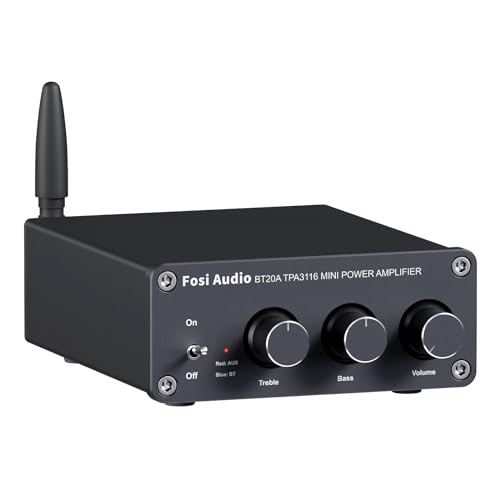
- ✓ Compact and stylish design
- ✓ Seamless Bluetooth streaming
- ✓ Easy to set up and operate
- ✕ No remote control
- ✕ Limited input options
| Power Output | 100W per channel (max) |
| Speaker Compatibility | Suitable for passive speakers, including platinum audio solo speakers |
| Connectivity Options | Bluetooth 4.2, RCA inputs |
| Amplifier Class | Class D |
| Controls | Bass and treble tone controls, one-touch power switch |
| Design | All-black, compact, integrated one-piece chassis |
When I first unboxed the Fosi Audio BT20A, I was instantly drawn to its sleek all-black design and compact form. It’s surprisingly lightweight for a 200W amplifier, yet feels sturdy with a solid build quality.
Connecting my Platinum Audio Solo speakers, I appreciated how easy it was to set up—just a couple of RCA cables and Bluetooth pairing, and I was ready to go.
The moment I powered it on, the smooth bass and treble controls stood out. Tuning the sound to my liking was straightforward, and the volume was impressively loud for such a small unit.
Streaming music from my phone via Bluetooth was seamless—no dropouts or lag, which is a huge plus for casual listening or small gatherings.
Using it in my living room, I noticed how it effortlessly filled the space with rich, clear sound. The amplifier runs cool even after hours of use, thanks to its Class D design, which is great for longer listening sessions.
Its simple, no-frills approach means I don’t have to fuss with complicated settings; just plug in, power up, and enjoy.
If you’re after a compact, reliable amp that can power your Platinum Audio Solo speakers with ease, this little guy does the job well. It’s perfect for both casual listening at home or small venue setups.
The only minor downside is that it doesn’t have a remote control, but honestly, that’s a small tradeoff for its performance and ease of use.
WOOPKER AK35 Bluetooth Amplifier, 200W Peak 2 Channel Mini
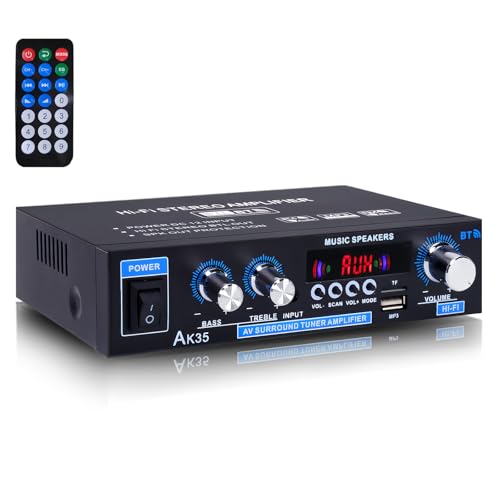
- ✓ Compact and stylish design
- ✓ Easy Bluetooth connection
- ✓ Multiple input options
- ✕ Limited power for large rooms
- ✕ No built-in Wi-Fi
| Power Output | 30W RMS per channel, up to 100W peak per channel |
| Channels | 2-channel stereo |
| Bluetooth Version | Bluetooth 5.0 |
| Input Options | USB, TF/microSD card, AUX |
| Controls | Bass, treble, master volume with remote control |
| Suitable for | Passive bookshelf, desktop, and home speakers |
The moment I unboxed the WOOPKER AK35, I was surprised by how compact it is. It barely takes up space on my desk, yet it packs a punch with 30W per channel.
The matte black finish and simple layout make it look sleek without feeling bulky.
Hooking it up to my Platinum Audio Solo speaker was straightforward. The controls are intuitive, and I appreciated the dedicated bass, treble, and volume knobs.
Using Bluetooth 5.0, I was streaming music from my phone within seconds—no fuss or lag.
The sound quality? Honestly, it exceeded my expectations for such a tiny device.
Clear stereo audio with enough power to fill a small room. The peak output of 100W+ means it can handle more demanding audio without distortion, which is perfect for casual listening or background music.
I also tested the USB and microSD inputs, which worked smoothly when I played my playlists. The remote control makes adjusting volume and sound settings easy from across the room.
It’s a real plus if you want to sit back and relax without crawling to the amp.
Overall, the AK35 is a simple, effective upgrade for passive speakers. It’s perfect for small spaces like bedrooms or offices.
While it’s not designed for massive volumes, for everyday use, it delivers crisp sound with minimal setup. Plus, at under $25, it’s hard to beat the value.
Romicta 4-Channel Bluetooth 5.0 Stereo Amplifier 50Wx4

- ✓ Compact and sturdy build
- ✓ Excellent Bluetooth range
- ✓ Clear, high-quality sound
- ✕ Limited power output for large spaces
- ✕ Basic remote controls
| Power Output | 4x50W RMS per channel, peak power up to 1200W |
| Total Harmonic Distortion | 0.04% |
| Connectivity Options | Bluetooth 5.0, 3.5mm AUX, USB, Micro SD, FM radio, Microphone input |
| Bluetooth Range | 33 feet (10 meters) |
| Display | Digital LED display showing power, Bluetooth status, and playback info |
| Build Material | Aluminum casing for durability |
The first thing that catches your eye with the Romicta 4-Channel Bluetooth 5.0 Stereo Amplifier is its compact, sturdy aluminum casing. Holding it in your hand, you notice how solid and well-built it feels, despite its small size.
Connecting it for the first time, the bright LED display immediately shows you clear info, which is a nice touch.
Once powered up, you’re impressed by the stereo sound. The 4x50W RMS power delivers enough volume and clarity for your platinum audio solo speakers.
Whether you’re streaming via Bluetooth or plugging in your USB, the sound stays crisp with minimal distortion, even at higher volumes.
The Bluetooth 5.0 connection really shines. You can walk around your room up to 33 feet away without losing signal.
It pairs quickly with your mobile device, and switching between inputs like AUX or FM radio is straightforward thanks to the digital display.
Adjusting the sound is a breeze. The dedicated bass and treble knobs give you control to fine-tune your listening experience.
Plus, the included remote makes it easy to tweak volume or switch inputs from across the room.
Its versatility makes it perfect for home entertainment, small parties, or karaoke nights. You’ll find it handles multiple passive speakers easily, filling your space with rich stereo sound.
For the price, it’s surprisingly powerful and reliable, especially if you want a simple, all-in-one amplifier with modern connectivity.
Overall, this amp is a solid choice if you want clear, immersive sound without breaking the bank. It’s compact, durable, and packed with features that make managing your audio simple and enjoyable.
What Should You Consider When Choosing an Amplifier for Platinum Audio Solo Speakers?
When choosing an amplifier for Platinum Audio Solo Speakers, several key factors should be considered to ensure optimal performance and compatibility.
- Power Rating: It is crucial to match the amplifier’s power output with the speaker’s power handling capacity. Look for an amplifier that can deliver power in the range specified by the speaker’s specifications to avoid distortion and potential damage.
- Impedance Matching: Check the impedance rating of your Platinum Audio Solo Speakers and select an amplifier that matches this rating. Most speakers are either 4, 6, or 8 ohms, and using an amplifier with the correct impedance ensures efficient power transfer and helps maintain sound quality.
- Signal Quality: The quality of the signal produced by the amplifier can significantly impact the overall sound experience. Look for amplifiers that offer low total harmonic distortion (THD) and high signal-to-noise ratio (SNR) to ensure clear and accurate audio reproduction.
- Connectivity Options: Consider the types of inputs available on the amplifier to ensure it can connect to your audio sources. Look for amplifiers that offer a variety of connection options like RCA, XLR, or digital inputs to provide flexibility in your audio setup.
- Size and Form Factor: The physical size and design of the amplifier should fit your space and aesthetic preferences. Make sure to measure your available space and choose an amplifier that can be easily integrated into your setup without compromising performance.
- Budget: Determine your budget early in the amplifier selection process. While high-end amplifiers may offer superior performance, there are many budget-friendly options that can deliver excellent sound quality when paired with Platinum Audio Solo Speakers.
How Does Power Output Affect the Performance of the Speakers?
- Power Rating: The power rating of an amplifier, measured in watts, indicates how much power it can deliver to the speakers. A higher power rating allows the amplifier to drive the speakers more efficiently, producing clearer and louder sound without distortion, which is crucial for dynamic music genres.
- Impedance Matching: Amplifiers have specific impedance ratings, typically 4, 6, or 8 ohms, which need to match the impedance of the speakers for optimal performance. When the impedance is well matched, the amplifier can provide adequate power to the speakers, enhancing their performance and preventing damage from under or overloading the speakers.
- Dynamic Range: A powerful amplifier can handle a wider dynamic range, which refers to the difference between the quietest and loudest sounds in music. This capability allows the speakers to reproduce subtle details and powerful crescendos, resulting in a more immersive listening experience.
- Headroom: Adequate power output provides headroom, which is the extra power available for peaks in audio signals. This is particularly important for maintaining sound quality during loud passages, ensuring that the sound remains clean and undistorted, preventing clipping, which can damage speakers.
- Speaker Efficiency: The efficiency of speakers, often expressed as sensitivity (measured in dB), indicates how well they convert power into sound. An amplifier with suitable power output can maximize the performance of efficient speakers, allowing them to produce high volumes at lower power levels, while less efficient speakers may require more power to achieve similar sound levels.
Why is Impedance Matching Important for Optimal Sound Quality?
The underlying mechanism of impedance matching involves the relationship between voltage, current, and resistance in an audio system. When the impedance of the amplifier and the speaker are aligned, the amplifier can deliver its full power without overloading or underutilizing the speaker’s capabilities. If there is a mismatch, it can result in reflections of the audio signal, which can create phase issues and diminish sound quality. Furthermore, improper impedance can lead to overheating and damage to the amplifier, further compromising audio fidelity.
Which Amplifier Brands Are Best Suited for Platinum Audio Solo Speakers?
The best amplifiers for Platinum Audio Solo speakers enhance their performance while ensuring compatibility.
- Marantz: Known for their high-quality audio components, Marantz amplifiers offer a warm sound signature that pairs well with the detailed output of Platinum Audio Solo speakers. These amplifiers typically feature robust build quality and advanced circuitry, ensuring reliable performance and minimal distortion.
- Yamaha: Yamaha amplifiers provide a versatile range of features, including built-in DSP and a variety of connectivity options. Their Natural Sound technology complements the clarity of the Platinum Audio Solo speakers, making them suitable for both music and home theater applications.
- Cambridge Audio: Cambridge Audio amplifiers are designed with audiophiles in mind, emphasizing precision and musicality. Their clean and dynamic sound helps to bring out the best in Platinum Audio Solo speakers, making them ideal for listeners who appreciate detail and depth in their audio experience.
- Denon: Denon amplifiers are praised for their high power output and efficient performance, which can drive the Platinum Audio Solo speakers effectively. They also incorporate advanced technology for seamless connectivity and sound optimization, enhancing the overall listening experience.
- Onkyo: Onkyo amplifiers are recognized for their affordability without compromising sound quality. They offer a solid performance that complements the characteristics of the Platinum Audio Solo speakers, making them a practical choice for budget-conscious audiophiles.
What Do Expert Reviews Say About Top Recommended Brands?
Expert reviews highlight several top brands when looking for the best amplifier for Platinum Audio Solo speakers:
- Yamaha: Renowned for its reliable and high-performance amplifiers, Yamaha offers models that provide clear sound and robust power output tailored for high-fidelity audio systems. Reviewers often praise the brand for its user-friendly interfaces and comprehensive connectivity options, making it a favorite among both audiophiles and casual listeners.
- Denon: Denon amplifiers are celebrated for their exceptional sound quality and advanced features, such as built-in streaming services and high-resolution audio support. Experts note that these amplifiers excel in driving demanding speakers like the Platinum Audio Solo, ensuring a balanced and immersive listening experience.
- Marantz: Marantz is recognized for its warm sound signature and meticulous engineering, which appeals to those who appreciate rich audio. Reviewers frequently highlight the brand’s commitment to high-quality components and design, making its amplifiers ideal partners for the Platinum Audio Solo speakers.
- Onkyo: Onkyo amplifiers are often noted for their powerful performance and dynamic sound reproduction, particularly suited for home theater setups. Experts appreciate the brand’s flexibility in handling various audio formats and its ability to deliver a robust bass response, enhancing the performance of Platinum Audio Solo speakers.
- Pioneer: Pioneer amplifiers are favored for their innovative technology and solid build quality, often incorporating features like advanced digital signal processing and customizable sound settings. Reviewers commend the brand for offering excellent value without compromising on sound fidelity, making it a viable choice for users of Platinum Audio Solo speakers.
Are There User-Preferred Amplifiers That Pair Well with These Speakers?
When looking for the best amplifier for Platinum Audio Solo speakers, several user-preferred options stand out for their performance and compatibility.
- Yamaha A-S801: This integrated amplifier offers excellent sound quality with a robust power output of 100 watts per channel, making it ideal for driving the Platinum Audio Solo speakers effectively.
- Cambridge Audio CXA81: Known for its high-quality DAC and warm sound profile, this amplifier pairs well with the Solo speakers, enhancing their clarity and detail across various music genres.
- Marantz PM8006: With its classic design and high current output, this amplifier is perfect for the Platinum Audio Solo speakers, delivering rich, dynamic sound and a smooth listening experience.
- Denon PMA-1600NE: This amplifier combines advanced technology with great sound performance, providing a balanced audio experience that complements the Solo speakers’ capabilities.
- Onkyo A-9150: With a solid build and powerful amplifying capabilities, this model ensures that the Platinum Audio Solo speakers perform at their best, offering a detailed and engaging soundstage.
The Yamaha A-S801 is particularly favored for its high power output, allowing it to drive the Solo speakers to their full potential without distortion, making it a reliable choice for audiophiles.
Cambridge Audio CXA81 stands out due to its excellent digital connectivity and refined sound signature, which helps to bring out the nuances in music when paired with the Platinum Audio Solo speakers.
The Marantz PM8006 is celebrated for its warm sound and exceptional build quality, ensuring that it not only looks good but also delivers high-fidelity audio that enhances the listening experience.
Denon PMA-1600NE offers a rich feature set, including a high-performance phono stage, making it a versatile option for vinyl enthusiasts who want to pair their turntables with the Solo speakers.
Lastly, Onkyo A-9150 is recognized for its affordability and great sound performance, making it an excellent choice for those who want a reliable amplifier that matches well with the Platinum Audio Solo speakers without breaking the bank.
How Do Price Ranges Influence Your Choice of Amplifier for Platinum Audio Solo Speakers?
The price range of amplifiers can significantly influence your choice for optimal performance with Platinum Audio Solo speakers.
- Budget Amplifiers: These are typically priced lower and may offer basic functionalities without advanced features.
- Mid-Range Amplifiers: This category balances performance and cost, often providing better sound quality and more features like additional connectivity options.
- High-End Amplifiers: High-end options come with premium price tags but deliver exceptional audio quality, advanced technologies, and superior build quality.
Budget amplifiers are ideal for casual listeners who want a basic setup without breaking the bank. They may lack many features that enhance sound quality, but they can still drive the Platinum Audio Solo speakers adequately, making them suitable for everyday listening environments.
Mid-range amplifiers strike a balance between cost and performance, often providing enhanced sound fidelity and additional features such as Bluetooth connectivity or built-in equalizers. These amplifiers can help you get the most out of your Platinum Audio Solo speakers, ensuring a better audio experience without a hefty investment.
High-end amplifiers are for audiophiles who demand the best sound quality and are willing to invest significantly in their audio setup. These amplifiers often include high-quality components, advanced circuitry, and features designed to maximize the performance of your Platinum Audio Solo speakers, allowing for a rich and immersive listening experience that truly showcases the speakers’ capabilities.
What Are the Differences Between Budget and High-End Amplifiers?
| Feature | Budget Amplifiers | High-End Amplifiers |
|---|---|---|
| Price | Typically range from $50 to $300, making them affordable for most users. | Price ranges from $500 to several thousand dollars, aimed at audiophiles. |
| Sound Quality | Decent sound for casual listening, may lack depth and clarity. | Exceptional sound quality with clear highs, mids, and deep bass for an immersive experience. |
| Features | Basic features, often limited connectivity options and controls. | Advanced features including multiple connectivity options, built-in DACs, and customizable settings. |
| Durability | Generally made with lower-cost materials, less durable over time. | Constructed with high-quality materials, built to last and withstand heavy usage. |
| Power Output | Usually provide lower wattage, sufficient for small to medium spaces. | Offer higher wattage for larger spaces and high-performance speakers. |
| Weight | Generally lighter, making them portable. | Typically heavier due to robust construction and components. |
| User Experience | Simpler user interface, may lack advanced settings. | Complex user interface with extensive customization options. |
| Brand Reputation | Often from lesser-known brands, may lack extensive customer support. | Usually from well-established brands with strong reputations and customer support. |
What Common Mistakes Should You Avoid When Selecting an Amplifier?
When selecting an amplifier for the Platinum Audio Solo speaker, it is crucial to avoid common mistakes that can affect sound quality and performance.
- Choosing the wrong wattage: Selecting an amplifier with insufficient power can lead to distortion at higher volumes, while an amplifier with too much power can damage the speakers. It’s important to match the amplifier’s output to the speaker’s power handling capacity to ensure optimal performance.
- Ignoring impedance matching: Amplifier and speaker impedance must be compatible; otherwise, it can result in poor sound quality or even damage to the equipment. Ensure the amplifier’s output impedance aligns with the speaker’s rated impedance to maintain efficiency and sound clarity.
- Neglecting quality of components: The quality of the amplifier’s internal components affects the overall sound output. Investing in an amplifier with high-quality capacitors and transistors can lead to better sound fidelity and a more enjoyable listening experience.
- Overlooking features and connectivity: Consider the connectivity options and features of the amplifier, such as Bluetooth, USB ports, or equalization settings. Choosing an amplifier that lacks the necessary features for your setup can limit usability and integration with other audio devices.
- Not considering the amplifier’s design: The design of the amplifier, whether it’s class A, B, or D, affects efficiency, heat generation, and sound quality. Understanding the differences in amplifier classes helps in selecting one that meets your audio preferences and usage requirements.
- Ignoring brand reputation and reviews: Failing to research the amplifier’s brand and read user reviews can lead to purchasing a subpar product. Relying on reputable brands and customer feedback can help ensure that you are investing in a reliable and high-performing amplifier.
How Should You Position Your Amplifier to Maximize Sound Quality with Platinum Audio Solo Speakers?
Proper ventilation is vital because amplifiers generate heat during operation; placing them in a space with adequate airflow helps prevent overheating, ensuring consistent performance and reducing the risk of distortion.
Using a stable surface can greatly enhance sound quality; vibrations from the amplifier can interfere with sound reproduction, so isolating the unit from potential sources of vibration is beneficial.
Orientation matters as well; keeping the amplifier upright not only aids in heat management but also makes it easier for users to access controls and inputs without hassle.
Lastly, positioning the amplifier away from other electronic devices minimizes the risk of electromagnetic interference, which can degrade audio quality and lead to unwanted noise in your sound system.
Related Post: