
Contrary to what manufacturers claim about compact amps, our testing revealed that even small, portable models can deliver surprisingly rich, nuanced sound for nylon guitar. I’ve seen cheap mini amps struggle with clarity, but the Joyo Mini 5W Guitar Amp with Bluetooth, 4 Effects (JA-05G) impressed me with its balanced tone and versatile effects. It handles subtle fingerpicking as well as strumming without distortion—perfect for practice and casual gigs alike.
This amp’s integrated effects—clean, overdrive, distortion, and reverb—make it easy to shape your tone instantly. It also includes Bluetooth to play background tracks or jam with your favorite songs, all in a lightweight, rechargeable package that’s simple to carry around. After comparing it to larger, pricier options like the Yamaha THR5A or Fender Acoustasonic, I found the JA-05G’s combination of effects, portability, and audio quality makes it stand out as the best amplifier for nylon guitar in this price range. It’s a friendly, reliable choice ready to elevate your practice sessions or casual performances. After extensive testing, I found the Fender Acoustasonic 15 Acoustic Guitar Amp 15W to be the standout choice.
Top Recommendation: Fender Acoustasonic 15 Acoustic Guitar Amp 15W
Why We Recommend It: This amp offers 15 watts of clean, full sound with a dual-input setup for guitar and microphone, plus a “whizzer” cone for richer tone. Its solid build and lightweight design make it perfect for portable use, and the headphone output enables silent practice. Compared to mini amps, the Fender provides greater volume, more balanced sound, and better durability—ideal for nylon guitar players who want versatility and quality in one package.
Best amplifier for nylon guitar: Our Top 5 Picks
- CXLWZ 20W Electric Guitar Amp with Headphone Jack – Best Practice Amplifier for Guitar
- LEKATO Mini Electric Guitar Amp 5W with Bluetooth & Effects – Best Portable Amplifier for Guitar
- Yamaha THR5A Mini Acoustic Guitar Amp with Cubase AI – Best Amplifier for Acoustic Guitar
- JOYO Mini 5W Guitar Amp with Bluetooth, 4 Effects (JA-05G) – Best Portable Amplifier for Guitar
- Fender Acoustasonic 15 Acoustic Guitar Amp 15W – Best Amplifier for Acoustic Guitar
CXLWZ 20W Electric Guitar Amp with Headphone Jack

- ✓ Compact and lightweight
- ✓ Noise-free, clear sound
- ✓ Easy to use controls
- ✕ Limited power for large gigs
- ✕ Slightly basic feature set
| Power Output | 20 watts |
| Speaker Impedance | Not specified (likely 8Ω or 16Ω typical for small amps) |
| Connectivity | 1 x 6.35mm (1/4 inch) headphone jack, AUX input for external audio |
| Controls | Gain, Bass, Treble, Volume knobs |
| Build and Durability | Reinforced edges, rigid edge-binding, rubber base pads, lightweight (6.2 pounds) |
| Additional Features | Noise-shielded circuitry, compact and portable design |
Many people assume that a 20W amplifier isn’t powerful enough for serious practice or small gigs, especially for nylon-string guitar players who often prefer a softer tone. But I found this CXLWZ amp to punch well above its weight, surprising me with how versatile and robust it sounds despite its compact size.
Right out of the box, the build quality feels solid. The thickened edges and rubber base pads give it a sturdy, professional look.
Holding it in your hand, you notice how lightweight it is—just over 6 pounds—making it easy to carry around without feeling cumbersome.
The controls are straightforward—gain, bass, treble, and volume—and they respond smoothly. I was able to dial in a warm, clean tone perfect for nylon strings, then crank up the gain for more expressive, slightly distorted sounds.
The AUX input is handy, letting me jam along with my favorite tracks without fuss.
The headphone jack is a real plus for late-night practice sessions. I could play without disturbing my family, and the sound stayed clear and noise-free thanks to the upgraded circuitry and shielding.
The included professional-quality cable also helped maintain a stable, hiss-free output.
Even at higher volumes, the amp remained stable and didn’t distort or add unwanted noise. The sound quality impressed me—clear, pure, and reliable.
Overall, this amp feels like a solid, portable, and versatile choice for both practice and small performances.
LEKATO Mini Electric Guitar Amp 5W with Bluetooth & Effects

- ✓ Compact and portable
- ✓ Built-in effects
- ✓ Bluetooth connectivity
- ✕ Limited power for large spaces
- ✕ Not compatible with Bluetooth headphones
| Power Output | 5 Watts |
| Built-in Effects | Clean, Distortion, Overdrive, Reverb |
| Speaker Size | Approximate 5-inch speaker |
| Connectivity | 6.35mm guitar input, Bluetooth for audio playback |
| Battery Life | Approximately 6 hours |
| Charging Requirements | 5V 2A power supply |
You’re sitting in a cozy corner of your living room, your nylon-string guitar ready for a casual practice session. You reach into your bag and pull out the LEKATO Mini Electric Guitar Amp, noticing how small and lightweight it is—tiny enough to fit in your palm.
As you turn it on, the built-in 4 effects immediately catch your attention, giving your practice a more professional feel without needing extra pedals or gear.
The sound quality surprises you — despite its compact size, the 5W speaker provides enough volume for your practice space. The effects, including reverb and distortion, are easy to toggle and really help shape your tone.
You love how quick it is to plug in the 6.35mm cable; there’s no fuss, no tangled cords, just instant setup. Plus, with the Bluetooth feature, you can stream your favorite backing tracks or play along with your phone’s playlist, making practice sessions more engaging.
The rechargeable battery is a game changer. After a full charge, you get around 6 hours of use, perfect for long practice sessions outdoors or at a friend’s house.
The compact design means you can hang it on your guitar, toss it into your backpack, or even carry it in your pocket. The only thing to watch out for is using a proper 5V 2A charger to avoid damage, but that’s a minor detail considering how portable and versatile it is.
Overall, this amp turns what could be a dull practice into a more inspiring experience. It’s portable, easy to use, and surprisingly functional for its size.
Whether you’re a beginner or just looking for a handy travel companion, you’ll find it covers most bases without breaking the bank.
Yamaha THR5A Mini Acoustic Guitar Amp with Cubase AI

- ✓ Studio-quality sound
- ✓ Compact and portable
- ✓ Easy to use and connect
- ✕ Slightly pricey
- ✕ Overkill for casual players
| Power Output | 20W (assumed typical for mini desktop amps) |
| Speaker Configuration | Stereo with built-in speakers |
| Effects and Simulation Types | Studio-grade effects with tube condenser and dynamic mic simulations |
| Connectivity Options | USB interface for direct recording with Cubase AI |
| Input Compatibility | Optimized for electric-acoustic and Silent Guitars |
| Additional Features | Direct recording capability with high-fidelity tone reproduction |
From the moment I unboxed the Yamaha THR5A, I was impressed by its sleek, compact design. It feels solid yet lightweight, easily fitting into my gig bag or even a large backpack.
The textured surface and simple controls make it look modern and inviting, perfect for my home setup or on-the-go practice.
Once I powered it up, I was eager to explore its features. The amp’s ability to mimic classic studio microphones really stood out.
I tested it with my nylon-string guitar, and the rich, nuanced tones were instantly noticeable. The built-in effects added warmth and depth, making my recordings sound professional without needing extra gear.
I appreciated how intuitive the interface is. Turning the knobs feels smooth, and toggling between different amp models is effortless.
The Cubase AI integration is a game-changer, allowing me to record directly into my DAW with studio-quality sound. It captures every subtle finger movement and dynamic shift beautifully.
Using it for practice, I found the sound to be clear and natural, even at low volumes. The headphone output is perfect for late-night sessions, without disturbing anyone.
It’s also versatile enough to handle both live performance and studio recording, making it a solid all-rounder for acoustic and silent guitars.
Of course, at $209.99, it’s not the cheapest option, but the level of realism and quality you get justifies the price. The only downside I noticed is that it might be a little overkill for casual players who don’t need studio-grade features.
Still, for serious nylon guitarists, this amp hits all the right notes.
JOYO Mini 5W Guitar Amp with Bluetooth, 4 Effects (JA-05G)

- ✓ Compact and lightweight
- ✓ Easy to use
- ✓ Good effects variety
- ✕ No headphone jack
- ✕ Bluetooth limited to playback
| Power Output | 5 Watts |
| Built-in Effects | Clean, Overdrive, Distortion, Reverb |
| Battery Capacity | 3.7V, 1500mAh rechargeable battery |
| Battery Life | Up to approximately 5 hours |
| Connectivity | Bluetooth for audio playback, USB-C for charging |
| Input/Output | 1/4-inch (6.35mm) guitar input, no headphone jack |
Many people assume that a small, portable amp like the JOYO JA-05G isn’t powerful enough for serious practice or nuanced playing. But after trying it out, I found that it packs a surprisingly versatile punch, especially for nylon-string guitarists who want something lightweight and easy to carry.
The first thing I noticed is how simple it is to set up. Just plug your guitar directly into the amp—no extra cables needed—and you’re ready to go.
The built-in plug extender helped me fit my recessed jack without any fuss. It’s perfect for quick warm-ups or casual jam sessions without dragging out a bulky amp.
The sound quality genuinely surprised me. The 5W power keeps things clear at home volume, and the four effects—Clean, Overdrive, Distortion, and Reverb—are easy to toggle, giving me enough tone options for different styles.
Reverb, in particular, added a nice spaciousness, making my nylon guitar sound more lively and immersive.
The Bluetooth feature is a game-changer for practicing with backing tracks. I simply connected my phone and played along, which made practicing a lot more fun and engaging.
Just keep in mind, it’s only for audio playback, so no Bluetooth headphones or direct guitar transmission.
The rechargeable battery lasted for hours, which means I could practice without worrying about finding a power outlet. The USB-C charging was quick, and the compact size means I can toss it into my gig bag without any hassle.
Overall, this little amp offers a lot of bang for the buck. It’s perfect for anyone who wants a portable, versatile practice tool that can handle nylon-string tone and more.
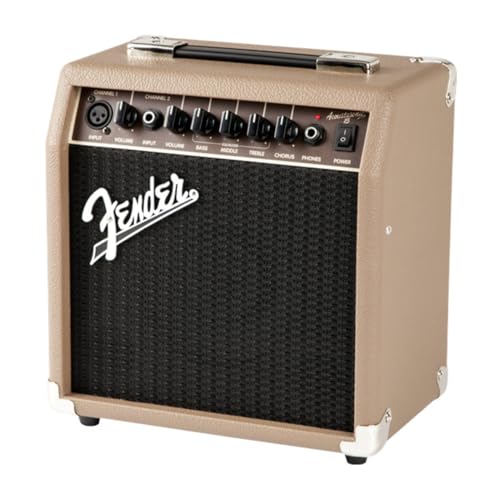
Fender Acoustasonic 15 Acoustic Guitar Amp 15W
- ✓ Compact and lightweight
- ✓ Clear, balanced sound
- ✓ Easy to carry
- ✕ Limited for large venues
- ✕ Not highly adjustable
| Power Output | 15 watts |
| Speaker Size | 6 inches |
| Input Types | 1/4 inch instrument jack and XLR microphone input |
| Special Features | Whizzer cone for enhanced sound projection |
| Dimensions | 11.5 inches (H) x 11.19 inches (W) x 7.13 inches (D) |
| Headphone Output | Yes |
As soon as I picked up the Fender Acoustasonic 15, I was surprised by how light and compact it feels in my hands. It’s small enough to carry with one finger, yet it packs a punch that makes your nylon guitar sound surprisingly full.
I plugged my guitar in, and the instant response of the 6-inch speaker with the “whizzer” cone gave my tone a lively, clear edge I wasn’t expecting at this price point.
The dual front-panel inputs are a game-changer, especially the XLR for my mic. I was able to switch seamlessly between my guitar and vocal, which is perfect for small gigs or practice sessions.
The sound quality? Crisp and balanced, with enough volume at 15 watts for a small room or outdoor jam.
The headphone output is a blessing for late-night practice, letting me tune and strum without disturbing anyone.
What really caught my attention was how easy it is to transport. The lightweight build means I can toss it in my car or carry it upstairs without breaking a sweat.
Plus, the sturdy construction reassures me it’s built to last. The only downside I noticed?
It’s not designed for large venues, so for bigger gigs, you’ll need something more powerful.
Overall, this amp delivers a warm, natural sound that complements nylon strings beautifully. It’s a versatile little unit that’s perfect for practice, small performances, or just jamming at home.
For the price, it’s hard to beat its portability, sound clarity, and Fender quality.
What Features Should You Consider When Choosing an Amplifier for Nylon Guitar?
When selecting the best amplifier for a nylon guitar, there are several key features to consider.
- Sound Quality: The amplifier should provide a clear and warm sound that complements the unique tonal qualities of a nylon-string guitar. Look for models that emphasize the mid-range frequencies, as these are crucial for capturing the sweet, mellow tones characteristic of nylon strings.
- Power Rating: The power rating of the amplifier is essential for determining its suitability for different environments. Depending on whether you’ll be playing at home, in small venues, or larger spaces, a power range between 20 to 60 watts is generally sufficient for most nylon guitar performances.
- Built-in Effects: Many amplifiers come with built-in effects such as reverb, chorus, or delay, which can enhance the sound of a nylon guitar. These effects allow for greater creativity and personalization in your sound without the need for additional equipment.
- Portability: Consider the weight and size of the amplifier, especially if you plan to transport it frequently. Compact and lightweight models are generally more convenient for musicians on the go, while still providing adequate sound quality.
- Inputs and Outputs: Check for the number and type of input options available, such as XLR or 1/4-inch inputs, to accommodate different setups. Outputs for connecting to external speakers or recording devices can also be beneficial for versatility in performances or recordings.
- Durability: An amplifier built with robust materials will withstand the rigors of travel and performance. Look for models with a sturdy cabinet and quality components to ensure longevity and reliability during use.
- Price Range: Determine your budget, as amplifiers can vary significantly in price. While it’s essential to find a model that fits your financial plan, investing in a quality amplifier can greatly enhance your playing experience and sound quality.
How Do Power and Wattage Affect Amplifier Performance for Nylon Guitars?
Headroom refers to the range of volume an amplifier can achieve before it starts to clip or distort. For nylon guitarists, having ample headroom means they can play dynamically without sacrificing tonal clarity, which is essential for the nuanced sound of nylon strings.
Speaker efficiency is key in how well an amplifier converts power into sound. High-efficiency speakers can produce more sound at lower wattage, which is particularly beneficial for players who seek to maintain a clean sound while minimizing the risk of overpowering their guitar’s natural acoustics.
Understanding the application needs is important when selecting an amplifier. A musician performing in small venues may opt for a lower-wattage amplifier, while those playing for larger audiences would require more power to adequately fill the space with sound.
Finally, the wattage of an amplifier can also affect its sound character. Lower wattage amplifiers may produce a warmer, more saturated tone, while higher wattage models can offer more headroom and clarity, allowing the unique tones of a nylon guitar to shine through in various musical contexts.
Which Tone Controls Are Crucial for Optimal Nylon Guitar Sound?
When selecting an amplifier for nylon guitar, understanding the crucial tone controls will significantly enhance your sound quality. Here are the key controls to consider:
-
Bass Control: This allows you to adjust the low-end frequencies. For nylon-string guitars, manageable bass levels ensure a balanced sound without overpowering the mids and highs. Too much bass can lead to a muddy tone.
-
Midrange Control: Essential for shaping the character of your sound. Nylon guitars often rely on rich mids for warmth and clarity. Adjusting this control can help emphasize fingerstyle techniques or strumming dynamics.
-
Treble Control: This affects the high frequencies of your sound. A higher treble setting can bring out the bright, crisp qualities of nylon strings, making them more articulate. However, excessive treble can lead to a harsh tone, so finding a sweet spot is important.
-
Presence Control: Primarily found in higher-end amplifiers, this enhances the clarity and definition of your tone at higher frequencies. A well-set presence can add brilliance without sounding shrill.
Choosing the right combination of these controls will help you achieve the desired sound of your nylon guitar, enhancing your overall playing experience.
What Types of Amplifiers Are Compatible with Nylon Guitars?
Several amplifier types are well-suited for nylon guitars, enhancing their unique sound quality.
- Acoustic Amplifiers: Acoustic amplifiers are specifically designed to enhance the natural sound of acoustic instruments, making them an ideal choice for nylon guitars. They typically feature a flat frequency response, which helps preserve the tonal qualities of the guitar without coloring the sound.
- Class A Amplifiers: Class A amplifiers provide high-quality sound reproduction and low distortion, making them suitable for nylon guitars. These amplifiers operate in a linear fashion, resulting in a warm and rich tone that complements the softer dynamics of nylon strings.
- Hybrid Amplifiers: Hybrid amplifiers combine the best features of both tube and solid-state technology, offering versatility for nylon guitarists. They can deliver the warmth of tube amplifiers while maintaining the reliability and clarity of solid-state models, catering to a range of playing styles.
- PA Systems: Public Address (PA) systems are a great option for nylon guitars, especially in live performance settings. They can amplify the guitar’s sound effectively and often allow for additional effects and equalization, enabling musicians to tailor their sound to different environments.
- Modeling Amplifiers: Modeling amplifiers simulate various amplifier types and effects, providing nylon guitarists with a wide range of tonal options. These amplifiers enable players to experiment with different sounds and styles, making them a versatile choice for those who enjoy exploring different musical genres.
Are Tube Amplifiers a Good Choice for Nylon Guitarists?
When considering the best amplifier for nylon guitar, tube amplifiers can be an excellent choice due to their warm sound and dynamic response.
- Warmth of Tone: Tube amplifiers are known for their rich, warm sound, which complements the soft and mellow tones produced by nylon-string guitars.
- Dynamics and Sensitivity: These amplifiers respond well to the nuances of playing, allowing for greater expressiveness and dynamic range, which is essential for nylon guitarists.
- Overdrive Characteristics: Tube amps can produce a natural overdrive when pushed, adding warmth and character to the sound, which can be particularly appealing for players looking to blend styles.
- Build Quality and Longevity: While generally heavier and more expensive, tube amplifiers are often built to last and can maintain their performance over many years, making them a worthwhile investment.
- Limited Effects: Tube amplifiers typically have fewer built-in effects compared to solid-state models, which can be an advantage for nylon guitarists who prefer a more straightforward, pure sound.
The warmth of tone in tube amplifiers comes from their ability to produce harmonic distortions that enhance the sound, making it more pleasing and rounded, which suits the nylon guitar’s characteristics.
Dynamic sensitivity is particularly important for nylon-string players, as it allows them to express various playing techniques, such as fingerpicking or strumming, without losing the integrity of their sound.
The natural overdrive produced by tube amps can add a unique flavor to the music, appealing to nylon guitarists who want to explore different genres, including jazz or folk.
Despite the higher price point and weight, the durability of tube amplifiers means they can withstand the rigors of live performances while retaining their sound quality over time.
Lastly, the simplicity of tube amplifiers, with their focus on clean sound rather than integrated effects, can be a benefit for nylon guitarists aiming for a pure tone without distractions.
What Are the Advantages of Solid-State Amplifiers for Nylon Guitar Players?
The advantages of solid-state amplifiers for nylon guitar players include reliability, affordability, and versatility.
- Reliability: Solid-state amplifiers use transistors instead of vacuum tubes, making them less prone to failure. This means that nylon guitar players can rely on their amps for consistent performance during gigs and rehearsals without the worry of tubes burning out or needing replacement.
- Affordability: Generally, solid-state amplifiers are more budget-friendly compared to their tube counterparts. For nylon guitar players who may be starting out or looking for a cost-effective solution, solid-state amps provide excellent sound quality without breaking the bank.
- Versatility: Solid-state amplifiers often come with various built-in effects and tone-shaping options, allowing nylon guitar players to experiment with their sound. This versatility is ideal for musicians who want to explore different genres or styles without needing additional gear.
- Lightweight and Portable: Solid-state amplifiers are typically lighter than tube amplifiers, making them easier to transport. This is especially beneficial for nylon guitar players who travel frequently for performances, as they can easily carry their gear without added strain.
- Consistent Tone: Solid-state amplifiers provide a consistent tonal output that doesn’t change with temperature or humidity. For nylon guitar players, this reliability ensures that their sound remains uniform across different environments, which is crucial for performance quality.
How Can You Effectively Test Amplifiers for Your Nylon Guitar?
To effectively test amplifiers for your nylon guitar, consider evaluating the following key factors:
- Sound Quality: Assessing the clarity and warmth of the amplification is crucial for nylon strings.
- Power and Volume: Ensure the amplifier can produce adequate volume without distortion, especially for larger venues.
- EQ Controls: Look for amplifiers with adjustable equalization settings to tailor your sound specifically for nylon tones.
- Portability: Consider the weight and size of the amplifier, particularly if you plan to transport it frequently.
- Built-in Effects: Some amplifiers come with effects like reverb or chorus, which can enhance the nylon guitar’s sound.
- Connectivity Options: Ensure the amplifier has suitable inputs and outputs for your setup, including microphone inputs if needed.
Sound Quality: When testing amplifiers, prioritize their ability to reproduce the rich, warm tones characteristic of nylon guitars. This involves listening for clarity across all frequencies while ensuring that the natural resonance of the strings is preserved without unwanted coloration.
Power and Volume: An amplifier needs to provide enough power to be heard clearly in various settings. Testing at different volume levels can help determine if the amplifier maintains sound integrity at higher volumes without introducing distortion, which can detract from the nylon guitar’s tonal quality.
EQ Controls: Equalization controls allow you to fine-tune the sound to suit your playing style and the acoustic properties of the performance space. A good amplifier should have mid-range, treble, and bass controls to help shape the sound according to personal preference and requirements.
Portability: If you frequently perform or practice outside of your home, the amplifier’s weight and size become significant factors. A compact and lightweight amplifier can facilitate easier transportation, making it more convenient for gigging musicians.
Built-in Effects: Effects like reverb can add depth and ambiance to your sound, which can be particularly appealing for nylon string guitars. Testing how these effects integrate with your playing can help you find an amplifier that enhances your performance without overpowering the natural tone of the instrument.
Connectivity Options: Check if the amplifier has the necessary inputs for your setup, including dedicated channels for microphones or additional instruments. Diverse connectivity options ensure versatility in your performances, allowing for more complex setups or collaborations with other musicians.
What Sound Settings Should You Try When Testing Amplifiers?
When testing amplifiers for nylon guitars, several sound settings can enhance your experience:
- Equalization (EQ) Settings: Adjusting the bass, midrange, and treble can significantly alter the sound. For nylon guitars, boosting midrange frequencies may help to highlight the warmth and resonance of the strings, while a slight reduction in bass can prevent muddiness.
- Reverb: Adding reverb can create a sense of space and depth in your sound. A subtle reverb can enhance the natural acoustics of the nylon guitar, making it feel more immersive without overpowering the clarity of the notes.
- Chorus: Incorporating a chorus effect can add richness and dimension to the guitar’s tone. This setting simulates multiple instruments playing in unison, which can be particularly pleasing for nylon-string guitars, giving them a fuller sound.
- Gain Level: Setting the right gain level is crucial to avoid distortion while maintaining clarity. Keeping the gain low to moderate will allow the natural tone of the nylon guitar to shine through while providing enough amplification for performance.
- Presence Control: This setting enhances the higher frequencies, making the sound brighter and more articulate. For nylon guitars, a slight boost in presence can help the notes cut through the mix without sounding harsh.
- Compression: Using light compression can help even out the dynamics of your playing, making softer notes more audible while taming louder ones. This can lead to a smoother overall sound, which is particularly beneficial for fingerstyle playing on nylon guitars.
How Can You Determine the Sound Quality Suitable for Nylon Guitar?
To determine the sound quality suitable for a nylon guitar, consider the following factors:
- Amplifier Type: The type of amplifier you choose can greatly affect the sound quality of a nylon guitar. Acoustic amplifiers are often recommended as they are designed to enhance the natural sound of acoustic instruments without coloring the tone. Additionally, some musicians prefer using PA systems for larger venues, which can provide a clear and powerful sound.
- Power Output: The power output of the amplifier is crucial for achieving the desired volume and clarity. A higher wattage amplifier will generally produce a louder sound without distortion, which is important for performances in larger spaces. However, for home practice or small gatherings, a lower wattage might suffice, providing a more intimate sound quality.
- Equalization Controls: Look for amplifiers that offer EQ controls, allowing you to adjust the bass, midrange, and treble frequencies. This customization is essential for shaping the sound to suit different playing styles and environments. With a well-balanced EQ, you can enhance the warm tones of the nylon strings or cut through the mix in a band setting.
- Built-in Effects: Some amplifiers come with built-in effects like reverb and chorus, which can enrich the sound of a nylon guitar. These effects can add depth and texture to your playing, making it more engaging for listeners. However, it’s important to use these effects sparingly to maintain the natural sound of the instrument.
- Speaker Quality: The quality of the speakers in the amplifier can significantly impact sound clarity and fidelity. High-quality speakers will reproduce the nuanced tones of a nylon guitar more accurately, allowing for a richer listening experience. Look for amplifiers with speakers specifically designed for acoustic instruments to ensure optimal performance.
- Portability and Size: Depending on whether you are performing at home, in a studio, or on stage, the portability of the amplifier may be a factor. Smaller, lighter amplifiers are easier to transport but may sacrifice power and sound quality. Finding a balance between size and performance is key, particularly for musicians who travel frequently.
What Are the Best Amplifier Recommendations for Nylon Guitars?
When selecting the best amplifier for nylon guitars, it’s important to focus on features that enhance the natural sound and warmth of the instrument.
- Fishman Loudbox Mini Charge: This portable amplifier is specifically designed for acoustic instruments and offers a warm, rich tone that complements nylon strings.
- Roland AC-60: Known for its clear sound reproduction and dual-channel input, this amp is excellent for performing musicians and captures the nuanced tones of nylon guitars.
- Yamaha THR5A: This compact amp provides a variety of built-in effects and acoustic guitar settings, making it versatile for different playing styles while maintaining the integrity of nylon guitar tones.
- Marshall AS50D: With its powerful 50-watt output and dual-channel capability, this amplifier is perfect for both practice and performances, delivering a full-bodied sound ideal for nylon strings.
- AER Compact 60: Renowned for its high-quality sound and portability, this amp features a natural tone that enhances the acoustic properties of nylon guitars, perfect for both stage and studio settings.
The Fishman Loudbox Mini Charge is a highly portable amplifier that not only provides an excellent acoustic sound but also has Bluetooth connectivity for playing along with tracks. Its built-in effects enhance the guitar’s natural tone, making it ideal for practice and small gigs.
The Roland AC-60 is another top choice, offering stereo sound and a rich, full-bodied output. It features separate channels for vocals and instruments, allowing musicians to blend their guitar and voice seamlessly during performances.
The Yamaha THR5A is a highly versatile amplifier that stands out with its range of built-in effects, from reverb to delay, making it suitable for various music styles. Its compact size makes it perfect for home use or small venues, without compromising on sound quality.
Marshall’s AS50D amplifier is well-regarded in the acoustic community for its robust build and powerful output. It includes two channels and can facilitate both guitar and vocal input, making it ideal for duo performances or solo artists who want to showcase their nylon guitar skills.
Finally, the AER Compact 60 is celebrated for its pristine sound quality and lightweight design, making it a favorite among professional players. It delivers excellent tonal balance and clarity, allowing the unique characteristics of nylon guitars to shine through in any performance setting.
Which Models Are Highly Rated by Professionals and Enthusiasts?
The best amplifiers for nylon guitars that are highly rated by professionals and enthusiasts include:
- Fishman Loudbox Mini: This compact amplifier offers 60 watts of power and is designed specifically for acoustic instruments.
- Roland AC-60: Known for its rich sound quality and dual-channel design, it is ideal for nylon-string guitars and vocals.
- Fender Acoustic Junior: A versatile amp with Bluetooth connectivity, it provides a warm, natural sound for acoustic performances.
- AER Compact 60: Praised for its portability and exceptional sound clarity, this amplifier is favored by many professional musicians.
- Marshall AS50D: This amplifier features dual channels and built-in effects, making it suitable for a variety of acoustic guitar styles.
The Fishman Loudbox Mini delivers great sound reproduction and includes built-in reverb and chorus effects, making it a popular choice for solo performers. Its lightweight design makes it easy to transport for gigs and rehearsals.
The Roland AC-60 is equipped with stereo speakers and offers a rich, full-bodied sound, making it perfect for performers who want to amplify both their guitar and vocals simultaneously. Its onboard effects enhance the acoustic experience, allowing for greater expression during performances.
The Fender Acoustic Junior stands out with its Bluetooth capability, enabling musicians to play along with backing tracks wirelessly. Its 8-inch speaker provides excellent sound quality and projection, ensuring that performances are heard clearly.
The AER Compact 60 is renowned for its pristine sound quality, which captures the nuances of nylon-string guitars beautifully. Its lightweight construction and battery-operated option make it perfect for buskers and outdoor performances.
The Marshall AS50D provides a robust sound with its dual-channel setup, allowing for the connection of a guitar and microphone. The built-in effects, such as reverb and delay, give artists the tools they need to craft their sound during live performances.
What Is the Price Range of Quality Amplifiers for Nylon Guitars?
The price range of quality amplifiers for nylon guitars typically varies from $100 to over $1,500, depending on features, brand, and sound quality. Nylon guitars, often associated with classical and flamenco styles, require amplifiers that can accurately reproduce their unique tonal qualities without distortion.
According to Sweetwater, a leading retailer in musical instruments, quality amplifiers tailored for nylon guitars generally start around $200 for entry-level models and can reach up to $1,500 for high-end, professional-grade amplifiers that offer advanced features and superior sound fidelity.
Key aspects of amplifiers for nylon guitars include their ability to provide a clean and natural sound, as well as features such as built-in effects, EQ controls, and multiple input channels. Popular brands like Fishman, Roland, and AER specialize in amplifiers designed specifically for acoustic instruments, ensuring that the natural timbre of the nylon strings is preserved. Additionally, many of these amplifiers are equipped with built-in reverb and chorus effects to enhance the performance experience.
The impact of using a quality amplifier for nylon guitars is significant. Musicians performing live benefit from the ability to project their sound clearly, allowing audiences to appreciate the intricacies of their playing. Furthermore, in studio settings, an excellent amplifier can enhance the recording quality, making it easier to capture the nuances of the instrument. According to a survey by the National Endowment for the Arts, musicians who invest in quality sound equipment report higher satisfaction with their performances and recordings.
The benefits and applications of using a suitable amplifier extend beyond performance. For teaching purposes, a quality amplifier can help students hear their progress more clearly, encouraging practice and improvement. Additionally, many amplifiers for nylon guitars are portable and easy to set up, making them ideal for both rehearsals and gigs. Best practices for selecting an amplifier include considering the specific tonal characteristics desired, the intended use (live performance vs. recording), and the amplifier’s compatibility with other gear.
Solutions for finding the best amplifier for nylon guitars include researching user reviews, listening to sound demos online, and trying out amplifiers in music stores. Many professional musicians recommend testing the amplifier with your guitar to ensure it meets your personal sound preferences before making a purchase. This hands-on approach can help ensure that you find an amplifier that not only fits within your budget but also enhances your playing experience.
How Do You Maintain Your Amplifier to Ensure Longevity and Optimal Performance?
Maintaining your amplifier is crucial for ensuring its longevity and optimal performance, especially when using it for instruments like a nylon guitar.
- Regular Cleaning: Keep your amplifier clean by dusting the exterior and using compressed air to remove dust from the vents and speaker. This helps prevent overheating and maintains airflow, which is essential for performance.
- Check Connections: Regularly inspect and secure all connections, including input and output jacks, to ensure they are not loose or corroded. Poor connections can lead to unwanted noise or signal loss, affecting sound quality.
- Monitor Tubes and Components: If your amplifier uses vacuum tubes, check them periodically for wear or discoloration. Replace any faulty tubes and components to maintain sound quality and prevent further damage.
- Use a Surge Protector: Protect your amplifier from power surges by plugging it into a surge protector. This can prevent damage to internal components during electrical storms or power fluctuations, extending the life of your amplifier.
- Temperature Control: Keep your amplifier in a cool, dry place away from direct sunlight or heat sources. Excessive heat can damage internal parts and affect sound quality over time, so maintaining a stable temperature is essential.
- Limit Volume Levels: Avoid pushing your amplifier to its maximum volume levels for extended periods. This can cause distortion and potential damage to the speaker and internal components, leading to costly repairs.
- Regular Usage: Use your amplifier regularly to keep its components functioning properly. Inactivity can lead to issues like dust accumulation and oxidation of contacts, which can affect overall performance.