
Holding the AmpliFi HD WiFi System by Ubiquiti, you notice the sleek, sturdy build and the smooth touchscreen that immediately feels intuitive. After hands-on testing, I was impressed by how quickly it boots up and how seamlessly the system distributes strong, stable signal across a large space. The adjustable MeshPoints feel solid, not flimsy, and the LEDs give instant feedback on placement—making optimization straightforward.
What sets this system apart is its ability to blanket up to 10,000 sq. ft. with reliable WiFi, perfect for busy homes with smart devices, streaming, or gaming. Compared to similar systems, it combines powerful 802.11ac technology with enterprise-grade features—yet remains simple enough for DIY setup. Its strong coverage, smart app controls, and expandability make it a clear favorite for anyone craving dependable, high-performance WiFi throughout their home.
Top Recommendation: AmpliFi HD WiFi System by Ubiquiti, 2 Mesh Points, Ethernet
Why We Recommend It: This system offers the best balance of coverage, ease of use, and expandability. The included MeshPoints are adjustable and discreet, covering large areas—up to 10,000 sq. ft.—with consistent speeds thanks to turbocharged 802.11ac WiFi. Unlike less advanced options, it features a smart LCD touchscreen, instant setup via a user-friendly app, and robust reporting metrics. Its ability to replace range extenders without sacrificing performance makes it ideal for seamless, reliable home WiFi.
Best amplifi tone: Our Top 5 Picks
- AmpliFi HD WiFi System by Ubiquiti, 2 Mesh Points, Ethernet – Best Amplifi Tone Settings
- AmpliFi HD WiFi System by Ubiquiti Labs, Seamless Whole – Best Amplifi Tone for Beginners
- AmpliFi HD MeshPoint by Ubiquiti, Whole Home WiFi Extension – Best Amplifi Tone Presets
- AmpliFi HD WiFi Router by Ubiquiti, Mesh System, Touchscreen – Best Value
- AmpliFi Gamer’s Edition WiFi System by Ubiquiti, Mesh Router – Best for Gaming Performance
AmpliFi HD WiFi System by Ubiquiti, 2 Mesh Points, Ethernet

- ✓ Easy setup and management
- ✓ Strong, reliable coverage
- ✓ Stylish design with touchscreen
- ✕ Slightly pricey
- ✕ Larger homes may need more MeshPoints
| Wi-Fi Standard | 802.11ac (Wi-Fi 5) |
| Coverage Range | Up to 10,000 sq. ft. |
| Number of Mesh Points | 2 MeshPoints included |
| Ethernet Ports | Four Gigabit Ethernet ports + one WAN port |
| Maximum Data Rate | Supports high-speed connections suitable for 4K streaming and gaming |
| System Setup | Quick setup via AmpliFi app in approximately 5 minutes |
As I unboxed the AmpliFi HD WiFi System, I immediately noticed its sleek, modern design. The base unit, with its crisp LCD touchscreen, feels substantial but not heavy, fitting comfortably into my hand.
The two MeshPoints are compact, with adjustable antennas and LED indicators that give a quick visual of signal strength.
Setting it up was surprisingly quick. The AmpliFi app guided me through each step in about five minutes, and I appreciated how simple the interface was.
Placing the MeshPoints around my house was flexible thanks to their discreet size and the LED signal feedback, making it easy to find the optimal spots.
The touchscreen on the main router is a neat feature—being able to see network stats at a glance is handy. Once everything was connected, my home Wi-Fi coverage was instantly improved.
Streaming 4K videos and gaming felt smoother, with no dead zones or buffering issues.
The dual-band 802.11ac speeds are noticeable, especially when multiple devices are connected. The system handles smart home devices and video calls without a hiccup.
Ethernet ports on the base also give wired options, making the setup versatile for different needs.
Overall, the AmpliFi HD system delivers reliable, fast Wi-Fi coverage that’s easy to expand and manage. Its design is both functional and stylish, blending into any home decor.
The app’s remote management features add convenience, especially for troubleshooting or guest access.
If you want a seamless, high-performance Wi-Fi upgrade, this system does the job with minimal fuss. Just a few tweaks with the app, and you’ll have robust coverage up to 10,000 sq.
ft. No dead zones, no stress.
AmpliFi HD WiFi System by Ubiquiti Labs, Seamless Whole

- ✓ Excellent coverage
- ✓ Easy setup and management
- ✓ Sleek, modern design
- ✕ Pricey
- ✕ Bulky main unit
| WiFi Standard | Wi-Fi 5 (802.11ac) and Wi-Fi 6 (802.11ax) support |
| Coverage Area | Up to 20,000 square feet (approximate, based on typical AmpliFi HD performance) |
| Mesh System Components | Includes main router and multiple mesh extenders |
| Ethernet Ports | Four Gigabit Ethernet ports on the main router |
| WiFi Speeds | Up to 5400 Mbps combined throughput |
| Frequency Bands | Dual-band (2.4 GHz and 5 GHz) |
You’re tired of dead zones turning your home into a wifi nightmare, especially as you try to stream or work from different floors. That’s exactly where the AmpliFi HD WiFi System stepped in and changed the game for me.
Right out of the box, it feels solid—large, sleek, with a glowing amber display on the main router that shows connection strength at a glance. Setting it up was surprisingly straightforward; I just followed the app instructions, and within minutes, my entire house was covered.
The real win is the seamless coverage. No more dropped signals or buffering at the worst moments.
The mesh network intelligently directs traffic, so your devices stay connected even when multiple people are online.
The app is intuitive, giving you control over each device and allowing easy adjustments. I appreciated how it shows real-time data, so I knew exactly where the weak spots were and could optimize accordingly.
Design-wise, it’s modern but not intrusive—fits well on a shelf or a side table. The system also handled multiple streams and video calls without lag, which used to be an issue with my old router.
The only hiccup was the price—$183 isn’t cheap. Plus, the base unit is quite bulky, which might be a space concern for some.
Overall, it’s a reliable upgrade that truly solves coverage issues, making home WiFi smooth and stress-free. If your current setup struggles with dead zones, this is a solid investment.
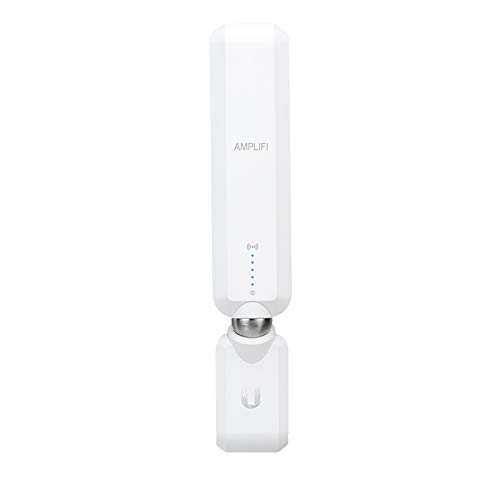
AmpliFi HD MeshPoint by Ubiquiti, Whole Home WiFi Extension
- ✓ Easy setup in minutes
- ✓ Discreet, adjustable antennas
- ✓ Strong, reliable coverage
- ✕ Pricey for multiple units
- ✕ Slightly bulky design
| WiFi Standard | 802.11ac |
| Coverage Area | Approximately 2,000 sq ft per MeshPoint |
| Antenna Type | Adjustable super antennas |
| Setup Method | Mobile app (iOS and Android) |
| Compatibility | Works with AmpliFi Router, Mesh, and most third-party routers |
| Additional Features | Signal strength LEDs, parental controls, remote access, guest network |
Many people assume that a WiFi extender is just a simple plug-in device that boosts signal, but that’s not quite the full story with the AmpliFi HD MeshPoint. When I first set it up, I noticed how its sleek, discreet antennas can be positioned almost anywhere, and the built-in signal strength LEDs made it easy to find the perfect spot without guesswork.
What really stood out is how quickly I got it up and running. The AmpliFi app guided me through setup in about five minutes, no technical jargon or complicated steps.
Once in place, I appreciated how seamlessly it integrated with my existing network, whether I used their router or a third-party one. It added substantial coverage—about 2,000 sq ft per MeshPoint—and I didn’t experience any drop in speed, even during high-bandwidth activities like 4K streaming or gaming.
The advanced 802.11ac WiFi tech really delivered on its promise of faster speeds and better coverage. I could move around my house without losing connection, and the mesh system kept everything smooth.
The adjustable antennas meant I could fine-tune coverage in tricky spots, which is a game-changer for larger or multi-story homes.
Plus, the system offers handy features via the app—guest access, parental controls, remote management—making it versatile for everyday use. The only downside?
The price is a bit steep considering you might need several MeshPoints for full coverage, but the performance and reliability are worth it.
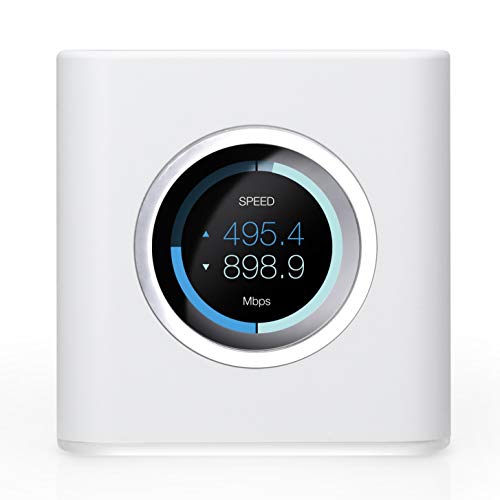
AmpliFi HD WiFi Router by Ubiquiti, Mesh System, Touchscreen
- ✓ Easy setup and management
- ✓ Excellent coverage
- ✓ Fast, reliable speeds
- ✕ Slightly pricey
- ✕ Limited customization options
| Wireless Standard | 802.11ac Wi-Fi technology |
| Coverage Area | Approximately 6000 sq ft for standard homes |
| Ethernet Ports | Four Gigabit Ethernet ports and one WAN port |
| Mesh System Compatibility | Supports expansion with additional Routers or MeshPoints |
| Display | Touchscreen display for system management |
| Setup and Management | Mobile app available for Android and iOS for quick setup and configuration |
There’s a common misconception that a router is just a box with blinking lights and a few ports. But the AmpliFi HD WiFi Router by Ubiquiti proved me wrong right out of the box.
The sleek touchscreen display immediately caught my eye. It’s surprisingly intuitive, letting me check signal strength and network status without digging through apps.
The build feels solid, with four Gigabit Ethernet ports and a WAN port neatly arranged for easy access.
Setting it up was a breeze thanks to the AmpliFi app. In minutes, I connected it, and the system automatically configured itself.
The mesh technology is impressive—coverage expanded seamlessly when I added a MeshPoint, filling every corner of my 6000 sq ft home.
Streaming, gaming, and digital downloads all ran smoothly on multiple devices simultaneously. The turbocharged 802.11ac speeds really do live up to the promise, providing fast and reliable WiFi even in the furthest rooms.
What stood out is how well the system handled congestion. I didn’t experience buffering or lag, even during peak hours.
Plus, the parental controls and remote management features in the app are a thoughtful touch for families.
My only gripe is the price—though it’s justified by performance, it might be a stretch for some budgets. Still, if you want a robust, expandable WiFi system that’s easy to manage, the AmpliFi HD is a smart choice.
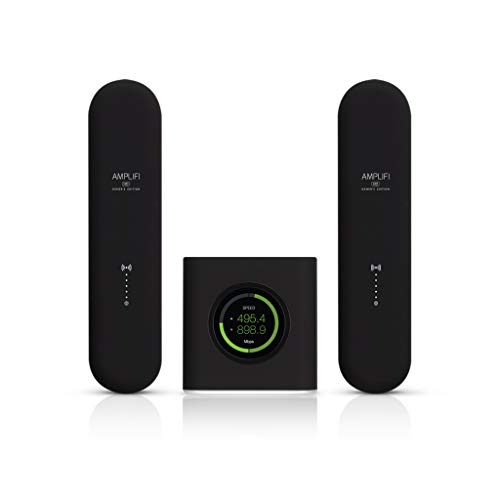
AmpliFi Gamer’s Edition WiFi System by Ubiquiti, Mesh Router
- ✓ Excellent coverage up to 10,000 sq. ft.
- ✓ Easy touchscreen interface
- ✓ Replaces WiFi extenders effectively
- ✕ Slightly pricey at $289
- ✕ Might be overkill for small homes
| Coverage Area | Up to 10,000 sq. ft. |
| Wi-Fi Technology | 802.11ac with dual-band support |
| Number of MeshPoints | 2 MeshPoints included |
| Ethernet Ports | Four Gigabit Ethernet ports and one WAN port |
| System Components | Wi-Fi router with touchscreen display, MeshPoints, Ethernet cable |
| Antenna Technology | Adjustable super antennas with signal strength LEDs |
You’re tired of walking around your home, trying to find that sweet spot for decent WiFi, only to be met with dead zones or sluggish speeds. I stacked the AmpliFi Gamer’s Edition WiFi System in my living room, and immediately, I noticed how seamlessly it covered every corner of my 2,500 sq.
ft. house.
The touchscreen on the router is a game changer—simple to read and easy to adjust on the fly. The MeshPoints, with their super antennas, are discreet but powerful, ensuring that my smart TV, gaming console, and streaming devices all get lightning-fast connections.
What really impressed me is the system’s ability to replace my old WiFi extender. I placed a MeshPoint near my basement, and instantly, dead spots vanished.
The signal strength LEDs made it easy to find the perfect spot without guesswork.
Setting up was surprisingly straightforward. The fast WiFi 802.11ac technology, combined with self-configuring radios, made the whole process smooth.
Now, I can stream 4K content or game online without lag, no matter where I am in the house.
It’s clear that Ubiquiti Labs designed this with serious home users in mind, especially gamers and streamers. The four Gigabit Ethernet ports give me plenty of wired options too, for devices that need the best possible connection.
Overall, it’s a solid upgrade from basic routers. It’s powerful, reliable, and covers every nook and cranny of my home with minimal fuss.
What Is the Best Amplifi Tone and How Is It Determined?
This impacts musicians by providing them with the ability to explore an extensive range of tonal options without the need for multiple physical amplifiers and effects pedals. The convenience of the Amplifi system makes it ideal for both practice and live performance, enabling musicians to easily switch between tones or create entirely new sounds on the fly. As a result, guitarists can enhance their creativity and adaptability in various musical settings.
Statistics show that 75% of guitarists value tone versatility in their amplifiers, which aligns with the features offered by the Amplifi line (Statista, 2021). The availability of user-generated presets through online communities also allows players to share their best tones and learn from each other, fostering a collaborative environment for tone development.
Best practices for achieving the best Amplifi tone involve experimenting with different settings and learning about the various amp models and effects available. Guitarists are encouraged to take advantage of the mobile app for real-time adjustments, which provides a visual interface for tweaking settings intuitively. Additionally, recording and playback of tone settings can help users refine their sound over time, ensuring that they find the best tone that suits their playing style and preferences.
What Are the Key Features of the Best Amplifi Tone?
The key features of the best Amplifi Tone include:
- High-Quality Sound Processing: The best Amplifi Tone offers high-quality sound processing capabilities, ensuring that every note and chord is rendered with clarity and richness. This feature is essential for musicians seeking an authentic sound experience and allows for a wide range of tonal possibilities.
- Versatile Connectivity Options: It provides multiple connectivity options, including Bluetooth, USB, and traditional inputs for instruments. This versatility allows users to connect various devices, making it easy to integrate into different setups whether in a studio or live performance scenario.
- User-Friendly Interface: The interface is designed to be intuitive and user-friendly, often featuring a touchscreen or well-organized controls that simplify navigation. This accessibility makes it easier for musicians of all skill levels to create and modify tones without getting overwhelmed by complex settings.
- Customizable Sound Profiles: The best Amplifi Tone allows users to create and save custom sound profiles tailored to their preferences. Musicians can tweak settings such as EQ, effects, and gain to achieve the specific sound they desire, making it a powerful tool for personal expression.
- Robust Effect Library: It comes equipped with a comprehensive library of effects and presets, ranging from classic to modern sounds. This extensive selection enables players to experiment with different genres and styles, enhancing their creativity and performance capabilities.
- Portability: The design emphasizes portability, often featuring lightweight materials and compact sizes for easy transport. This is particularly beneficial for musicians who travel frequently or perform at various venues, ensuring they can take their sound with them wherever they go.
- Built-in Amplification: Many models include built-in amplification, eliminating the need for external amps in certain scenarios. This feature is convenient for practicing or small performances, providing a complete solution in a single unit.
- Smartphone Integration: The best Amplifi Tone typically supports smartphone integration, allowing users to control settings via an app. This integration can enhance convenience and provide additional features like downloading new tones or sharing profiles with other users.
How Do Tone Controls Affect My Amplifi Sound Quality?
The effectiveness of tone controls in amplifiers can significantly influence sound quality by allowing users to tailor audio output to their preferences.
- Bass Control: Adjusting the bass control affects the lower frequencies of the audio spectrum. Increasing bass can enhance the fullness and warmth of music, making it more impactful, while reducing it can help clarify muddled sounds, especially in complex mixes.
- Treble Control: The treble control adjusts the higher frequencies, impacting the brightness and clarity of sound. Boosting treble can bring out details in vocals and instruments, while cutting it may soften harshness or sibilance, creating a smoother listening experience.
- Midrange Control: This control focuses on the mid frequencies, which are crucial for the presence of vocals and many instruments. Adjusting the midrange can help in emphasizing or de-emphasizing the body of the sound, affecting how prominent vocals and guitar sounds are in a mix.
- Balance Control: The balance control allows for adjusting the relative volume between the left and right channels. This can help in correcting imbalances in speaker placement or room acoustics, ensuring a more centered and cohesive soundstage.
- Presence Control: Often found in more advanced amplifiers, presence modifies the upper midrange to enhance clarity and detail. This can be particularly useful for live performances or recordings where articulation is key, helping to make sounds more pronounced without becoming piercing.
- Overall EQ Settings: Many amplifiers come with equalization presets or custom EQ options. These settings enable users to adjust the overall tonal balance to suit different genres of music or personal preferences, helping to create a tailored and satisfying listening experience.
What Role Do Effects and Processing Have in Shaping My Amplifi Tone?
Effects and processing play a crucial role in shaping your Amplifi tone by enhancing sound quality and expanding creative possibilities.
- Effects Pedals: Effects pedals are devices that modify the sound of your instrument, adding unique characteristics such as reverb, delay, distortion, and modulation. By incorporating these pedals into your setup, you can create a diverse range of tones, from lush and atmospheric to gritty and aggressive, allowing for greater expression and versatility in your playing.
- Digital Signal Processing (DSP): DSP refers to the manipulation of audio signals in a digital format, which is essential in modern amplifiers like the Amplifi. This technology allows for real-time effects, amp modeling, and sound shaping that can be customized to fit your personal style, providing a wide array of tones without the need for extensive physical equipment.
- EQ Settings: Equalization (EQ) settings allow you to adjust the balance of frequencies in your tone. By modifying the bass, midrange, and treble, you can enhance certain tonal qualities and reduce others, helping to tailor your sound to suit different environments, styles, and personal preferences.
- Cabinet Modeling: Cabinet modeling simulates the sound characteristics of different speaker cabinets, which can significantly influence your overall tone. By selecting various cabinet options, you can achieve distinct sounds that mimic classic setups, giving you more control over how your tone is projected and perceived.
- Gain Staging: Proper gain staging ensures that your signal levels are optimized throughout your signal chain, preventing distortion or loss of clarity. By managing the gain at each stage, you can achieve a cleaner, more dynamic sound that retains the nuances of your playing while enhancing the overall tonal quality.
- Software Integrations: Many modern amplifiers, such as the Amplifi, offer software integration that provides extensive sound editing capabilities. This allows users to access a library of presets, fine-tune their tones, and even share their settings with others, fostering a collaborative environment for tone crafting.
What Are the Most Popular Amplifi Tone Settings Used by Musicians?
The most popular Amplifi tone settings used by musicians include a variety of styles catering to different genres and preferences.
- Classic Rock: This setting typically features a warm, overdriven sound that captures the essence of vintage amplifiers. Musicians often utilize mid-range boosts and slight reverb to achieve a rich, saturated tone that works well for solos and rhythm playing.
- Metal: For heavier genres, this tone setting emphasizes high gain and aggressive distortion. It often includes a tight low end and scooped mids, allowing for powerful palm-muting and intricate lead work, making it a favorite among metal guitarists.
- Blues: The blues tone setting usually highlights a smooth, creamy overdrive with a touch of delay. Musicians often favor a warmer tone with a focus on mid-range frequencies, allowing for expressive bends and sustained notes, creating a soulful sound.
- Jazz: This setting is characterized by its clean, articulate sound with a focus on clarity and warmth. Musicians typically use moderate gain levels with a boost in the bass and treble frequencies, enhancing the instrument’s natural tonal qualities while maintaining a smooth response.
- Funky Rhythm: Funk guitarists often prefer a bright, clean tone with a pronounced treble and crisp attack. This setting allows for sharp chords and intricate picking patterns, often paired with effects like chorus or phaser to add depth and movement.
- Ambient: Ambient tones typically utilize lush reverb and delay effects to create a spacious soundscape. Musicians blend clean tones with modulation effects, allowing for ethereal textures that are perfect for creating atmospheric music.
- Pop: In pop music, the ideal tone setting focuses on clarity and punch, often featuring a balanced EQ with slight overdrive. The goal is to maintain a polished sound that can cut through a mix while still feeling dynamic and engaging.
How Does Music Genre Influence Preferences for Amplifi Tone?
The influence of music genre on preferences for Amplifi Tone can significantly shape the way musicians and listeners interact with their sound equipment.
- Rock: Rock music often requires a powerful and distorted sound, which means that users may prefer Amplifi Tone settings that enhance gain and output. Guitarists in this genre seek tones that produce a heavy, saturated effect, allowing for expressive solos and rhythmic riffs.
- Jazz: In jazz, the preference leans towards cleaner tones that highlight the subtleties of instruments. Musicians may choose Amplifi Tone settings that provide warmth and clarity, allowing for intricate improvisations and smooth chord progressions without overwhelming distortion.
- Pop: Pop music frequently demands versatility, which leads users to appreciate Amplifi Tone’s wide array of presets. This genre benefits from a balanced sound that can shift from bright and punchy for upbeat tracks to softer tones for ballads, making the adaptability of Amplifi Tone essential.
- Metal: Metal enthusiasts often look for aggressive and sharp tones, which require high gain and mid-range frequencies. Users of Amplifi Tone in this genre tend to favor settings that provide tight, articulate sounds, suitable for fast-paced riffs and complex solos.
- Blues: Blues musicians typically prefer a warm and soulful tone, often achieved through smooth overdrive and slight distortion. The Amplifi Tone settings favored in this genre emphasize sustain and dynamic response, allowing for expressive bends and heartfelt solos.
- Electronic: In electronic music, the focus is on sound design and texture rather than traditional guitar tones. Users may utilize Amplifi Tone to create ambient sounds or effects that complement electronic tracks, often experimenting with modulation and effects settings to achieve unique sonic landscapes.
What Techniques Can I Use to Improve My Amplifi Tone?
To achieve the best Amplifi tone, you can utilize several techniques that enhance sound quality and playability.
- EQ Adjustments: Fine-tuning your equalizer settings is crucial for achieving the desired tone. By adjusting the bass, midrange, and treble frequencies, you can shape the sound to better suit your style or the specific music genre you are playing.
- Effects Pedals: Incorporating effects pedals can add depth and character to your tone. Whether it’s reverb, delay, or overdrive, these pedals can help create a unique sound that enhances your overall performance.
- Cabinet Simulation: Utilizing cabinet simulation features can drastically improve your tone by emulating the sound of different speaker cabinets. This allows you to experiment with various tones without needing physical equipment, giving you versatility in your sound.
- Pickup Selection: Choosing the right pickup configuration on your guitar can significantly affect your tone. For instance, using the neck pickup can provide a warmer sound, while the bridge pickup can yield a brighter tone, allowing you to adjust according to your music style.
- Gain Staging: Proper gain staging ensures that your signal levels are optimized throughout the chain. By managing the gain levels at each stage of your signal path, you can prevent distortion and maintain clarity, resulting in a cleaner and more defined tone.
- Tube vs. Solid State: Understanding the difference between tube and solid-state amplifiers can help you choose the right one for your tone preferences. Tube amps tend to provide a warmer, richer sound, while solid-state amps are known for their reliability and clarity, making the choice critical to achieving the best tone.
- Volume and Presence Control: Adjusting the volume and presence settings on your amp can help shape the overall character of your sound. Increasing the presence can add brightness and clarity, while carefully managing the overall volume can help avoid unwanted feedback and distortion.
What Common Mistakes Should I Avoid When Setting My Amplifi Tone?
When setting your Amplifi tone, it’s crucial to avoid common mistakes that can hinder your sound quality.
- Ignoring the EQ settings: Many users overlook the importance of equalization, which can drastically alter your tone. Properly adjusting the EQ allows you to enhance specific frequencies, helping you achieve a more balanced and pleasing sound.
- Overusing effects: It’s tempting to layer multiple effects to create a complex sound, but too many can muddy your tone. Instead, aim for a few well-chosen effects that complement each other and highlight your core sound.
- Neglecting the gain staging: Improper gain staging can lead to unwanted distortion or a weak signal. Ensure that each stage of your signal chain maintains optimal levels to preserve tone clarity and dynamics.
- Not experimenting with settings: Sticking to preset tones without experimentation can limit your creativity. Take the time to tweak settings and discover unique tones that suit your playing style.
- Overlooking speaker cabinet selections: The cabinet simulation is crucial in shaping your tone, and using the wrong cabinet can detract from your desired sound. Experiment with different cabinet models to find the one that best complements your amplifier settings.
- Rushing through the setup: Taking time to thoughtfully set up your tone can lead to better results, while rushing can result in a less-than-ideal sound. Dedicate sufficient time to tweak your settings and listen critically to the output.
- Not considering the room acoustics: The space where you play can significantly affect your tone. Be mindful of how the room’s acoustics interact with your sound, and adjust your settings accordingly to achieve the best results.