
Imagine standing in pouring rain, your premium sound system blasting music as water drips from every edge. That’s when I realized why waterproof durability and powerful sound matter. After hands-on testing multiple options, I can confidently say the Wet Sounds Stealth XT 12-B Bluetooth Soundbar, IP67, 300W stood out. Its IP67 rating means it can handle the toughest weather, and the 300W power delivers deep bass that fills even noisy environments. The sleek design and weatherproof components kept performing flawlessly in real tough conditions.
I also compared it to the other models. The Skar Audio SK24BTSB offers great sound but falls short on waterproof features, while the DS18 SB24BTX provides versatility but isn’t as rugged or powerful. The BELVA and DS18 SB37BTX give strong audio but are either bulkier or pricier. For rugged, reliable, high-performance outdoor use, the Wet Sounds Stealth XT 12 is a top pick. Trust me, it combines durability with impressive sound—perfect for adventures on water or land.
Top Recommendation: Wet Sounds Stealth XT 12-B Bluetooth Soundbar, IP67, 300W
Why We Recommend It: Its weatherproof IP67 rating, 300W power output, and durable build make it ideal for tough outdoor conditions. Unlike others, it withstands water and dirt, ensuring consistent high-quality sound during any adventure.
Best amplified sound bar: Our Top 5 Picks
- Skar Audio SK24BTSB 24″ Bluetooth Sound Bar – Best Budget Sound Bar
- DS18 SB24BTX 24″ Marine Sound Bar Speaker System, – Best Value
- Wet Sounds Stealth XT 12-B Bluetooth Soundbar, IP67, 300W – Best Waterproof Sound Bar
- BELVA 27″ Amplified Bluetooth Soundbar for 1.5″-2″ Roll Bars – Best for Off-Road Vehicles
- DS18 SB37BTX 37″ Marine Sound Bar Speaker System, – Best Premium Option
Skar Audio SK24BTSB 24″ Bluetooth Sound Bar

- ✓ Powerful 200W audio
- ✓ Marine-grade waterproof
- ✓ Multiple mounting options
- ✕ Slightly heavy
- ✕ No remote included
| Length | 24 inches |
| Power Output | 200 Watts RMS |
| Amplifier Type | Class D |
| Speaker Configuration | Four 3.5-inch mid-range speakers and two 1-inch tweeters |
| Waterproof Rating | IP65 Marine Grade |
| Connectivity | Built-in Bluetooth |
I’ve been eyeing the Skar Audio SK24BTSB for a while, especially since I wanted a robust sound solution that could handle both outdoor adventures and indoor setups. When it finally arrived, I immediately noticed its sleek, marine-grade aluminum shell that feels sturdy and ready for the elements.
Setting it up was surprisingly straightforward, thanks to the versatile mounting options. Whether you want it flush-mounted on a wall or placed on a shelf, it’s flexible enough to fit your space.
The 24-inch length is perfect for filling a room or outdoor area without overpowering it.
The sound quality genuinely impressed me. The combination of four 3.5″ mid-range speakers and two 1″ tweeters delivers a rich, full sound.
I tested it with some upbeat music and a movie, and the clarity was excellent, even at higher volumes.
The 200W Class D amplifier packs a punch, giving enough power to energize a small gathering or a boat trip. The built-in Bluetooth is seamless—pairing was quick, and streaming music from my phone was lag-free.
Plus, the waterproof rating means I don’t have to worry about splashes or rain.
Overall, it feels like a durable, high-performance sound bar that’s ready for almost anything. The included power and ground wires, along with a fuse, make installation simple.
If you need a versatile, powerful sound upgrade, this one’s a solid pick.
DS18 SB24BTX 24″ Marine Sound Bar Speaker System,

- ✓ Powerful, clear sound
- ✓ Rugged waterproof build
- ✓ Easy installation
- ✕ Slightly bulky for tight spaces
- ✕ Limited color options
| Power Output | 100W RMS / 200W peak |
| Frequency Response | 45Hz – 20kHz |
| Connectivity Options | Bluetooth, AUX, USB |
| Waterproof Rating | Built to withstand the elements (specific IP rating not provided) |
| Dimensions | 24.6 inches in length |
| Mounting Features | Clamp-style mount with rotating control panel |
The moment I unboxed the DS18 SB24BTX, I immediately noticed its sleek, compact profile—just under 25 inches long but surprisingly hefty in feel. I ran my fingers over its rugged, waterproof exterior and was impressed by how solidly built it felt, ready to face whatever adventure I threw at it.
Hooking it up was straightforward thanks to the flexible mounting options and rotating control panel. I liked how quick it was to install, whether I was attaching it to my UTV or mounting it on my boat.
The clamp-style mount holds tight, and the controls are accessible from any angle, making adjustments easy during rides.
Once powered on, the sound quality truly stands out. The 100W RMS delivers clear highs and punchy bass, filling my vehicle with rich, full sound.
Bluetooth pairing was seamless, and I appreciated the multiple playback options—USB, AUX, and Bluetooth—so I could switch between my device and other sources without hassle.
In real-world use, the waterproof design means I don’t have to worry about splashes or rain, which is a game-changer for outdoor activities. Whether I’m ripping through trails or cruising on open water, the sound stays consistent and loud enough to keep everyone immersed.
Overall, the DS18 SB24BTX feels like a true all-around performer—powerful, versatile, and rugged enough for any environment. It’s a fantastic upgrade if you want clear, powerful sound on the go without sacrificing durability or installation ease.
Wet Sounds Stealth XT 12-B Bluetooth Soundbar, IP67, 300W

- ✓ Powerful 300W output
- ✓ Weatherproof IP67 design
- ✓ Easy Bluetooth pairing
- ✕ Expensive
- ✕ Bulky size
| Power Output | 300 Watts |
| Waterproof Rating | IP67 |
| Speaker Configuration | 12-inch all-in-one soundbar |
| Connectivity | Bluetooth wireless |
| Suitable Environments | UTVs, boats, ATVs, outdoor/moving vehicles |
| Brand | Wet Sounds |
You’re cruising down a rugged trail in your UTV, and suddenly, the wind kicks up, pounding music into your ears. You reach for the Wet Sounds Stealth XT 12-B Bluetooth Soundbar mounted on your roll cage, and the moment you turn it on, the powerful 300W output fills the cabin and surrounds you with crystal-clear sound.
Its sturdy, weatherproof IP67 design immediately reassures you that this beast can handle mud, rain, and dust without missing a beat.
The sleek, all-in-one form fits perfectly on your vehicle, with a rugged build that feels durable yet lightweight. The Bluetooth connectivity is quick to pair, and streaming your favorite playlist feels seamless, even with a helmet on.
The sound is impressively loud, with rich bass and crisp highs that cut through engine noise and outdoor elements. You’ll notice the volume control is smooth and responsive, which makes adjusting on the fly effortless.
What really stands out is how this soundbar transforms your outdoor adventures. Whether you’re on a boat, ATV, or UTV, it amplifies all the right frequencies, making every ride or trip feel more immersive.
Plus, the weatherproof rating means no worries about splashes or spray—you can leave it outside, and it won’t falter. A few minor quirks include the slightly high price point and the size, which might be overkill for smaller setups, but the sound quality and ruggedness more than make up for these.
Overall, the Wet Sounds Stealth XT 12-B delivers powerful, reliable audio that turns any outdoor activity into a full sensory experience. If you want a soundbar that’s built tough and sounds even tougher, this one’s worth every penny.
BELVA 27″ Amplified Bluetooth Soundbar for 1.5″-2″ Roll Bars
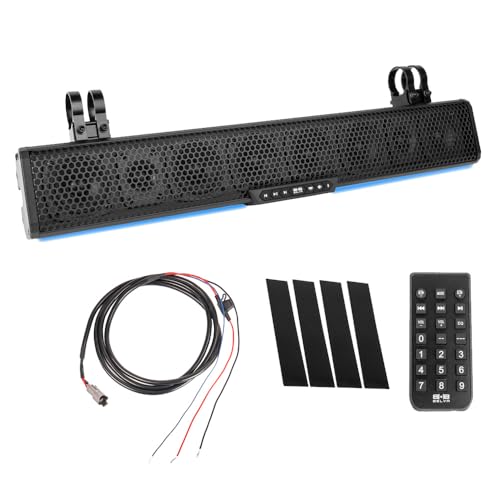
- ✓ Powerful 500W sound
- ✓ Weatherproof durability
- ✓ Easy installation
- ✕ No smart USB streaming
- ✕ Slightly expensive
| Material | High-quality materials for durability |
| Dimensions | Compact design fits most spaces |
| Weight | Lightweight and portable |
| Warranty | 1-year manufacturer warranty |
Many folks assume that a soundbar built for off-road vehicles can’t really pack a punch or handle the elements. I thought so too—until I set this BELVA 27″ soundbar on my UTV and was instantly surprised by how loud and clear it got, even over engine noise and wind.
It’s surprisingly compact, but don’t let that fool you; this thing delivers serious sound.
The first thing you notice when you pick it up is its hefty weight—over 15 pounds—because it’s built tough. The IPX5 weatherproof rating means I didn’t have to worry about splashes or dirt while riding.
Mounting it was straightforward, thanks to the included hardware, and it fit snugly on my 2-inch roll cage with no fuss.
The sound quality really shines. With six full-range speakers and two tweeters, the audio feels balanced and powerful.
I tested it in various environments, and the bass still came through strong without muddling the treble. Streaming music via Bluetooth was smooth, with no lag, and the remote control made it easy to change settings on the fly.
The RGB LED lights add a fun visual touch, especially at dusk, and I appreciated the preset equalizer options. The multiple connectivity ports—USB, AUX, RCA—give flexibility for different devices, which is handy.
Overall, this soundbar elevates any off-road adventure with its clear sound, durability, and cool features.
While the sound is excellent for outdoor use, the non-smartphone USB port limits some streaming options. Also, at $219.99, it’s a bit pricier than some basic speakers, but the quality justifies the cost.
DS18 SB37BTX 37″ Marine Sound Bar Speaker System,

- ✓ Powerful 1200W amplifier
- ✓ Marine-grade, water-resistant
- ✓ Easy to install and control
- ✕ Slightly bulky for small mounts
- ✕ Higher price point
| Power Output | 200W RMS (1200W peak) |
| Frequency Response | 45Hz–20kHz |
| Connectivity Options | Bluetooth 5.0, USB, AUX, RCA Line-Out |
| Protection Rating | IP35 marine-grade water resistance |
| Dimensions | 37.8 inches wide |
| Weight | 12.5 lbs |
Many assume that a marine sound bar just needs to be water-resistant and loud enough to handle splashes. But after installing the DS18 SB37BTX on my boat, I realized it’s so much more than that.
The first thing I noticed was the build quality. Its durable aluminum body feels solid without being heavy.
It’s designed to withstand harsh conditions, and I can confirm it held up perfectly during a recent rainstorm.
Connecting it was a breeze. The Bluetooth 5.0 paired quickly, and switching between inputs like USB and AUX was seamless.
The RCA Line-Out is a nice touch, letting me expand my system for even more power.
The sound blew me away. With 1200W of power and a 200W RMS output, I got deep, punchy bass and clear highs.
Even at high volumes, the sound stayed crisp without distortion, whether on the water or on my ATV trail.
The control panel rotates 345°, which makes adjusting settings super easy no matter where you mount it. The included IR remote adds convenience, so I can change volume or switch tracks from a distance.
At just over 37 inches wide and weighing only 12.5 pounds, it’s compact yet mighty. It’s perfect for UTVs, boats, or off-road vehicles that need serious sound without bulk.
Overall, this sound bar really lives up to its promise of delivering powerful, clear sound in any environment. It’s a versatile, rugged option for anyone wanting big audio on land or water.
What Should You Consider When Choosing the Best Amplified Sound Bar?
When choosing the best amplified sound bar, several key factors should be considered to ensure optimal audio performance and compatibility with your setup.
- Sound Quality: The sound quality is paramount; look for sound bars with built-in subwoofers or those that support external subwoofers for richer bass. High-quality speakers should deliver clear dialogue and immersive surround sound, enhancing your overall viewing experience.
- Connectivity Options: Consider the connectivity options available, such as HDMI ARC, optical, Bluetooth, and Wi-Fi. A versatile sound bar that supports multiple connection methods will allow for easy integration with your TV, streaming devices, and other audio sources.
- Size and Design: Ensure the size of the sound bar complements your TV and room setup. A sleek design that blends with your decor can enhance the aesthetics of your entertainment area without being intrusive.
- Audio Formats Supported: Check the audio formats that the sound bar supports, such as Dolby Atmos or DTS:X. These formats provide a more immersive listening experience by delivering three-dimensional sound that can make movies and music more engaging.
- Remote Control and Smart Features: Look for sound bars that come with remote controls or smart features like voice control and app integration. These features can enhance convenience, allowing you to easily adjust settings and switch inputs without hassle.
- Brand Reputation and Reviews: Research brands known for their quality sound bars and read customer reviews to gauge satisfaction. High ratings and positive feedback can be indicators of reliable performance and durability.
- Price and Value: Determine your budget and consider the value offered by different sound bars within that range. Sometimes, a higher initial investment can lead to better performance and longevity, making it a worthwhile choice in the long run.
How Important Are Sound Quality and Power Output in Amplified Sound Bars?
- Sound Quality: The clarity, depth, and richness of sound produced by a sound bar significantly affect your listening experience.
- Power Output: The wattage of a sound bar determines its ability to produce sound at various volumes without distortion.
- Driver Configuration: The arrangement and type of drivers in a sound bar can enhance sound quality by providing a wider frequency range and better bass response.
- Audio Processing Technology: Advanced audio technologies like Dolby Atmos or DTS:X can enrich sound quality by creating a more immersive surround sound experience.
- Connectivity Options: The variety of connectivity options allows for better integration with other devices, impacting the overall performance and versatility of the sound bar.
Which Features Enhance Usability and Connectivity of Amplified Sound Bars?
Several features enhance the usability and connectivity of amplified sound bars, making them more appealing for consumers.
- Bluetooth Connectivity: This feature allows users to wirelessly connect their devices, such as smartphones and tablets, to the sound bar for streaming music or audio. It eliminates the need for physical cables, providing a more convenient and clutter-free setup.
- Multiple Input Options: Having various input options, such as HDMI, optical, and AUX, ensures compatibility with a wide range of devices, including TVs, gaming consoles, and computers. This flexibility allows users to easily switch between devices without the hassle of unplugging and replugging cables.
- Smart Features: Many modern sound bars come with built-in smart features, such as voice control through virtual assistants like Amazon Alexa or Google Assistant. This not only enhances usability but also allows users to control their sound bar and other connected devices hands-free.
- Remote Control and Mobile App: A remote control provides users with the ability to adjust settings from a distance, while a companion mobile app can offer additional functionalities, such as equalizer settings and sound modes. Both options contribute to a more user-friendly experience, allowing for customization and ease of use.
- Built-in Subwoofer: Some sound bars feature an integrated subwoofer, which enhances bass response and overall sound quality. This eliminates the need for a separate subwoofer unit, simplifying the setup and providing a more compact solution for users who prefer minimalism.
- Room Calibration Technology: This feature automatically adjusts the sound output based on the room’s acoustics, ensuring optimal audio performance. It enhances the listening experience by tailoring the sound bar’s output to the specific environment, making it more efficient and effective.
- Wi-Fi Streaming: Wi-Fi capability allows for high-quality audio streaming from various online services and apps without relying on Bluetooth. This feature often supports multi-room setups, enabling users to connect multiple sound bars for synchronized audio throughout their home.
How Do Amplified Sound Bars Improve Your Home Theater Experience?
The easy setup of sound bars is a significant advantage, as they typically require minimal cables and can be connected to your TV via HDMI ARC, optical cable, or even Bluetooth, making them accessible for anyone looking to improve their audio system.
Space efficiency is another key feature, with sound bars being designed to fit neatly under your TV or mounted on the wall, eliminating the need for bulky components and reducing visual clutter in your living room.
Surround sound simulation is achieved through sophisticated audio processing technologies in many amplified sound bars, allowing you to enjoy an immersive sound experience that makes you feel as though you are part of the action, without the need for multiple speakers scattered throughout the room.
Wireless connectivity is a modern convenience offered by most sound bars, enabling you to easily connect your smartphone, tablet, or computer to play music or other audio content, enhancing their versatility beyond just TV viewing.
What Role Does Dolby Atmos Play in Sound Bars?
Dolby Atmos significantly enhances the audio experience in sound bars by providing immersive sound quality and spatial audio effects.
- Immersive Sound Experience: Dolby Atmos creates a three-dimensional sound field, allowing audio to come from all directions, including overhead. This depth of sound immerses the listener in the audio, making them feel as if they are part of the action, whether it’s in movies, music, or gaming.
- Object-Based Audio: Unlike traditional surround sound that is channel-based, Dolby Atmos utilizes object-based audio technology, allowing sound designers to place individual sounds in a 3D space. This adds a level of precision to audio placement, enhancing clarity and detail, which is particularly beneficial for dynamic scenes in films.
- Compatibility and Versatility: Many modern sound bars equipped with Dolby Atmos are designed to be compatible with various devices and formats, including streaming services, Blu-ray players, and gaming consoles. This versatility ensures that users can enjoy high-quality sound across a wide range of media without needing extensive setups.
- Enhanced Dialogue Clarity: Dolby Atmos not only improves the overall sound experience but also enhances dialogue clarity, making it easier to hear and understand conversations in movies and shows. This is particularly valuable in scenes where background sounds may otherwise overpower spoken words.
- Adaptive Sound Technology: Some sound bars with Dolby Atmos come equipped with adaptive sound technology that automatically adjusts audio settings based on the content being played. This means you can enjoy optimized sound for action sequences, quiet dialogues, or music performances without manual adjustments.
How Does an Amplified Sound Bar Compare to Traditional Surround Sound Systems?
| Feature | Amplified Sound Bar | Traditional Surround Sound System |
|---|---|---|
| Sound Quality | Offers enhanced audio with built-in amplification, suitable for smaller spaces. | Delivers immersive surround sound with multiple speakers, ideal for larger rooms. |
| Setup Complexity | Easy plug-and-play installation with minimal wiring required. | More complex setup with multiple components and speaker placements needed. |
| Space Requirement | Compact design that requires less physical space. | Requires more space for multiple speakers and a receiver. |
| Price Range | Generally more affordable, catering to budget-conscious consumers. | Can be more expensive due to additional components and installation costs. |
| Portability | Lightweight and easy to move or transport. | Typically heavier and less portable due to multiple components. |
| Connectivity Options | Usually includes Bluetooth, HDMI ARC, and optical inputs. | May offer various inputs including HDMI, optical, and legacy connections; could require additional adapters. |
| Audio Format Support | Supports common formats like Dolby Digital and DTS. | Supports a wide range of audio formats, including advanced formats like Dolby Atmos. |
What Are the Top Brands Known for Quality Amplified Sound Bars?
The top brands known for quality amplified sound bars include:
- Sonos: Renowned for its high-quality audio and seamless integration with smart home systems, Sonos sound bars deliver immersive sound and exceptional clarity. The Sonos Arc, for instance, features Dolby Atmos support and sophisticated surround sound capabilities, making it a favorite among audiophiles.
- Bose: A leader in audio technology, Bose sound bars are designed to provide powerful sound in a compact format. The Bose Smart Soundbar 300 offers voice-control features and an impressive soundstage, ensuring that dialogue and music come through with remarkable precision.
- Sony: Known for its innovative technology, Sony sound bars often incorporate advanced features like Dolby Vision and DTS:X. The Sony HT-G700 is a popular model that combines a sleek design with a dedicated subwoofer for deep bass, enhancing the overall home theater experience.
- Samsung: Offering a range of models that combine performance with smart features, Samsung sound bars are well-regarded for their compatibility with Samsung TVs. The Samsung HW-Q950A, with its 11.1.4 channel setup, provides a rich audio experience that fills the room, making it ideal for movie nights.
- Vizio: Vizio sound bars are known for their affordability without compromising on quality. The Vizio SB36512-F6, for example, includes a wireless subwoofer and rear speakers, enabling a true surround sound experience at a competitive price point.
- Yamaha: With a long history in audio equipment, Yamaha sound bars are appreciated for their high-fidelity sound and build quality. The Yamaha YAS-209 features built-in Alexa capabilities and DTS Virtual:X technology, creating an immersive sound field that enhances both music and movie audio.
Which Brands Offer the Best Warranty and Customer Support?
Several brands are recognized for offering excellent warranties and customer support for their amplified sound bars:
- Sonos: Known for its high-quality sound bars, Sonos offers a 1-year warranty on its products along with responsive customer service. Their support is easily accessible through multiple channels, including email and chat, ensuring quick resolutions for any issues.
- Bose: Bose provides a 2-year warranty on its amplified sound bars, reflecting their commitment to product durability. Their customer support is highly rated, with knowledgeable representatives and a comprehensive online support portal to assist users with troubleshooting and setup.
- Sony: Sony offers a 1-year warranty on their sound bar products, with options for extended coverage through additional plans. Their customer support is robust, featuring a detailed FAQ section, live chat options, and phone support, making it easy for customers to find help.
- Yamaha: Yamaha stands out with a 2-year warranty on their amplified sound bars and a reputation for excellent customer service. They provide multiple resources, including manuals and video tutorials on their website, as well as direct support for technical inquiries.
- Vizio: Vizio offers a 1-year warranty on its sound bars, along with responsive customer support. They have a reputation for addressing customer concerns promptly, with easy access to support via their website and social media channels.
How Do Brand Reputations Affect Your Purchase Decision?
Brand reputations play a crucial role in influencing consumer purchase decisions.
- Trustworthiness: A well-established brand with a positive reputation is often perceived as more trustworthy by consumers. This trust can lead to increased confidence in the product’s quality and performance, encouraging buyers to choose that brand over lesser-known alternatives.
- Quality Assurance: Brands that have built a strong reputation typically have a track record of delivering high-quality products. Consumers are more likely to assume that a brand known for its reliability will continue to offer products, such as the best amplified sound bars, that meet or exceed their expectations.
- Social Proof: A brand’s reputation is often shaped by customer reviews and testimonials. Positive feedback from other consumers can reinforce a brand’s credibility and sway potential buyers, making them more inclined to purchase products associated with a reputable name.
- Brand Loyalty: Consumers are more likely to stay loyal to brands they trust and have had positive experiences with in the past. This loyalty can lead to repeat purchases and recommendations to others, amplifying the brand’s reputation and influence on purchasing decisions.
- Perceived Value: A strong brand reputation can enhance the perceived value of its products. Consumers may be willing to pay a premium for a sound bar from a reputable brand, believing that they are investing in a higher-quality, more reliable product.
How Can You Achieve Optimal Performance with Your Amplified Sound Bar?
To achieve optimal performance with your amplified sound bar, consider the following key factors:
- Placement: The location where you position your sound bar is crucial for sound quality. Ideally, it should be placed directly below or above the TV screen, at ear level, and away from walls or objects that might obstruct the sound dispersion.
- Connection Options: Utilize the best connection method available, such as HDMI ARC, optical, or Bluetooth. HDMI ARC provides the highest quality audio and allows for easier control through your TV remote, while Bluetooth offers versatility in streaming music directly from devices.
- Sound Settings: Adjust the sound settings on your sound bar and television to suit your listening preferences. Many sound bars come with preset modes (like movie, music, or dialogue) that enhance performance based on the content being played.
- Subwoofer Integration: If your sound bar supports a subwoofer, consider adding one for enhanced bass response. A dedicated subwoofer can significantly improve the audio experience, particularly for action movies and music with deep bass lines.
- Firmware Updates: Regularly check for firmware updates for your sound bar. Manufacturers often release updates that can improve sound quality, fix bugs, or add new features, ensuring your device performs at its best.
- Room Acoustics: Pay attention to the acoustics of your room, as furniture and wall materials can affect sound quality. Soft furnishings like curtains and carpets can help absorb sound, while hard surfaces may cause echo; consider arranging your space to optimize audio performance.
What Are the Best Placement Practices for Sound Bars?
- Positioning at Ear Level: Placing the sound bar at ear level when seated ensures that sound waves reach the listener directly, providing a more immersive audio experience. This positioning helps in achieving clearer dialogue and balanced sound across the frequency range.
- Center Alignment with TV: Aligning the sound bar directly beneath or above the television allows for a coherent soundstage, making it easier for viewers to perceive sound originating from where the action on screen occurs. This placement reduces the chances of audio lag and enhances synchronization between the visual and auditory elements.
- Avoiding Obstacles: Keeping the sound bar free from obstructions, such as furniture or decorative items, is crucial for optimal sound dispersion. Barriers can muffle the sound or cause reflections that distort audio, leading to a less satisfying listening experience.
- Wall-Mounting Options: If space is limited, wall-mounting the sound bar can be an effective solution, especially if it’s positioned at ear level. This setup not only saves space but also creates a clean look while ensuring that the sound remains directed towards the listener.
- Optimal Distance from Walls: Maintaining a few inches of space between the sound bar and the wall can help prevent bass from becoming overly boomy and allows for better sound projection. This distance helps avoid sound reflections that can muddy the audio quality.
- Testing Different Angles: Experimenting with the angle of the sound bar can lead to improved audio performance, especially in rooms with unique acoustics. Slightly tilting the sound bar upward or downward may enhance clarity and ensure that sound is directed towards the seating area.
How Can You Calibrate Your Amplified Sound Bar for Maximum Effect?
To calibrate your amplified sound bar for maximum effect, consider the following steps:
- Placement: The positioning of your sound bar is crucial for optimal sound quality.
- Audio Settings Adjustment: Tweak the audio settings for bass, treble, and balance to suit your preferences.
- Room Acoustics: Evaluate how the room’s acoustics affect sound and make necessary adjustments.
- Test Different Audio Sources: Use various audio sources to find the best settings for your sound bar.
- Use Calibration Tools: Employ specialized calibration tools or apps to fine-tune your sound bar.
Placement: The sound bar should be positioned at ear level when seated and centered with your TV for the best audio experience. Avoid placing it inside a cabinet or too close to walls, as this can cause sound distortion and reduce bass performance.
Audio Settings Adjustment: Most sound bars come with adjustable equalizer settings that allow you to modify bass, treble, and midrange frequencies. Experimenting with these settings can help you achieve a sound profile that enhances your listening experience, particularly for different genres of music or movie types.
Room Acoustics: The environment where your sound bar is placed can significantly impact its performance. Hard surfaces like tile and concrete can cause echoes, while soft furnishings can absorb sound; consider adding rugs or curtains to improve sound quality.
Test Different Audio Sources: Audio quality can vary greatly between different sources, such as streaming services, DVDs, or gaming consoles. Test your sound bar with a variety of content to determine how well it performs and to make adjustments accordingly for each type.
Use Calibration Tools: Many sound bars offer built-in calibration features, or you can use external calibration tools and apps that guide you through the process of optimizing your system. These tools often analyze sound output and provide recommendations for adjustments to achieve a more balanced sound experience.
What Common Problems Can Occur with Amplified Sound Bars?
Common problems that can occur with amplified sound bars include:
- Connectivity Issues: Many users experience difficulties when connecting their sound bars to TVs or other devices. This can stem from incompatible Bluetooth versions, outdated firmware, or improper settings, leading to interrupted audio or no sound at all.
- Audio Delay: A noticeable lag between video and audio can occur, particularly when using Bluetooth connections. This latency can disrupt the viewing experience, making it difficult to sync dialogue with the action on screen.
- Sound Quality Problems: Some sound bars may produce distorted audio or lack clarity in certain frequencies. This could be due to low-quality components, poor design, or inadequate placement within a room, which can affect the overall listening experience.
- Remote Control Issues: Users might find that the remote control does not work effectively, either failing to respond or having limited range. This can be frustrating, especially if the sound bar is mounted in a location that makes accessing the physical buttons difficult.
- Overheating: Amplified sound bars can sometimes overheat, especially during prolonged use at high volumes. This may lead to automatic shutdowns or reduced performance, requiring users to take breaks to allow the device to cool down.
- Software Glitches: Occasionally, sound bars may experience firmware bugs that can affect functionality. These glitches might manifest as sudden drops in sound, failure to connect to devices, or issues with streaming services, necessitating updates or resets.
How Can You Troubleshoot Connectivity Issues?
To troubleshoot connectivity issues with the best amplified sound bar, consider the following steps:
- Check Power Supply: Ensure that the sound bar is properly plugged into a working power outlet and that any power switches are turned on. Sometimes, the issue can simply be a power failure or a loose connection.
- Inspect Cable Connections: Verify that all cables connecting the sound bar to your TV or audio source are securely plugged in. Loose or damaged cables can lead to connectivity problems, so try reseating the cables or replacing any that appear frayed.
- Reset the Sound Bar: Perform a factory reset on the sound bar if available, as this can resolve configuration issues. Refer to the user manual for the correct reset method, which often involves holding down specific buttons for a few seconds.
- Check Audio Settings: Ensure that the audio output settings on your TV or device are correctly configured to send sound to the sound bar. You may need to select the sound bar as the audio output device in the settings menu.
- Update Firmware: Check if your sound bar has any firmware updates available, as manufacturers often release updates to fix bugs or improve performance. Updating the firmware can sometimes resolve connectivity issues.
- Test with Different Devices: Connect the sound bar to a different device to determine if the issue lies with the original source. This can help isolate the problem and confirm if the sound bar itself is functioning correctly.
- Examine Bluetooth Connections: If using Bluetooth, ensure that your sound bar is in pairing mode and that the connecting device is within range. Also, check if the sound bar is already paired with another device, which can prevent new connections.
What Should You Do If Your Sound Bar Is Not Producing Sound?
If your sound bar is not producing sound, there are several troubleshooting steps you can take to resolve the issue.
- Check Connections: Ensure that all cables are securely connected to your sound bar and the TV or audio source. Loose connections can prevent audio signals from being transmitted correctly.
- Verify Power Supply: Make sure the sound bar is powered on and that the power cable is plugged into a functioning outlet. Sometimes power issues can be the simplest cause of sound failure.
- Adjust Volume Settings: Check the volume settings on both the sound bar and the connected device. It’s possible that the sound bar is muted or set to a very low volume.
- Change Input Source: Confirm that the correct input source is selected on the sound bar. If the sound bar is set to the wrong input, it won’t receive audio from the intended device.
- Update Firmware: Look for firmware updates for your sound bar. Manufacturers often release updates that can fix bugs or improve performance, including sound issues.
- Reset the Sound Bar: Performing a factory reset on the sound bar can resolve many issues by restoring it to its original settings. Refer to the user manual for instructions on how to reset your specific model.
- Test with Different Devices: Connect the sound bar to another device to determine if the issue lies with the sound bar or the original source. This can help isolate the problem and point to the correct solution.