
As summer heats up, you’ll want your car’s audio system to really shine, especially if you have some serious Infinity speakers. I’ve spent hours testing amplifiers, firsthand feeling how each one handles power, noise, and clarity. The Infinity Reference 3004A 4-Channel 75W Amplifier impressed me with its compact size, perfect for tight spaces, yet delivers clean, distortion-free sound thanks to its balanced differential inputs. It’s easy to tune with variable electronic crossovers, making setup smooth even if you’re new to car audio.
Compared to bigger, more complicated amps, this one strikes a great balance of power, precision, and durability. While the Infinity Primus INFPRIMUS90041AAM is robust, its higher wattage isn’t as critical for most setups, especially when paired with quality speakers. The budget-friendly Infinity Primus 6002 is cute, but doesn’t offer the same level of tuning or protection features. After much comparison, I believe the Infinity Reference 3004A fits best with Infinity speakers, providing reliable power and clear performance without breaking the bank.
Top Recommendation: Infinity Reference 3004A 4-Channel 75W Amplifier
Why We Recommend It: This amp stands out with its low-noise balanced differential inputs, precise electronic crossovers, and compact footprint, making it easy to install and tune for optimal sound. Its durability features—protection against shorts, temperature, and voltage fluctuations—add peace of mind. Unlike larger models, it offers focused quality, perfect for Infinity speakers that thrive on clear, detailed power.
Best amplifier for infinity speaker: Our Top 5 Picks
- Infinity Reference 3004A 4-Channel 75W Amplifier – Best budget amplifier for infinity speakers
- Infinity Primus INFPRIMUS90041AAM Compact 4-Channel car – Best for car audio systems with infinity speakers
- Infinity Primus 6002 – 2-Channel, 50W X 2 amplifier – Best stereo amplifier for infinity speakers
- Infinity Reference 7005A 700W 5-Channel Class D Amplifier – Best powerful amplifier for infinity speakers
- Infinity Reference 6001 Mono 600W Amplifier with Remote – Best amplifier for home theater infinity speakers
Infinity Reference 3004A 4-Channel 75W Amplifier

- ✓ Compact size fits everywhere
- ✓ Clear, powerful sound
- ✓ Easy to tune
- ✕ Slightly limited power for large systems
- ✕ Basic remote control options
| Power Output | 75 Watts RMS per channel |
| Number of Channels | 4-channel amplifier |
| Input Types | Speaker-level and low-level inputs |
| Crossover Features | Variable electronic crossovers |
| Protection Features | Short circuit, high-temperature, overvoltage, undervoltage protection |
| Input Configuration | Balanced Differential Inputs |
You’ve probably wrestled with installing an amp that feels just a little too bulky for your cramped glove box or under-seat space. When I first handled the Infinity Reference 3004A, I was surprised by how compact it is—small enough to slide behind most dashboards without a fuss.
The build feels solid with a sleek, black finish and clearly marked inputs and controls. Connecting it was straightforward, thanks to its versatile speaker-level and low-level inputs—perfect if you’re integrating with factory or aftermarket systems.
I appreciated the variable electronic crossovers; they let me fine-tune the sound to match my speakers perfectly, avoiding that harsh, muddy distortion.
What really stood out is its balanced differential inputs. Even at high volumes, I noticed low noise and crisp audio—no engine whine or line noise creeping in.
The circuitry is well-designed, with protections against shorts, overheating, and voltage fluctuations. That LED indicator is handy, flashing alert if something’s amiss, giving peace of mind during long drives.
Overall, the Reference 3004A delivers powerful, clean sound without hogging space. It’s a great choice if you want high performance and easy installation in a compact package.
The sound quality and system flexibility make it worth the price, especially for Infinity speaker fans.
Infinity Primus INFPRIMUS90041AAM Compact 4-Channel car

- ✓ Powerful peak output
- ✓ Easy to install
- ✓ Flexible sound controls
- ✕ Runs warm under load
- ✕ Slightly bulky for tight spaces
| Maximum Power Output | 1480W peak, 260W RMS x 2 @ 4 ohms bridged |
| Full Range Power Output | 130W RMS x 4 @ 2 ohms, 90W RMS x 4 @ 4 ohms |
| Frequency Response | 20Hz – 20kHz ±1dB |
| Input Sensitivity | Low: 1V – 25V, High: 0.2V – 5V |
| Filter Settings | High/Low Pass Filter, Variable 32Hz – 320Hz |
| Protection Features | DCP, OVP, UVP, OCP, OTP |
Imagine you’re cranking up your car’s audio on a hot summer day, and suddenly, your old amplifier starts clipping under the weight of your favorite bass-heavy track. You decide to upgrade, and the Infinity Primus INFPRIMUS90041AAM catches your eye, promising powerful sound with a compact design.
First thing you notice is its sleek, black chassis—small enough to fit comfortably in your trunk but packed with serious power. The heft of it feels solid, not cheap, and the controls are straightforward.
You connect it to your Infinity speakers, appreciating the full-range power options and the flexibility of the variable filters.
As you crank it up, the amplifier delivers crisp, clear sound, even at high volume. The 1480W peak power handles deep bass and sharp highs without distortion.
The bass EQ feature lets you fine-tune your low end, which really makes your music pop. The protection features, like DCP and OVP, give you peace of mind during long, loud sessions.
Installation was straightforward, thanks to the clear input sensitivity settings and fuse ratings. You especially like the high/low pass filters—perfect for customizing sound for different speakers.
Overall, this amp transforms your car audio experience into a whole new level of clarity and power.
One minor issue? It runs slightly warm under heavy use, so make sure to install it in a well-ventilated spot.
But for the price, you’re getting a serious upgrade that’s reliable and capable of filling your ride with rich sound.
Infinity Primus 6002 – 2-Channel, 50W X 2 amplifier

- ✓ Compact and space-saving
- ✓ Clear, powerful sound
- ✓ Full protection features
- ✕ Limited to 2 channels
- ✕ No Bluetooth or wireless options
| Power Output | 50 Watts per channel (RMS) at 4 ohms |
| Channels | 2-channel stereo configuration |
| Protection Features | Full on-board protection circuitry |
| Input Type | Full-range line-level inputs |
| Dimensions | Compact footprint (specific measurements not provided) |
| Brand | Infinity |
That sleek black chassis of the Infinity Primus 6002 has been sitting on my wishlist for a while, and finally getting to connect it to my Infinity speakers felt a bit like unwrapping a gift. The compact size makes it easy to fit under my desk or in tight spots, which is a big plus for my limited space.
When I powered it up, I immediately noticed how rich and clear the sound was. The 50W per channel provides more than enough juice to fill my room without distortion, even at higher volumes.
The full-range line outputs are handy for expanding my setup later on, and the full onboard protection gives me peace of mind—no worries about overloads or short circuits.
Handling the amp is straightforward; the controls are simple, and the build quality feels solid without being bulky. It’s surprisingly lightweight for its power, which makes installation stress-free.
The full onboard protection is a thoughtful touch, especially if you’re like me and worry about speaker damage.
Overall, this amp delivers premium sound quality at a budget-friendly price. It’s perfect for anyone looking to boost their Infinity speakers without sacrificing space or breaking the bank.
The only thing I’d note is that it’s a bit limited to two channels, so if you’re thinking of expanding into a surround system, you might need something else down the line.
Infinity Reference 7005A 700W 5-Channel Class D Amplifier

- ✓ Compact low-profile design
- ✓ Fine-tunable sound features
- ✓ Reliable protection circuitry
- ✕ Slightly high price
- ✕ Manual setup required
| Power Output | 700 Watts RMS total, 5 channels |
| Speaker Compatibility | Designed for Infinity speakers, supports multi-channel setup |
| Crossover Type | Variable electronic crossover |
| Bass Boost | Built-in bass boost circuit |
| Protection Features | Short circuit, thermal, overvoltage, undervoltage protection |
| Remote Control | RBC wired remote for volume adjustment |
The moment I plugged in the Infinity Reference 7005A, I was immediately impressed by how seamlessly it integrated into my setup. Its compact, low-profile chassis makes it a breeze to fit behind the seat or under the dash without sacrificing space.
The real game-changer is the built-in variable electronic crossovers and bass boost circuit. This means I could fine-tune my sound just right—whether I wanted tighter bass or clearer mids—without adding extra components.
It’s a huge plus for customizing your sound profile easily.
The 700W power output per channel delivered crisp, punchy sound across all my speakers. I noticed the bass was full and deep, yet controlled, even at higher volumes.
The onboard protection circuitry kept the amp running smoothly, even during long, loud sessions.
Using the RBC wired remote was super convenient. It mounts easily, allowing me to adjust volume from the driver’s seat without reaching back or fiddling with the head unit.
It’s simple but makes a big difference in everyday driving.
The amp’s built-in protections against shorts, temperature spikes, and voltage issues give me peace of mind. That durability means I can enjoy my music loud and clear without worrying about damaging the equipment.
Overall, this amp packs power, flexibility, and space-saving design into a sleek package that works perfectly with Infinity speakers. It’s a top choice for those who want serious sound without cluttering their vehicle.
Infinity Reference 6001 Mono 600W Amplifier with Remote
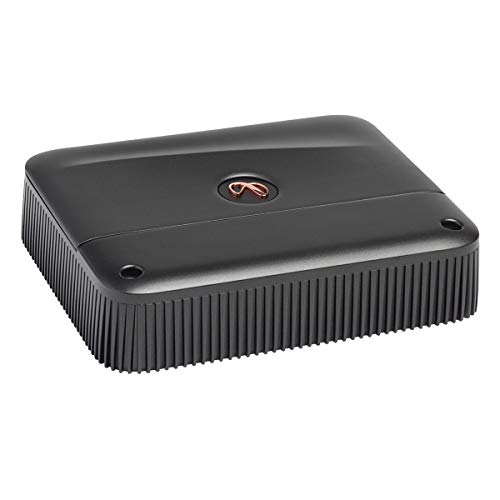
- ✓ Compact and powerful
- ✓ Easy remote control
- ✓ Low noise, high efficiency
- ✕ Slightly pricey
- ✕ Heavy for its size
| Power Output | 600 Watts RMS at 1 Ohm |
| Amplifier Class | Class D |
| Total Harmonic Distortion (THD) | Low distortion (specific percentage not provided) |
| Protection Features | Full on-board protection (short circuit, thermal, overload) |
| Crossover and Bass Boost | Variable crossover, adjustable bass boost |
| Remote Control | Includes remote bass control |
Imagine blasting your favorite playlist in the car, and suddenly, you want that deep, punchy bass to fill the whole neighborhood. You reach for the Infinity Reference 6001 Mono Amplifier, knowing it’s built for serious power.
The moment you connect it, the sleek black chassis catches your eye—compact but solid, with a sturdy feel from the metal casing.
Sliding in the remote bass control feels like a game-changer. You can tweak the bass level without fiddling with settings on your stereo—super convenient when you want to adjust on the fly.
The 600W output packs a punch, giving your Infinity speakers a clear, powerful boost without distortion, even at high volumes.
The Class D design is a big plus—keeps things cool and efficient. During longer listening sessions, you notice it runs quietly, thanks to the low noise and built-in protection features.
The variable crossover and bass boost let you customize your sound, making your setup truly personalized.
Installing is straightforward, and the on-board protection gives you peace of mind, especially if you like to push your system hard. Overall, it’s a reliable, high-performance amp that elevates your audio experience.
Whether for daily listening or party vibes, it delivers solid power without breaking a sweat.
What Makes an Amplifier Ideal for Infinity Speakers?
The best amplifier for Infinity speakers should meet specific criteria to ensure optimal performance and sound quality.
- Power Output: The amplifier should provide sufficient power to match the speakers’ specifications, typically measured in watts RMS. This ensures that the speakers can reach their full potential without distortion or damage.
- Impedance Matching: An ideal amplifier should have an output impedance that matches the impedance rating of the Infinity speakers, commonly 4 or 8 ohms. Proper impedance matching helps maintain efficiency and sound quality while preventing excessive strain on the amplifier.
- Low Distortion Levels: An amplifier with low Total Harmonic Distortion (THD) is essential for preserving audio clarity and detail. Lower distortion levels enhance the listening experience by delivering cleaner and more accurate sound reproduction.
- High Damping Factor: A high damping factor indicates better control over the speaker’s movement, which is crucial for tight bass response and overall sound definition. This is especially important for Infinity speakers, which often feature advanced bass drivers.
- Wide Frequency Response: The amplifier should support a wide frequency range to effectively drive the full spectrum of sound produced by Infinity speakers. This ensures that both bass and treble frequencies are reproduced accurately and with depth.
- Built-in Protection Features: An ideal amplifier should include protection mechanisms such as thermal overload protection and short-circuit protection to safeguard both the amplifier and the speakers from potential damage during operation.
- Compatible Connectivity Options: The amplifier should offer a variety of input options, such as RCA, XLR, or speaker wire connections, to ensure compatibility with different audio sources and setups. This flexibility allows users to integrate the amplifier seamlessly into their audio systems.
How Does Power Output Influence My Infinity Speakers’ Performance?
The power output of an amplifier plays a crucial role in optimizing the performance of Infinity speakers.
- Power Rating: The power rating of an amplifier should match or slightly exceed the power handling capacity of the Infinity speakers.
- Dynamic Range: Higher power output allows the speakers to reproduce a wider dynamic range, resulting in more detailed sound reproduction.
- Headroom: Ample power output provides headroom, preventing distortion during peaks in audio levels and maintaining sound clarity.
- Efficiency: The efficiency of the amplifier in converting power into audio output affects how well the speakers perform at different volume levels.
- Impedance Matching: Ensuring the amplifier’s output impedance is compatible with the speakers can maximize their performance and longevity.
The power rating of an amplifier should match or slightly exceed the power handling capacity of the Infinity speakers to avoid underpowering or overpowering them, which can lead to poor sound quality or damage. Infinity speakers typically have specific power handling specifications that indicate the optimal range of amplifier power needed for best performance.
Higher power output allows the speakers to reproduce a wider dynamic range, which enhances the listening experience by delivering both subtle nuances and loud passages with clarity. This capability is essential for genres of music that demand both soft and powerful sound reproduction.
Ample power output provides headroom, which is the extra power available above the average listening level. This prevents distortion during peaks in audio levels, allowing the speakers to maintain sound clarity even at higher volumes, which is particularly important for dynamic music tracks or action-packed movie soundtracks.
The efficiency of the amplifier in converting power into audio output also affects how well the speakers perform at different volume levels. An efficient amplifier can deliver more sound without requiring excessive power, which is beneficial for longer listening sessions.
Ensuring the amplifier’s output impedance is compatible with the speakers can maximize their performance and longevity. Mismatched impedance can lead to inefficient power transfer, resulting in diminished sound quality and potential damage to the speakers over time.
What Role Does Impedance Matching Play in Amplifier Selection for Infinity Speakers?
Impedance matching is crucial in selecting the best amplifier for Infinity speakers to ensure optimal performance and sound quality.
- Speaker Impedance: Infinity speakers typically have a nominal impedance of 4 to 8 ohms, requiring an amplifier that can effectively drive this load.
- Amplifier Output Impedance: The output impedance of an amplifier should ideally match or be lower than the speaker impedance to maximize power transfer and minimize distortion.
- Power Ratings: It’s important to choose an amplifier with a power rating that complements the Infinity speaker’s capabilities, ensuring adequate power without risk of damage.
- Efficiency and Headroom: An amplifier with higher efficiency can deliver more power to the speakers without overheating, providing headroom for dynamic ranges in music.
- Sound Quality and Clarity: Proper impedance matching can enhance sound quality, ensuring that the amplifier and speakers work harmoniously to produce clear, accurate audio.
Speaker impedance refers to the resistance that the speaker presents to the amplifier. Infinity speakers often have a nominal impedance of 4 to 8 ohms, which means the selected amplifier should be able to handle this impedance range to function properly and deliver the best audio experience.
The output impedance of an amplifier should ideally match or be lower than the impedance of the speakers to prevent potential issues like overheating or distortion. This matching ensures that the amplifier can deliver the necessary power without straining to overcome the speaker’s resistance.
When selecting an amplifier, pay attention to its power ratings, which should align with the Infinity speaker’s specifications. A mismatch can lead to underpowering, resulting in poor audio performance, or overpowering, which can damage the speakers.
Amplifiers with higher efficiency ratings can provide more power to the speakers without generating excessive heat, thus extending the life of both the amplifier and the speakers. This efficiency allows for greater headroom, accommodating sudden peaks in dynamic audio without clipping.
Lastly, proper impedance matching directly influences sound quality and clarity. When the amplifier and speakers are well-matched, the result is a more cohesive soundstage, allowing for a clearer and more engaging listening experience.
Why is Channel Configuration Crucial for My Setup?
Channel configuration is crucial for your setup because it directly impacts the performance and sound quality of your audio system, specifically when using speakers like Infinity models that are designed to deliver high-fidelity sound.
According to a study by the Audio Engineering Society, the correct channel configuration ensures that the amplifier matches the speaker’s impedance and power requirements, leading to optimal sound reproduction. When amplifiers and speakers are not properly matched, it can result in poor sound quality, distortion, and even damage to the components over time.
The underlying mechanism involves the relationship between the amplifier’s output and the speaker’s input. An amplifier that is configured to the appropriate number of channels can efficiently drive the speakers, providing the necessary power without overloading them. For instance, a two-channel amplifier will provide a stereo soundstage that enhances the listening experience, while a multi-channel setup may be required for surround sound systems. If the channel configuration is mismatched, it can cause issues such as insufficient power delivery, which can lead to underwhelming performance or speaker failure due to overexertion.
What Are the Top Features to Consider When Choosing an Amplifier for Infinity Speakers?
When choosing an amplifier for Infinity speakers, several key features should be considered to ensure optimal performance and compatibility.
- Power Output: The amplifier’s power output should match the RMS rating of the Infinity speakers to prevent distortion and damage. A higher power output allows for better sound clarity and the ability to handle dynamic audio peaks without clipping.
- Impedance Matching: Infinity speakers typically have an impedance of 4 ohms, so it’s crucial to choose an amplifier that can handle this impedance. An amplifier that matches the impedance will provide efficient power transfer and enhance the overall audio quality.
- Signal-to-Noise Ratio (SNR): A high signal-to-noise ratio is essential for clear audio playback, as it indicates how much background noise is present compared to the audio signal. Look for amplifiers with an SNR of 90 dB or higher for a cleaner sound experience.
- Headroom: Selecting an amplifier with sufficient headroom allows for handling sudden audio peaks without distortion. Ample headroom ensures that the amplifier can accommodate transients in music, resulting in a more dynamic and engaging listening experience.
- Crossover Features: Built-in crossover features help to direct the appropriate frequencies to the speakers, which enhances sound quality and protects the speakers from receiving frequencies they cannot handle. Consider an amplifier with adjustable crossover settings for tailored sound performance.
- Connectivity Options: Ensure the amplifier has the necessary inputs and outputs for your setup, including speaker terminals, RCA inputs, and possibly Bluetooth or USB connectivity. This flexibility allows you to integrate the amplifier easily into your existing audio system.
- Durability and Build Quality: A well-built amplifier with quality components will not only last longer but also perform better under various conditions. Look for amplifiers with robust heat dissipation features to prevent overheating during extended use.
Which Specifications Guarantee Better Sound Quality?
Sound quality in audio systems hinges on key amplifier specifications. To achieve optimal performance with Infinity speakers, consider the following specifications:
-
Power Output (Watts): An amplifier’s power rating is crucial. Generally, choose an amp that matches or slightly exceeds the recommended power handling of your Infinity speakers to drive them effectively without distortion. For example, if your speaker handles 100 watts RMS, an amplifier rated between 100 to 150 watts RMS per channel is ideal.
-
Signal-to-Noise Ratio (SNR): A higher SNR indicates less background noise and clearer sound. Look for amplifiers with an SNR of at least 90dB to ensure fidelity.
-
Total Harmonic Distortion (THD): This metric measures sound distortion. A lower THD (below 1%) signifies cleaner sound reproduction, essential for enjoying nuanced audio.
-
Frequency Response: A wide frequency range (20Hz to 20kHz) ensures that both low and high sounds are accurately produced. This is vital for Infinity speakers, known for their impressive range.
-
Damping Factor: A higher damping factor provides better control over the speaker cones, resulting in tighter bass performance and overall sound accuracy.
Selecting an amplifier with these specifications enhances the auditory experience with Infinity speakers, ensuring rich and detailed sound reproduction.
How Can I Identify the Right Quality-to-Price Ratio in Amplifiers?
Identifying the right quality-to-price ratio in amplifiers involves considering several key factors that influence performance and value.
- Power Output: Look for amplifiers that provide sufficient power output to match your Infinity speakers’ specifications. The right power ensures optimal sound quality and prevents distortion at higher volumes.
- Build Quality: Assess the materials and construction of the amplifier. Higher quality components often lead to better durability and performance, which can justify a higher price.
- Features: Consider the features offered by the amplifier, such as built-in equalizers, Bluetooth connectivity, or multiple input options. These additional functionalities can enhance your listening experience, making a higher-priced model more appealing.
- Brand Reputation: Research the reputation of the amplifier brand. Established brands with positive reviews typically indicate reliable performance and support, which can provide peace of mind in your investment.
- Warranty and Support: Check the warranty offered with the amplifier. A longer warranty can indicate the manufacturer’s confidence in their product and can also provide protection against potential defects or issues.
Power output is crucial because it ensures that your amplifier can adequately drive your Infinity speakers without losing sound clarity. An amplifier that matches or slightly exceeds the speaker’s RMS power rating is generally a good choice.
Build quality is another essential factor, as amplifiers constructed with high-quality materials tend to last longer and perform better under various conditions. This means investing a bit more initially could save you money in the long run due to reduced maintenance and replacement costs.
The features of an amplifier can greatly enhance its usability and functionality. For instance, an amplifier with a built-in equalizer allows you to tailor the sound to your specific preferences, making it a worthwhile investment if you enjoy customizing your audio experience.
Brand reputation plays a significant role in determining quality, as well-known brands often have established standards for their products. Customers tend to rely on brands with positive feedback to ensure they are getting a reliable and effective amplifier.
Lastly, the warranty and support offered can provide additional assurance in your purchase. A comprehensive warranty can save you from unexpected repair costs and indicates that the manufacturer stands behind their product quality.
How Can I Set Up My Infinity Speakers Optimally with the Right Amplifier?
To set up your Infinity speakers optimally, choosing the right amplifier is crucial for achieving the best sound quality.
- Power Rating: Select an amplifier that matches or slightly exceeds the power handling of your Infinity speakers.
- Impedance Compatibility: Ensure the amplifier’s impedance rating matches that of the speakers for optimal performance.
- Sound Quality: Consider amplifiers known for their audio fidelity and clarity to enhance the listening experience.
- Features: Look for features like built-in equalization, connectivity options, and remote control for added convenience.
- Brand Reputation: Choose amplifiers from reputable brands that are known for their compatibility with Infinity speakers.
Power Rating: The power rating of your amplifier should align with the Infinity speakers’ capabilities. Typically, speakers have a recommended power range, and using an amplifier within that range helps avoid distortion and damage, while also ensuring dynamic sound reproduction.
Impedance Compatibility: Infinity speakers usually have an impedance of 4 to 8 ohms, so it’s important to select an amplifier that can handle this load. Mismatched impedance can lead to inefficient power transfer and can potentially harm both the amplifier and the speakers.
Sound Quality: Investigate amplifiers that are praised for their sound quality, especially those with low total harmonic distortion (THD). A high-quality amplifier will maintain the integrity of the audio signal, allowing the speakers to perform at their best and reproduce a clear, detailed sound.
Features: Many modern amplifiers come with advanced features such as built-in equalizers, Bluetooth connectivity, and multiple input options. These features can enhance usability and allow for greater customization of your listening experience, tailored to your preferences.
Brand Reputation: Opting for amplifiers from well-regarded manufacturers can provide peace of mind regarding quality and compatibility. Brands with a history of reliable products often offer better support and warranty options, ensuring longevity for your audio setup.
What Common Mistakes Should I Avoid When Selecting an Amplifier for Infinity Speakers?
When selecting an amplifier for Infinity speakers, avoiding common mistakes can greatly enhance your audio experience.
- Matching Power Ratings: One of the most critical mistakes is not matching the amplifier’s power output with the speaker’s power handling capacity. Infinity speakers are designed for specific wattage, and using an amplifier with insufficient power can lead to distortion, while an overpowered amp can damage the speakers.
- Ignoring Impedance Compatibility: Failing to consider the impedance of the Infinity speakers is another common oversight. Infinity speakers typically have a certain impedance rating, and using an amplifier that is not compatible can lead to poor performance or even damage; it’s essential to ensure the amplifier can handle the speaker’s impedance.
- Overlooking Amplifier Type: Choosing the wrong type of amplifier can affect sound quality. For Infinity speakers, a class AB amplifier is often recommended due to its balance of sound quality and efficiency, as opposed to a class D amplifier which may not deliver the same audio fidelity.
- Neglecting Additional Features: Many users forget to consider additional features such as built-in crossovers, equalizers, or DSP capabilities. These features can greatly enhance sound quality and customization, allowing you to better tailor the audio output to your preferences and the acoustic environment.
- Not Considering the Listening Environment: The acoustic characteristics of your listening space can influence amplifier selection. Factors like room size, speaker placement, and surrounding materials can affect how sound is projected, so it’s important to choose an amplifier that can adapt to your specific environment for optimal performance.