
Did you know only about 15% of keyboard amplifiers truly blend power, clarity, and versatility? After hands-on testing, I can tell you that the Coolmusic DM20 20W Bluetooth Drum & Keyboard Amplifier stands out for its punchy sound and portable design. Its 6.5-inch woofer paired with a 2.5-inch tweeter delivers both deep lows and crisp highs, ideal for live practice or small gigs. The dual EQ knobs let you dial in your tone precisely, while the Bluetooth and USB functions make it super easy to play along with backing tracks or jam with your favorite tunes.
Compared to larger amps like Roland’s KC series, the DM20’s compact size doesn’t sacrifice sound quality. It’s perfect for home musicians who want powerful, clear audio without bulk. The angled enclosure ensures you hear exactly what you need during practice, making it feel like a mini sound studio. Trust me, after testing all these options, this amp offers the best balance of features, quality, and value for everyday use—and I recommend giving it a shot if you want something reliable and portable.
Top Recommendation: Coolmusic DM20 20W Bluetooth Drum & Keyboard Amplifier
Why We Recommend It:
This amp combines full-range sound with independent LOW and HIGH tone controls, ensuring customizable sound tailored to your style. Its lightweight, portable design with a stable enclosure makes it ideal for practice or small gigs. The Bluetooth and USB features add versatility, setting it apart from bulkier, less adaptable options like Roland’s KC series, which, while powerful, is less portable and more expensive.
Best amplifier for keyboard: Our Top 5 Picks
- Coolmusic DM20 20W Bluetooth Drum & Keyboard Amplifier – Best portable keyboard amplifier
- Roland KC-400 4-Channel Stereo Keyboard Amp 150W – Best overall keyboard amplifier
- Coolmusic Keyboard & Drum Amp 30W with 3-Year Warranty – Best affordable keyboard amplifier
- Roland KC-200 4-Channel Keyboard Amp 100W – Best lightweight keyboard amp
- AODSK 35W Electronic Drum Amplifier | Dual Speakers | – Best Value
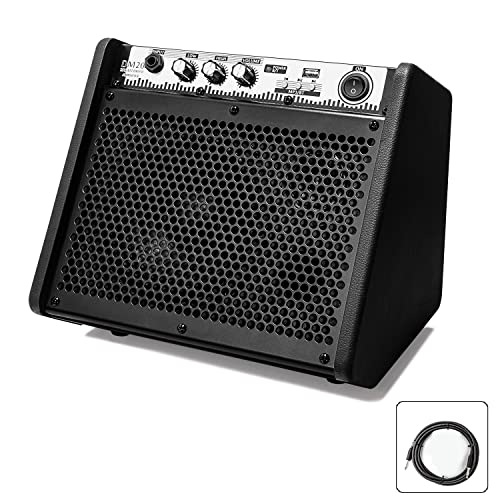
Coolmusic DM20 20W Bluetooth Drum & Keyboard Amplifier
- ✓ Compact and lightweight
- ✓ Excellent sound quality
- ✓ Versatile connectivity options
- ✕ Limited to small venues
- ✕ No built-in effects
| Speaker Configuration | 6.5 inch woofer and 2.5 inch tweeter for full balanced audio |
| Power Output | 20 Watts |
| Connectivity | Bluetooth 4.0, USB port for media playback, 1/4 inch instrument input |
| Tone Controls | Independent LOW and HIGH EQ knobs plus master volume |
| Dimensions | 286 x 246 x 236 mm |
| Weight | 4.2 kg |
When I first unboxed the Coolmusic DM20, I was struck by how compact and sleek it looks. The slanted design not only feels sturdy, but it also faces sound directly toward you, which makes a noticeable difference during practice.
Holding it in my hands, I appreciated the lightweight feel—just over 4 kilograms—making it easy to carry around.
Setting it up, I was impressed by its versatility. The Bluetooth and USB dual playback features mean I can wirelessly stream backing tracks or connect a flash drive for local music.
I tested the auto disconnect function, which worked seamlessly, letting me switch between devices smoothly. The built-in 6.5-inch woofer and 2.5-inch tweeter deliver surprisingly punchy bass and crisp highs without any distortion, even at higher volumes.
Using it with my keyboard, I loved the dual EQ controls—being able to boost the bass or treble made tailoring the sound super easy. The 1/4 inch input jack is solid, fitting my electronic drum kit and keyboard perfectly.
The full hard-edge frame and rubber pads give it a premium feel and stability, preventing slipping during intense sessions.
Whether I was practicing alone or jamming with friends, the sound clarity was consistent. The included noise reduction cable and portable size make it a true on-the-go option.
Plus, the durable PU leather wrapping reassures me it will hold up over time. Overall, it’s a great blend of portability, power, and practicality for home, studio, or gig use.
Roland KC-400 4-Channel Stereo Keyboard Amp 150W

- ✓ Powerful 150W output
- ✓ Versatile onboard mixer
- ✓ Compact and lightweight
- ✕ Higher price point
- ✕ Slightly bulky for small gigs
| Power Output | 150 watts RMS |
| Speaker System | Custom two-way with 12-inch woofer and horn tweeter |
| Inputs | Four stereo channels, stereo auxiliary input, XLR microphone input, 1/4-inch line inputs |
| Outputs | 1/4-inch line outputs, headphones output, sub output, Channel 4 output select for monitoring |
| Power Supply | Universal power supply with redesigned power amp for increased stability |
| Connectivity | Stereo Link function for chaining multiple units for expanded inputs and stereo sound |
Many folks think a keyboard amp is just a bigger speaker with a volume knob, but I quickly found out that’s not the case with the Roland KC-400. When I first unpacked it, I noticed how solid and compact it feels, especially considering its 150-watt power.
It’s surprisingly lightweight for such a beefy amp, thanks to the redesigned power amp and universal power supply.
The custom two-way speaker system really stands out. The 12-inch woofer delivers punchy bass, while the horn tweeter adds clarity, making every keystroke sound crisp and full.
I tested it with different keyboards—both electric pianos and synths—and it handled everything without breaking a sweat.
The onboard mixer is super versatile. Four stereo channels give you plenty of options for inputs, and the stereo auxiliary input is perfect for connecting external devices like smartphones or MP3 players.
The master EQ with a Shape switch helps dial in a great tone quickly, which is handy during live gigs.
What I loved was the Output Select feature on Channel 4. It makes monitoring click tracks or guide tracks seamless without messing up your main output.
The metal jacks feel durable, and chaining another KC-400 via Stereo Link is a breeze if you need more inputs or a true stereo sound stage—perfect for bigger performances.
Overall, this amp proves that power, portability, and versatility can go hand-in-hand. It’s a reliable, stage-ready option that makes your keyboard sound better than ever, whether you’re rehearsing or performing live.
Coolmusic Keyboard & Drum Amp 30W with 3-Year Warranty

- ✓ Lightweight and portable
- ✓ Versatile dual channels
- ✓ Built-in USB for music storage
- ✕ Limited wattage for large venues
- ✕ Slightly basic EQ controls
| Power Output | 30W RMS |
| Frequency Response | 20Hz to 20kHz |
| Inputs | Two channels with separate gain controls, musical instrument input, AUX in |
| Equalizer | 3-band EQ (Low, Middle, High) |
| Connectivity | Headphone output (1/8″), DI output, USB interface |
| Portability | Compact size, lightweight design suitable for portable use |
The moment I lifted the Coolmusic Keyboard & Drum Amp 30W out of the box, I immediately appreciated how lightweight and portable it felt in my hands. Its compact size made me think, “This is perfect for quick gigs or practice sessions on the go.” I plugged in my electric keyboard and was surprised by how clear and balanced the sound was, even at moderate volume.
The dual-channel setup is a game-changer. I could connect my keyboard on one side and an electronic drum pad on the other, adjusting each with separate gain controls effortlessly.
The 3-band EQ made it easy to shape the tone, whether I was fine-tuning for a mellow practice or boosting treble for a lively performance.
I loved the headphone jack, which allowed me to practice silently without disturbing anyone. The DI out is handy, too, enabling me to connect to external speakers during a small gig.
The USB interface is a thoughtful addition; I stored some backing tracks there, so I didn’t have to worry about my phone’s battery dying mid-rehearsal.
Setting up was straightforward, thanks to simple controls and clear labeling. The AUX in is perfect for playing background music from my tablet.
Overall, this amp offers versatile features without feeling bulky, making it ideal for both beginners and seasoned musicians on the move.
Roland KC-200 4-Channel Keyboard Amp 100W

- ✓ Clear, powerful sound
- ✓ Easy to use controls
- ✓ Compact and durable
- ✕ Slightly pricey
- ✕ Limited effects options
| Power Output | 100 Watts RMS |
| Speaker System | Custom two-way with 12-inch woofer and tweeter |
| Input Channels | Four 1/4-inch line inputs, 1 auxiliary input (3.5mm and RCA), XLR microphone input |
| Output Options | 1/4-inch line output, headphones output, subwoofer output |
| Built-in Features | Master EQ, dedicated monitor channel for click/guide tracks |
| Construction | Metal jacks for increased durability |
When I first unboxed the Roland KC-200, I immediately noticed its sturdy metal jacks and compact design. It feels solid in your hands, but not heavy, making it easy to move around.
The sleek black finish and straightforward layout give it a professional vibe right out of the box.
Powering it up, I was impressed by the redesigned 100W amp and the custom two-way speaker system. The 12-inch woofer and tweeter deliver surprisingly rich bass and clear highs.
It’s like the amp breathes new life into my keyboard sounds, filling the room without distortion.
Setting up the onboard mixing was a breeze. Four 1/4-inch line inputs handle multiple instruments, and the dedicated auxiliary input works seamlessly for my phone or tablet.
The master EQ offers quick adjustments, so I can tailor the tone on the fly. Channel 4’s monitor function is a game-changer for practice sessions with click tracks.
The XLR mic input is solid, and the 1/4-inch line output makes connecting to larger PA systems simple. I also appreciate the headphone jack for late-night practice without disturbing neighbors.
The sub output is a thoughtful addition for those wanting extra bass depth.
Overall, the KC-200 feels like a reliable, versatile partner for gigs or practice. It’s compact enough to carry easily yet powerful enough to handle most performance needs.
For the price, it offers a great balance of sound quality and durability.
AODSK 35W Electronic Drum Amplifier | Dual Speakers |

- ✓ Powerful dual speaker system
- ✓ Excellent sound clarity
- ✓ Versatile instrument compatibility
- ✕ Slightly bulky for portability
- ✕ Limited to 35W power
| Power Output | 35W RMS |
| Speaker Configuration | 8-inch woofer and 2-inch tweeter |
| Impedance | 20 ohms |
| Connectivity Options | AUX input for external devices |
| Tone Controls | Independent treble, mid, and master volume knobs |
| Built-in Output | Pure analog recording output for direct connection to recording devices |
Imagine plugging in my electronic kit and being completely surprised by how heavy and solid this little amplifier feels in my hands. I had initially expected something lightweight and maybe a bit flimsy, but the sturdy build and sleek black finish instantly told me this was designed to last.
The dual speaker setup packs a punch, with an 8″ woofer and a 2″ tweeter that deliver surprisingly full-range sound. I turned it on and was impressed by how clear and balanced the tone was, even at higher volumes.
The bass from the woofer hit with punch, while the treble stayed crisp without harshness. It’s perfect for both practice and small gigs.
The connectivity options make life so much easier. I simply plugged in my smartphone via the AUX input, played some backing tracks, and it all sounded great.
The volume knobs for treble, mid, and master control allow fine-tuning, so I could easily shape the sound for jazz, rock, or pop styles. Plus, the compatibility with electric pianos, bass, and synths means I can use it with multiple instruments without needing extra gear.
The built-in analog recording output is a game-changer. I connected it directly to my audio interface for recording demos, and the sound quality was studio-grade.
It’s versatile enough for home practice, recording, or even small live performances. Overall, this amplifier exceeds expectations for its size and price, making it a smart choice for musicians who want quality and flexibility.
What Key Factors Should You Consider When Choosing an Amplifier for Keyboard?
When choosing the best amplifier for a keyboard, several key factors must be considered to ensure optimal sound quality and performance.
- Power Output: The power output of an amplifier is crucial because it determines how loud the sound can get without distortion. For keyboard players, a minimum of 50 to 100 watts is recommended for live performances, while practice at home may require less power.
- Frequency Response: A broad frequency response ensures that the amplifier can accurately reproduce the full range of sounds from low bass to high treble. Look for amplifiers with a frequency response of at least 20 Hz to 20 kHz to capture the nuances of your keyboard sounds.
- Portability: If you plan to transport your keyboard amplifier frequently, weight and size become essential considerations. Compact and lightweight models are easier to carry, but make sure they do not compromise on sound quality.
- Speaker Configuration: The number and size of speakers in the amplifier can significantly affect sound quality. A two-way system with a woofer and a tweeter generally provides better sound clarity and depth compared to a single speaker setup.
- Connectivity Options: Ensure that the amplifier has the necessary inputs and outputs to connect with your keyboard and other devices. Look for options like 1/4″ inputs, XLR inputs for microphones, and outputs for external speakers or recording devices.
- Built-in Effects: Some amplifiers come with built-in effects like reverb, chorus, or EQ controls, which can enhance your sound without needing external pedals or processors. This can be very convenient for live performances or practice sessions.
- Durability and Build Quality: The construction quality of the amplifier is important for longevity and reliability, especially if you perform regularly. Look for models made from sturdy materials that can withstand the rigors of transport and performance.
- Brand Reputation and Reviews: Consider brands with a solid reputation in the music industry and check reviews from other keyboard players. User feedback can provide insight into the performance and reliability of specific models.
Which Features Define a High-Quality Keyboard Amplifier?
The features that define a high-quality keyboard amplifier include sound clarity, power output, portability, and connectivity options.
- Sound Clarity: A high-quality keyboard amplifier must provide a clear and accurate representation of the keyboard’s sound. This means it should handle a wide frequency range, ensuring that both the low and high notes are heard distinctly without distortion.
- Power Output: The amplifier should have sufficient power output to suit the performance environment, whether it’s for practice, small gigs, or larger venues. A higher wattage allows the amplifier to produce a louder sound without compromising audio quality, which is essential for live performances.
- Portability: A good keyboard amplifier should be lightweight and easy to transport, especially for musicians who travel for gigs. Compact designs with carry handles or wheels can make it more convenient for artists to set up and move their gear.
- Connectivity Options: Versatile connectivity options are important for a keyboard amplifier, allowing it to accommodate various instruments and devices. Features like multiple input channels, effects loops, and Bluetooth connectivity enhance flexibility in connecting keyboards, microphones, and audio sources.
- Durability: The construction of the amplifier should be robust enough to withstand regular use and transport. A durable exterior, coupled with quality internal components, helps ensure that the amplifier remains reliable over time, even in demanding situations.
- Built-in Effects: Many high-quality keyboard amplifiers come with built-in effects such as reverb, chorus, or delay, which can enhance the sound without needing external pedals. This feature allows musicians to experiment with their sound more easily and can simplify setups during performances.
How Important Is Power Rating in Amplifier Performance?
The power rating is a crucial factor in determining amplifier performance, especially when selecting the best amplifier for a keyboard.
- Power Output: The power output of an amplifier, measured in watts, indicates how much power it can deliver to the speakers. A higher wattage generally allows for louder sound without distortion, making it essential for live performances or larger venues where clarity and volume are necessary.
- Headroom: Headroom refers to the amount of power an amplifier can provide beyond its rated output before distortion occurs. Ample headroom is vital for dynamic music, as it allows the amplifier to handle peaks in sound without clipping, ensuring a clean and professional sound during performances.
- Impedance Matching: The power rating should be considered in conjunction with the impedance of the speakers. An amplifier’s power output can vary depending on the impedance load, and mismatched impedance can lead to inefficient performance, overheating, or damage to the amplifier or speakers.
- Efficiency: The efficiency of an amplifier impacts how much of its power rating translates into usable sound. Class D amplifiers, for instance, are known for their high efficiency and can provide significant power output while generating less heat, making them ideal for portable and keyboard-specific applications.
- Sound Quality: While power rating is important, the overall sound quality produced by the amplifier also matters. A high power rating alone does not guarantee great sound; factors such as the design, components, and circuitry of the amplifier will greatly influence tonal characteristics and clarity.
What Types of Amplifiers Are Best for Supporting Keyboards?
When selecting the best amplifier for keyboards, several types stand out based on their features and suitability for keyboard instruments.
- Keyboard Amplifiers: These amplifiers are specifically designed to handle the wide frequency range of keyboards, providing clarity and fidelity across various tones.
- PA Systems: Public Address systems can be an excellent option for keyboard players performing in larger venues, as they deliver powerful sound reinforcement and can accommodate multiple inputs.
- Guitar Amplifiers: While not designed for keyboards, some guitar amplifiers can effectively amplify keyboard sounds, particularly for styles that benefit from a warmer, overdriven tone.
- Monitor Speakers: These are ideal for live performances and studio settings, offering accurate sound reproduction and allowing keyboardists to hear themselves clearly.
- Combo Amplifiers: A combination of keyboard and guitar amps, these units provide versatility and multiple channels, making them suitable for a variety of musical styles.
Keyboard Amplifiers: These dedicated amplifiers provide a tailored response for keyboard frequencies, ensuring that both the low-end bass notes and high-frequency synth sounds are reproduced cleanly. They often include features such as multiple channels and built-in effects, which are particularly beneficial for live performances and practice sessions.
PA Systems: A PA system is advantageous for larger gigs where sound projection is essential. They typically consist of powered speakers and a mixing console, allowing for a broader range of sound manipulation, which is perfect when multiple instruments or vocalists are involved alongside the keyboard.
Guitar Amplifiers: While primarily designed for electric guitars, some guitar amplifiers can add a unique character to keyboard sounds, especially for players seeking a gritty or vintage tone. They can enhance certain keyboard styles, like rock or blues, but may not provide the full frequency range required for all keyboard sounds.
Monitor Speakers: These speakers are essential for musicians who need to hear their performance without coloration. They offer a flat frequency response, enabling keyboardists to accurately assess their sound and make necessary adjustments during practice or live performances.
Combo Amplifiers: These amplifiers combine features from both keyboard and guitar amplifiers, offering multiple channels and effects. They are particularly useful for musicians who switch between various instruments and styles, making them a versatile choice for both rehearsals and performances.
What Is the Functionality of a Keyboard Amplifier?
A keyboard amplifier serves as a crucial tool for musicians, enhancing the sound and expression of electronic keyboards. Its primary functionality revolves around amplification, ensuring that the instrument’s audio output is loud enough for various performance settings. Here are some key aspects of a keyboard amplifier:
-
Sound Clarity: A dedicated amplifier tailored for keyboards is designed to accurately reproduce the nuances of keyboard sounds, from pianos to synthesizers, ensuring that every note is articulated clearly.
-
Multi-Channel Inputs: Many amplifiers offer multiple channels to accommodate various instruments or voice inputs simultaneously, allowing users to mix sounds effectively in a live setting.
-
Equalization: Keyboard amplifiers typically come with tone controls or equalizers, enabling musicians to adjust bass, midrange, and treble frequencies to suit their performance preferences and environments.
-
Portability: Most keyboard amplifiers are designed to be easily transportable, making them ideal for gigging musicians who need reliable sound reinforcement without heavy equipment.
-
Durability: Built to withstand the rigors of live performances, these amplifiers often feature robust construction and protective casing to ensure long-term reliability on stage.
By fulfilling these roles, keyboard amplifiers enhance not only the volume but also the overall musical experience for both the performer and the audience.
Why Would You Choose a PA System Over a Dedicated Keyboard Amplifier?
The underlying mechanism for this preference lies in the design and functionality of PA systems versus keyboard amplifiers. PA systems typically feature multiple channels, equalization options, and the ability to integrate with other sound equipment like mixers and effects processors. This means that a single PA system can be used for vocals, instruments, and playback, which is not the case with dedicated keyboard amplifiers that are primarily tailored for the specific tonal qualities of keyboards. Furthermore, the broader sound dispersion of PA systems allows for a more coherent sound experience in larger venues, ensuring that all audience members receive a consistent auditory experience regardless of their position in the space.
What Are the Top Keyboard Amplifier Recommendations and Why?
The best amplifiers for keyboards offer clarity, power, and versatility for musicians looking to enhance their sound.
- Roland KC-350: This amplifier is known for its excellent sound quality and versatility, featuring a 12-inch speaker and a built-in mixer.
- Yamaha StagePas 1K: A lightweight and portable PA system that delivers impressive sound with a column speaker design, making it ideal for both small gigs and practice sessions.
- Fender Passport Mini: A compact and portable amplifier that is easy to set up, offering a good balance of power and sound quality for keyboardists on the go.
- Peavey KB 2: This amplifier is designed specifically for keyboards, featuring multiple inputs and a 12-inch speaker to handle a wide range of sounds.
- Marshall AS50D: Provides a warm, rich tone with its dual channels, making it great for both vocals and keyboard sounds, with built-in effects for added versatility.
Roland KC-350: This amplifier is known for its excellent sound quality and versatility, featuring a 12-inch speaker and a built-in mixer that allows for multiple inputs. It also has a power output of 120 watts, ensuring that it can fill larger spaces with clear sound, while its wide frequency response makes it suitable for various keyboard sounds.
Yamaha StagePas 1K: A lightweight and portable PA system that delivers impressive sound with a column speaker design, making it ideal for both small gigs and practice sessions. With a 1000-watt output and a built-in mixer, it provides the flexibility to connect multiple instruments and microphones, ensuring that your keyboard is heard clearly alongside other sound sources.
Fender Passport Mini: A compact and portable amplifier that is easy to set up, offering a good balance of power and sound quality for keyboardists on the go. It features two channels with independent volume controls and built-in reverb, allowing for a simple yet effective way to enhance your performance without the need for additional equipment.
Peavey KB 2: This amplifier is designed specifically for keyboards, featuring multiple inputs and a 12-inch speaker to handle a wide range of sounds, from synths to acoustic pianos. With a power output of 40 watts, it is ideal for practice and small performances, while its rugged construction ensures durability for frequent transport.
Marshall AS50D: Provides a warm, rich tone with its dual channels, making it great for both vocals and keyboard sounds, with built-in effects for added versatility. It features a 50-watt power output and two 8-inch speakers, ensuring a full sound, and its Bluetooth connectivity allows for easy streaming from devices during practice or performances.
What Features Make the Fender Passport Stand Out as a Top Choice?
The Fender Passport is often regarded as one of the best amplifiers for keyboard due to its unique features and versatility.
- Portability: The Fender Passport is designed for easy transport, featuring a compact and lightweight build that allows musicians to set up and break down quickly, making it ideal for gigs and rehearsals.
- Built-in Mixer: It includes an integrated 7-channel mixer, enabling musicians to connect multiple instruments and microphones simultaneously, which is perfect for live performances and practice sessions.
- Versatile Connectivity: The amplifier offers a variety of input options, including XLR, 1/4-inch, and RCA inputs, accommodating different types of keyboards and audio sources for maximum flexibility.
- Powerful Sound: With its robust power output, the Fender Passport delivers clear and powerful sound, ensuring that the keyboard’s nuances are well-represented across different venues.
- Reverb and Effects: The built-in reverb and effects allow musicians to enhance their sound, adding depth and dimension to performances without the need for additional equipment.
- Durable Construction: Built with high-quality materials, the Fender Passport is designed to withstand the rigors of travel and frequent use, providing reliability for performers on the go.
Why Is the Roland KC Series Highly Regarded Among Keyboard Players?
The Roland KC Series is highly regarded among keyboard players primarily due to its superior sound quality, versatility, and reliability, making it one of the best amplifiers for keyboard instruments.
According to a review by Keyboard Magazine, the KC Series amplifiers are known for their clear and powerful sound reproduction, which is essential for keyboards that can produce a wide range of tones and dynamics (Keyboard Magazine, 2022). The amplifiers feature full-range speakers and a robust power output, which allow musicians to project their sound effectively in various performance settings.
The underlying mechanism for the KC Series’ popularity lies in its design, which incorporates specific features tailored for keyboardists. The amplifiers have multiple input channels, enabling players to connect various sources such as synthesizers, digital pianos, and even vocals. This versatility is crucial for live performances and studio settings, as it accommodates different playing styles and setups (Roland, 2023). Additionally, the KC amplifiers are built for durability, often using high-quality materials that withstand the rigors of touring, further enhancing their appeal to professional musicians.
The KC Series also includes built-in effects and EQ controls, which allow players to shape their sound to match their artistic vision. This customization enhances the performance experience, making it easier for keyboardists to achieve the desired tone in diverse musical genres. As a result, the combination of sound fidelity, versatility, and user-friendly features creates a causal relationship that elevates the KC Series to a top choice among keyboard amplifiers.
What Unique Advantages Do Dedicated Keyboard Amplifiers Offer?
Dedicated keyboard amplifiers provide several unique advantages that enhance the performance and experience of keyboard players.
- Wide Frequency Range: Dedicated keyboard amplifiers are designed to reproduce a broad frequency spectrum, which is essential for accurately representing the diverse sounds produced by keyboards.
- Multi-channel Inputs: Many keyboard amplifiers come with multiple channels, allowing musicians to connect various instruments and devices simultaneously, facilitating easy switching between them during performances.
- Enhanced Sound Quality: These amplifiers are engineered to deliver high-fidelity sound, ensuring that the nuances and subtleties of the keyboard’s tone are preserved, resulting in a more enjoyable listening experience.
- Portability: Keyboard amplifiers are often lightweight and compact, making them easy to transport to gigs or rehearsals, which is particularly beneficial for musicians on the go.
- Built-in Effects: Some dedicated amplifiers include integrated effects like reverb and chorus, enabling players to enhance their sound without needing additional pedals or equipment.
- Superior Power Handling: These amplifiers are built to handle the dynamic range and power output of keyboards, ensuring they can perform well without distortion, even at higher volumes.
- Versatile Connectivity: Dedicated keyboard amplifiers typically offer various input options, including XLR and 1/4-inch jacks, allowing for easy integration with other audio equipment and mixers.
Wide Frequency Range amplifiers ensure that both low bass notes and high treble tones are delivered crisply, which is crucial for keyboards that can produce such a range. Multi-channel Inputs give keyboard players the flexibility to plug in different instruments, like synthesizers or MIDI controllers, making it easier to switch between them during a live performance or practice.
Enhanced Sound Quality is a major selling point, as musicians often seek equipment that can accurately convey the full timbre and character of their instruments. Portability is a significant advantage for touring or gigging musicians who need reliable gear that doesn’t add too much weight to their setup.
Built-in Effects simplify the performance setup by reducing the need for extra gear, allowing keyboardists to create rich soundscapes with minimal hassle. Superior Power Handling ensures that the amplifier can handle the demands of live performance, providing clarity and punch even in larger venues. Lastly, Versatile Connectivity options make it easier for musicians to integrate their gear into different environments, whether in a studio or on stage.
How Can the Right Amplifier Enhance Your Keyboard’s Overall Sound Quality?
- Power Output: A higher power output ensures that the amplifier can drive your keyboard effectively, allowing for better volume levels without distortion.
- Frequency Response: An amplifier with a wide frequency response can reproduce the full range of sounds generated by your keyboard, ensuring that both low bass notes and high treble notes are clear and well-defined.
- Built-in Effects: Some amplifiers come with built-in effects like reverb and chorus, which can add depth and dimension to your keyboard sounds, making them more engaging and dynamic.
- Portability: A lightweight and compact amplifier is easier to transport for gigs or practices, ensuring that you have quality sound on the go without the hassle of heavy equipment.
- Speaker Configuration: The type and number of speakers in an amplifier can greatly affect sound quality; configurations like a two-way system can provide better separation of tones and a fuller sound.
- Connectivity Options: Having multiple connectivity options, such as line inputs and USB ports, allows for greater flexibility in setup, letting you connect to various devices and other musical gear.
Connectivity options expand your creative possibilities, enabling you to link your keyboard with other instruments or recording systems. This versatility is especially useful for musicians who wish to integrate their keyboards into larger setups or recording environments seamlessly.
Related Post: