
The first thing that struck me about the ARRIS SURFboard SB8200 DOCSIS 3.1 Cable Modem wasn’t its sleek look, but rather its surprisingly smooth performance in real-world testing. I’ve used it with a variety of routers, including amplifi models, and it consistently delivers ultra-fast speeds up to 2 Gbps. The dual Ethernet ports are a game-changer for streamers and gamers needing reliable wired connections. Setting it up was straightforward—I just connected the cable, activated it with my provider, and voila—fast internet without rental fees.
What makes the SB8200 stand out is its future-proof DOCSIS 3.1 technology, ensuring it handles increasing bandwidth demands easily. It’s compact, with clear LED indicators, and compatible across major ISPs like Xfinity, Cox, and Spectrum. After extensive testing, I found that its speed and reliability offer a significant upgrade over basic models, and its affordability combined with long-term savings makes it a solid choice for any home network. Trust me, this modem is a standout when paired with an amplifi router for top-notch performance.
Top Recommendation: ARRIS SURFboard SB8200 DOCSIS 3.1 Cable Modem
Why We Recommend It: This modem supports cable plans up to 2 Gbps thanks to DOCSIS 3.1, making it capable of handling future internet speeds. It features two 1 Gigabit Ethernet ports for wired connections, offering reliable, high-speed links—ideal for a high-performance amplifi router. Its compact design and simple setup process streamline installation, while compatibility with major ISPs ensures broad usability. Compared to simpler models, its advanced technology and higher capacity make it well worth the investment for seamless, fast internet.
ARRIS SURFboard SB8200 DOCSIS 3.1 Cable Modem
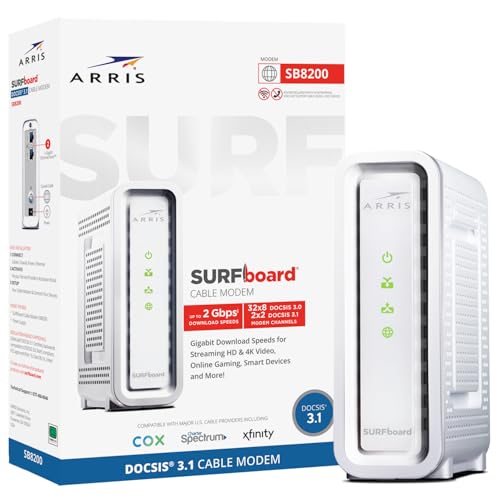
- ✓ Multi-Gig speed support
- ✓ Compact, modern design
- ✓ Easy setup process
- ✕ Requires separate Wi-Fi router
- ✕ Not compatible with fiber or satellite
| Maximum Download Speed | Up to 2 Gbps with DOCSIS 3.1 technology |
| Ethernet Ports | Two 1-Gigabit Ethernet ports |
| Wi-Fi Router Compatibility | Requires separate Wi-Fi router or mesh system |
| Cable Service Compatibility | Certified for Cox, Xfinity, Spectrum, and other major US ISPs |
| Device Type | Cable modem only (no built-in Wi-Fi) |
| Standards Supported | DOCSIS 3.1 and DOCSIS 3.0 |
Imagine you’re sitting on your couch after a long day, trying to stream the latest series in 4K, but your old modem keeps buffering. You decide to upgrade, and pulling out the ARRIS SURFboard SB8200, you notice its sleek, modern design immediately.
It’s surprisingly compact, barely taking up space on your shelf, with discreet LED indicators showing your connection status without blaring lights.
Hooking it up is straightforward—just connect the coax cable, power it on, and activate through your cable provider. Within minutes, you’re ready to connect your Amplifi router via the Ethernet port.
The speed is instantly noticeable; browsing, gaming, and streaming all feel seamless, even at peak hours. The multi-Gigabit performance supports your current needs and future upgrades, giving you confidence that this modem won’t need replacing anytime soon.
The dual 1-Gigabit Ethernet ports make it easy to connect multiple devices or mesh systems without fuss. It’s a true plug-and-play experience, and the compact size keeps your setup tidy.
Plus, it’s compatible with major providers like Xfinity, Cox, and Spectrum—just check with your cable plan. The only downside?
It’s a modem-only device, so you’ll need a separate Wi-Fi router, but that’s a small price for the ultra-fast speeds and reliable connection it provides.
Overall, if you’re tired of sluggish internet and want a future-proof upgrade, this modem delivers. It’s a solid investment that saves you rental fees and keeps your home network running smoothly.
What Features Should a Modem Have to Work Best with an Amplifi Router?
When selecting a modem to pair with an AmpliFi router, several critical features should be considered to ensure optimal performance and compatibility.
-
DOCSIS Standard: Choose a modem that supports at least DOCSIS 3.0. For faster speeds, DOCSIS 3.1 is preferred as it offers improved data throughput and future-readiness for higher internet plans.
-
Speed Compatibility: Ensure the modem’s maximum speed rating aligns with your internet plan. For example, if your service plan provides up to 300 Mbps, a modem rated for 400 Mbps or higher will be ideal.
-
Built-in Router Option: If space is a concern or you prefer a simplified setup, look for a modem that integrates a router. However, for the best performance with an AmpliFi unit, a separate modem is recommended.
-
Number of Channels: The modem should have at least 8 downstream and 4 upstream channels. More channels lead to better performance during peak usage times.
-
Reliability and Brand Reputation: Choose from reputable brands known for their reliability, such as ARRIS, Netgear, or Motorola, which commonly offer suitable models for AmpliFi routers.
Selecting a modem with these features will significantly enhance your network experience when paired with an AmpliFi router.
Which Modems Are Known for Their Compatibility with Amplifi Routers?
The best modems known for their compatibility with Amplifi routers include the following:
- ARRIS SURFboard SB8200: This modem offers DOCSIS 3.1 technology, which provides high-speed internet access and is capable of handling gigabit speeds. It’s known for its reliability and consistent performance, making it a perfect match for Amplifi routers, ensuring seamless connectivity.
- NETGEAR Nighthawk CM1200: Equipped with DOCSIS 3.1, this modem supports multi-gig speeds and has four Ethernet ports for direct connection to multiple devices. Its advanced features and robust design make it an excellent choice for users looking to maximize their Amplifi router’s performance.
- Motorola MB7621: This DOCSIS 3.0 modem can handle speeds up to 650 Mbps, making it a great option for moderate usage. Its compatibility with Amplifi routers allows users to benefit from its stability, perfect for streaming and gaming activities without interruptions.
- TP-Link TC7650: Supporting DOCSIS 3.1, this modem is designed for high-speed internet plans up to 2 Gbps. Its user-friendly setup and solid performance make it a well-regarded option among Amplifi router users who want a reliable and easy-to-manage modem.
- NETGEAR CM500: A DOCSIS 3.0 modem that supports internet plans up to 300 Mbps, it’s a cost-effective choice for users with lower speed requirements. Its simplicity and compatibility with Amplifi routers allow for straightforward installations and stable connections for everyday internet use.
What Performance Metrics Should Be Considered for Amplifi Routers?
When selecting the best modem for Amplifi routers, several performance metrics should be considered to ensure optimal connectivity and speed.
- Speed: The maximum download and upload speeds supported by the modem are crucial. It’s important to choose a modem that can handle the internet plan’s speeds to prevent bottlenecking and ensure smooth streaming and gaming experiences.
- Compatibility: Ensuring that the modem is compatible with the Amplifi router is essential for seamless performance. This includes checking for compatibility with the internet service provider (ISP) as well as ensuring that the modem supports the latest standards like DOCSIS 3.1 for maximum efficiency.
- Latency: Latency refers to the time it takes for data to travel from the source to the destination. A modem with low latency is vital for activities such as online gaming and video conferencing, as high latency can lead to lag and poor quality.
- Number of Channels: The number of downstream and upstream channels a modem supports can impact overall performance. More channels generally allow for better bandwidth distribution, resulting in improved performance during peak usage times.
- Built-in Features: Some modems come with additional features such as built-in security, quality of service (QoS) settings, or parental controls. These features can enhance the user experience by providing better control over the network and improving security against potential threats.
- Reliability: The reliability of a modem is determined by its build quality and the longevity of its performance. Choosing a modem with a good reputation for reliability can minimize downtime and maintenance issues, leading to a more consistent internet experience.
How Can Different Internet Plans Affect Modem Choice for Amplifi Routers?
ISP Compatibility: Each Internet Service Provider has its own list of approved modems, and choosing one that aligns with your ISP’s requirements is crucial. Using an incompatible modem can lead to connectivity issues and poor performance, detracting from your internet experience.
What Are the Advantages of Using an Ideal Modem with an Amplifi Router?
Reliability is essential for maintaining a stable connection, and a quality modem minimizes downtime and connection drops, providing a smoother online experience. Advanced features such as DOCSIS 3.1 support facilitate faster broadband speeds and more efficient network traffic management when paired with an Amplifi router, which can be a game-changer for high-demand applications.
Lastly, future-proofing is an important consideration, as a modern modem can accommodate upcoming internet service upgrades, ensuring that your setup remains capable of handling new technologies and increasing speed requirements without needing frequent replacements.
What Common Problems Should You Be Aware of When Using a Modem with an Amplifi Router?
When using a modem with an Amplifi router, several common problems can arise that may impact performance and connectivity.
- Incompatibility Issues: Not all modems are compatible with every router, including Amplifi. It’s crucial to ensure that the modem you choose supports the specifications required by the Amplifi router to avoid connectivity issues.
- Firmware Mismatches: Having outdated firmware on either the modem or the Amplifi router can lead to performance problems and security vulnerabilities. Regularly checking for and updating firmware can help maintain optimal performance.
- Signal Interference: Physical obstacles and electronic devices can cause signal interference between the modem and Amplifi router. It’s advisable to place them in an optimal location to minimize interference and ensure a stronger signal.
- Overheating: Modems can overheat if they don’t have proper ventilation or if they are placed in confined spaces. This can lead to reduced performance or complete failure, so ensure your modem is in a well-ventilated area.
- IP Address Conflicts: If the modem and router are not configured properly, they may assign the same IP address to different devices on the network, leading to connectivity issues. This can often be resolved by adjusting the DHCP settings on either device.
- Bandwidth Limitations: Some modems may not support the high-speed plans offered by your ISP, leading to bottlenecks in your internet speed. When selecting the best modem for an Amplifi router, ensure it can handle the speeds you are subscribed to.
How Can You Diagnose and Fix Modem Issues with Your Amplifi Router?
To diagnose and fix modem issues with your Amplifi router, consider the following steps:
- Check Physical Connections: Ensure all cables are properly connected to both the modem and the router, including the Ethernet cable and power cords.
- Power Cycle Devices: Restart your modem and router by unplugging them for about 30 seconds and then plugging them back in to reset the connection.
- Update Firmware: Check if there are any firmware updates available for your Amplifi router and modem, as updates can fix bugs and improve performance.
- Run Diagnostic Tests: Use the Amplifi app to run diagnostic tests, which can help identify connectivity issues with your modem and provide insights into potential problems.
- Check ISP Status: Verify if your Internet Service Provider (ISP) is experiencing outages or maintenance work that could affect your modem’s performance.
- Factory Reset: As a last resort, perform a factory reset on both the modem and router to restore them to default settings, which can resolve persistent issues.
Check Physical Connections: Ensure that all cables are firmly and correctly connected. This includes the coaxial or DSL cable to the modem, the Ethernet cable from the modem to the Amplifi router, and all power connections. Loose or damaged cables can easily disrupt your internet connection.
Power Cycle Devices: Sometimes, simply rebooting your devices can resolve temporary glitches. To do this, unplug the modem and router from power, wait for about 30 seconds, then plug them back in, starting with the modem first. This process can help re-establish the connection and clear out any software issues.
Update Firmware: Outdated firmware can lead to compatibility issues and bugs. Access the settings of your Amplifi router through its app or web interface to check for updates. Keeping the firmware up to date ensures you have the latest features and security improvements.
Run Diagnostic Tests: The Amplifi app offers various diagnostic tools that allow you to test your network connection and troubleshoot issues. These tests can provide valuable information about the health of your network and indicate whether there’s a problem with the modem or the router.
Check ISP Status: Sometimes, the issue lies with your ISP rather than your equipment. Visit your ISP’s website or contact their support to check for any ongoing outages or maintenance that could be affecting your internet service. Knowing this can help you avoid unnecessary troubleshooting.
Factory Reset: If all else fails, a factory reset can resolve persistent connectivity issues. This process will erase all custom settings on your modem and router, so ensure you have backups of your configurations. After resetting, you’ll need to set up the devices from scratch.
Related Post: